in Barcelona
 3 to 5 Nov 2026
Three municipalities in Germany’s Main-Kinzig district have formalised a joint smart city initiative to address a problem that plays out in dense residential neighbourhoods across the country: illegally parked vehicles that block intersections and prevent fire engines, ambulances, and waste collection trucks from getting through. The city of Hanau, the city of Maintal, and the municipality of Schöneck have signed an inter-municipal cooperation agreement to implement the project, titled “Crossing Clear – Sensors Secure Emergency Routes,” with Hanau serving as the lead implementing authority.
A Persistent Urban Problem Meets a Sensor-Based Answer
Densely settled residential districts present a chronic challenge for emergency services throughout Germany. Parked vehicles narrowing intersections or obstructing marked escape corridors can add critical minutes to a response time, directly affecting outcomes for people in medical emergencies or during fires. The Hanau project targets precisely this failure point: selected intersections and road sections identified as particularly problematic will be equipped with sensors that detect wrongly parked vehicles in real time.
Once a vehicle is flagged, data is transmitted immediately and in a GDPR-compliant manner over a central, data-platform-based system to the relevant regulatory authority, enabling faster and more targeted enforcement. The technology layer underpinning the data transmission is a LoRaWAN network, a low-power wide-area connectivity standard widely used in European smart city deployments for exactly this kind of distributed, battery-efficient sensor infrastructure.
State Funding and Inter-Municipal Collaboration
The project is backed by the Hessian Ministry for Digitalization and Innovation through the state’s “Starke Heimat Hessen” programme, which has channelled approximately 16 million euros per year into municipal digitalization since 2021 and has supported 125 communal and inter-communal digitalization projects with a cumulative grant total of around 92 million euros to date. The “Crossing Clear” initiative specifically received a grant of 729,611 euros, covering up to 90 percent of total project costs; the three partner municipalities together carry the remaining ten percent, distributed across the agreed cost plan and budget years.
The Hanau city council approved the inter-municipal cooperation agreement first, after which the formal agreement was signed by all three municipalities. The model is consistent with the Hessian ministry’s explicit preference for collaborative, inter-municipal projects over single-municipality initiatives, reflecting a broader policy intent to create replicable blueprints that other communities across the state can adopt.
What the Sensors Do and How the Data Flows
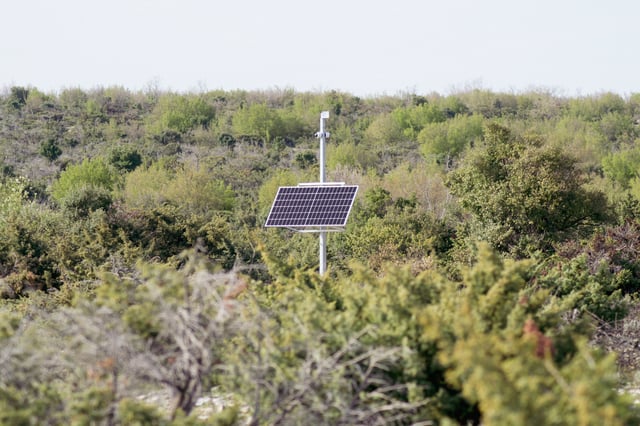
The sensors are installed at stationary positions on critical street sections and intersections. They identify vehicles parked in prohibited positions and relay detection data in real time over the LoRaWAN network to a central data platform. From there, the information reaches the responsible municipal regulatory offices, enabling enforcement officers to respond more efficiently and with precise location data rather than relying on citizen complaints or scheduled patrols.
The system is designed to comply with German data protection law, meaning that personal vehicle data is not retained beyond what is needed for the enforcement action and no visual surveillance infrastructure is involved in the core sensor logic as described in public project documentation. The exact sensor vendor and hardware specifications have not been disclosed in publicly available project communications.
“This project is an innovative step towards greater road safety and against blocked streets and intersections in Hanau. The fact that we are working together with other municipalities and can support each other is a great thing that benefits all partners,” said Isabelle Hemsley, City Councillor for Digitalization at the city of Hanau, in the city’s May 2026 press release.
Hanau’s Broader Smart City Agenda
“Crossing Clear” is one of two simultaneously funded smart city projects for Hanau within the same Hessian programme. The second, titled “Smart Winter Service,” applies sensor and data logic to road salting and winter road management. Together, the two projects reflect a deliberate strategy by Hanau’s digital administration to use sensor technology for tangible, service-delivery improvements rather than abstract data infrastructure.
The initiative also reflects a broader pattern visible across European municipalities, where IoT sensor deployments are increasingly being justified through direct public safety outcomes rather than general efficiency arguments. Comparable sensor-based parking enforcement models focusing on emergency access corridors have been piloted in other German and European cities, and the Hessian ministry’s programme design explicitly requires that funded projects have model character and be transferable to other municipalities.
The Three-Municipality Framework
Hanau is the largest of the three partners and acts as project lead. Maintal and Schöneck are smaller communities that adjoin Hanau within the Main-Kinzig district and face similar residential parking pressure. The inter-municipal structure allows all three to share implementation costs, technical infrastructure, and lessons learned, while Hanau absorbs the administrative coordination burden. This kind of sub-regional cooperation cluster is a recurring feature of the Hessian smart region funding architecture.