in Barcelona
 3 to 5 Nov 2026
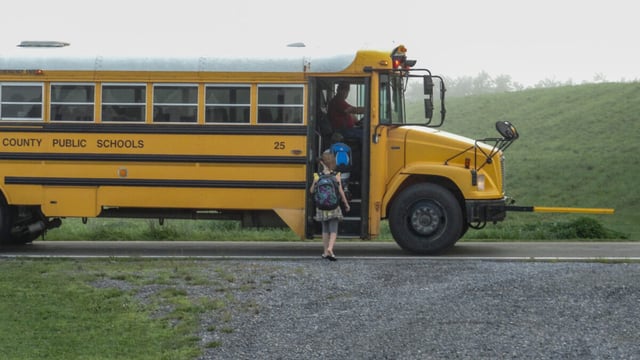
Miami-Dade County Public Schools has relaunched its AI-powered school bus infraction detection program, deploying stop-arm cameras across nearly 900 buses in partnership with the Miami-Dade Sheriff’s Office and child safety technology provider BusPatrol. The relaunch, announced on May 1, 2026, follows a year-long suspension triggered by due process concerns, and now enters live enforcement on May 18 with a $225 civil penalty for violations.
A Program Grounded in Student Safety, Stalled by Accountability Gaps
The infraction detection program was first launched in May 2024, built around a multi-agency framework involving the school district, the Sheriff’s Office, the Florida Division of Administrative Hearings (DOAH), and BusPatrol. Its stated purpose was to deter reckless driving near school buses and make bus stops safer for students boarding and alighting.
Less than a year later, Sheriff Rosie Cordero-Stutz suspended enforcement after identifying failures in the adjudication process that she said undermined both the fairness and public trust in the program. Among the issues that surfaced through an investigation by the Miami Herald and the Tributary: some drivers received $225 citations for situations that were lawful under state law, such as driving on the opposite side of a raised median more than five feet wide when a bus was stopped.
Legislative Reform Clears the Way for Relaunch
The suspension period was not simply administrative downtime. Working under Sheriff Cordero-Stutz’s leadership, Florida amended state statute s. 316.173 to strengthen the legal framework governing stop-arm enforcement statewide. “Those concerns helped lead to important clarification at the state level, changing the law statewide, strengthening the framework under which BusPatrol now operates and ensuring greater consistency and transparency,” Cordero-Stutz said during a press conference announcing the relaunch.
The revised statute gives registered vehicle owners a clearer, more accessible path to contest citations, including participation in virtual administrative hearings managed by DOAH. All outstanding citations from the initial enforcement period have been dismissed, the Sheriff’s Office confirmed.
How the Technology Works
Each of the roughly 900 school buses in the Miami-Dade fleet is equipped with BusPatrol’s AI-driven stop-arm camera system. When a bus stops and deploys its stop-arm, the cameras activate and scan surrounding traffic. The system uses BusPatrol’s proprietary Automated Violation Analysis (AVA) engine, a computer vision platform the company describes as capable of detecting stop-arm infractions across up to eight lanes and at 4K resolution, capturing both license plate data and video footage of the incident.
Recorded footage is transmitted to the Miami-Dade Sheriff’s Office, where human reviewers assess whether a violation occurred before any citation is issued. Citations are then mailed to the registered owner of the offending vehicle. BusPatrol’s model is violator-funded, meaning the district does not bear upfront capital costs; program expenses are covered by fines collected from violators.
Recidivism Data Supports the Enforcement Rationale
BusPatrol has reported that in programs it operates across Florida and other states, more than 90 percent of drivers who receive a first-time violation do not reoffend. The company also points to data showing reductions in violations per bus per day in Florida programs that have been active for more than one year, suggesting a behavioral deterrence effect over time.
The Miami-Dade school district has also renewed its contract with BusPatrol for up to an additional 10 years, signaling a long-term institutional commitment to the program beyond the relaunch period.
Florida Law and Where Drivers Must Stop
Under Florida law, all traffic must stop in both directions on two-lane roads and on multi-lane roads without physical barriers, including those with a centre turn lane, when a school bus is stationary with red lights flashing. On divided highways or roads separated by a raised or unpaved median of at least five feet in width, drivers travelling in the opposite direction are not legally required to stop, though they must slow down and remain alert for students crossing. Drivers moving in the same direction as the bus are always required to stop. Vehicles may only proceed once the bus begins moving again or the red lights cease flashing.
AI Cameras on Public Vehicles: A Widening Trend
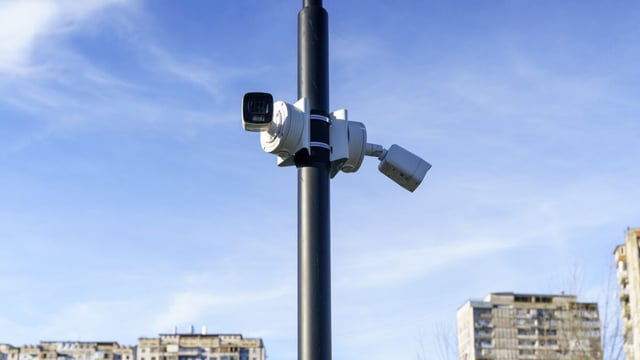
The Miami-Dade deployment sits within a broader national shift toward automated enforcement on publicly operated vehicles. Philadelphia became the first U.S. city to extend AI camera enforcement to trolleys in early 2026, targeting illegal parking that disrupts light-rail operations across six routes using a system developed by Hayden AI. New York’s Metropolitan Transportation Authority has reported that routes equipped with comparable camera systems saw a 40 percent drop in bus stop parking violations and bus speed increases of up to 36 percent on certain corridors. AI-powered cameras are also being deployed on garbage trucks in Dallas and parking enforcement vehicles in Pittsburgh, reflecting a growing municipal appetite for scalable, camera-based compliance tools across a wide range of public fleet types.
For school bus safety specifically, BusPatrol reports that its technology is currently deployed on approximately 30,000 school buses across North America, covering more than 1.6 million students daily. The Miami-Dade program, one of the largest single-district deployments in the country, represents a significant node in that national network.