in Barcelona
 3 to 5 Nov 2026
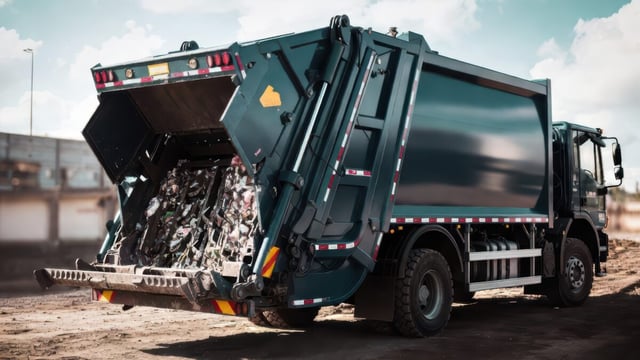
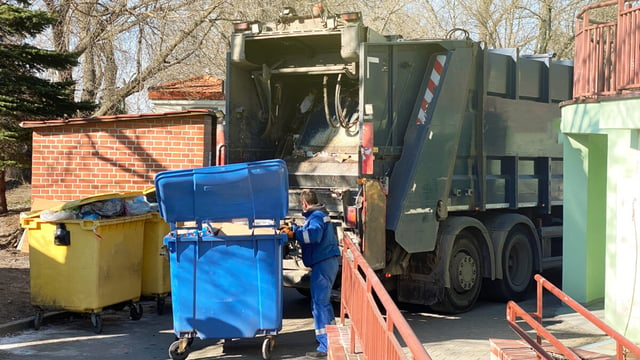
Rematics, the Hasselt-based start-up, said on 10 November 2026 that its Daisy4Truck (D4T) camera system now runs on more than 70 refuse collection vehicles operated by customers including the intermunicipal waste company Limburg.net, which serves 43 municipalities and 925,069 inhabitants in Belgian Limburg and Diest. According to the company’s press release published by Emerce, the fleet analyses about 1.75 million bin emptyings and 157,500 tonnes of waste a year, and pilots are under way in Germany, Spain and the United Kingdom following a May 2026 investment by German equipment maker MOBA Mobile Automation AG.
The announcement accompanied two award nominations: D4T is shortlisted in the Future-defining Technologies category of the Trends Impact Awards 2026, and Rematics is a finalist for Product of the Year in the Made in Limburg awards.
Roughly 25,000 Emptyings Per Truck Each Year
The operating figures, which are supplied by Rematics and have not been independently audited, imply an average of about 25,000 emptyings per vehicle per year across the 70-plus trucks, and an average load of roughly 90 kilograms per emptying when the 157,500 tonnes are divided across the 1.75 million lifts.
Rematics names Limburg.net, Remondis, Gielen Recycling, MilieuService Nederland and Afval Alternatief as customers, a mix of a public intermunicipal authority, a German-headquartered private collector and Belgian and Dutch commercial waste operators.
“The first trucks with our technology were on the road at the end of 2024. Today we analyse thousands of emptyings every day for customers in the Benelux, Germany and soon also the UK and Spain. That proves our application already works in the waste sector today,” said Bram Peetermans, CEO of Rematics, in the company’s 10 November 2026 press release.
A Camera, Lighting And An Edge Device Fitted In Under Four Hours
The D4T kit consists of a camera, a lighting unit and an on-board processing device, and Rematics says installation on a collection truck takes less than four hours on average, a figure that matters to fleet operators who cannot take vehicles off rounds for extended retrofits.
The software processes the entire tipping sequence at 40 frames per second rather than a handful of still images per lift, and according to the company it recognises more than 40 waste fractions as well as non-conforming material and hazardous items such as gas cylinders and batteries, both of which are recurrent causes of fires in compaction bodies and at sorting plants.
The system is designed to work across rolling containers, waste bags and commercial waste collections, and Rematics states that the whole stack was developed in-house.
An earlier profile by the Alliance to End Plastic Waste, which awarded Rematics a US$300,000 grant, described a first prototype installed on a rear-loader in 2024 that identified plastics with accuracy above 70%, against a stated target of 90%, and a neural network trained on public photographs and synthetic data.
What 40 To 50 Percent Recyclable Content Means For Incineration Volumes
In commercial waste streams, D4T measures on average between 40% and 50% recyclable material, according to Rematics, which calculates that at least 63,000 tonnes of recyclable material a year end up in incinerators from the volumes its trucks observe.
That lower bound corresponds to the 40% share applied to the full 157,500 tonnes analysed annually, so it assumes the commercial-waste ratio holds across the household rounds that Limburg.net and other public customers run.
For a public authority such as Limburg.net, which ran a manual sampling campaign in May 2026 in which 50 grey bags from 11 municipalities were hand-sorted into 40 categories, according to VRT NWS, continuous on-truck analysis offers a far larger sample than periodic composition studies, at the cost of relying on visual classification rather than weighed fractions.
MOBA’s €2 Million Stake Ties The System To An Established Bin-Weighing Supplier
MOBA Mobile Automation AG, founded in 1972 and headquartered in Limburg an der Lahn, Germany, made a strategic investment of €2 million in Rematics in May 2026, according to Made in Limburg, which also listed ACA Group and Nuhma as investors.
MOBA already supplies waste collection fleets through its MAWIS product family, which covers RFID bin identification, on-board weighing, billing, ultrasonic fill-level sensors and route telematics, and its website lists AI-based contaminant detection among the MAWIS modules.
Since the MOBA investment, Rematics has opened pilots in Germany, Spain and the United Kingdom, and says it is assessing demand in Southeast Asia and the Middle East, markets where MOBA’s existing distribution network gives a start-up of this size a sales channel it would otherwise have to build.
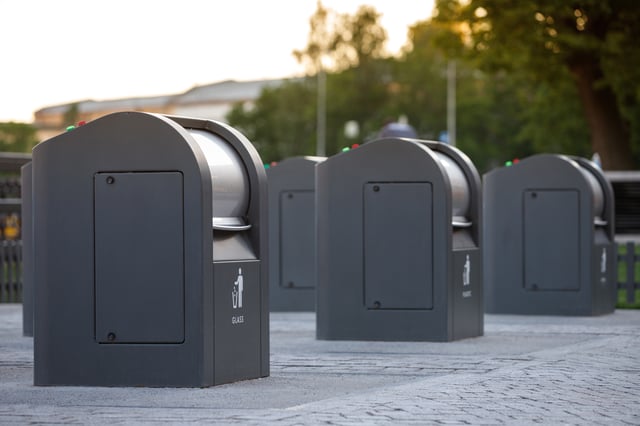
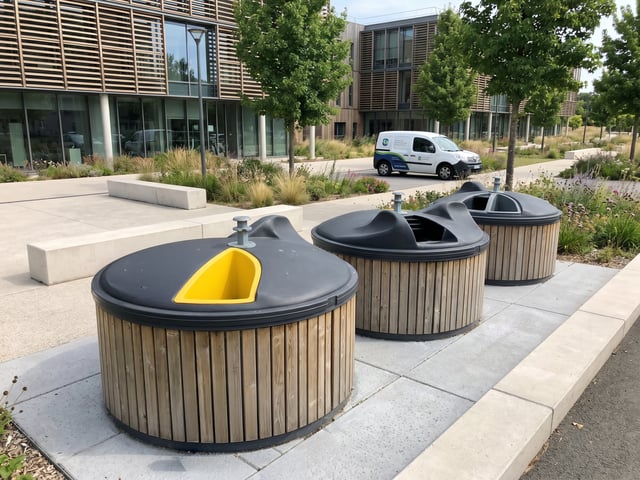
The product roadmap extends the system beyond rear-loader trucks to underground containers, glass bottle banks, organic waste collection and conveyor belts at sorting facilities.
Comparable Camera Systems Already Run On French, US And Brussels Fleets
Rematics is entering a segment with several active deployments: Veolia has fitted collection trucks with optical recognition cameras from Paris start-up Lixo for commercial customers, including four camera-equipped trucks serving about 2,000 businesses in the Bordeaux area since February 2026 and a later extension to the Loiret department.
In the public sector, Mauges Communauté, an authority of about 120,000 residents in western France, began piloting a camera from Grenoble start-up Ficha on a collection truck in February 2026, while the City of Tacoma in the United States used a US$1.8 million Environmental Protection Agency grant to equip trucks with Prairie Robotics cameras targeting recycling contamination.
The commercial case for on-truck recognition in Flanders is tied to residual waste policy: the region’s target of no more than 90 kilograms of residual waste per inhabitant per year by 2030 pushes intermunicipal companies toward data that can link contamination to specific rounds and collection systems.
The pilots in Germany, Spain and the United Kingdom will test whether a model trained mainly on Benelux waste streams holds its classification accuracy across different bin types, packaging formats and sorting rules, and whether operators convert those pilots into fleet-wide contracts once MOBA’s MAWIS hardware and D4T data are offered as a single package.