in Barcelona
 3 to 5 Nov 2026
Seven Emergency Service Districts in northwest Harris County, Texas, have extended a 12-year agreement with Miovision to deploy its Opticom emergency vehicle preemption (EVP) platform across 437 signalized intersections, the companies announced June 17, 2026. The upgrade replaces legacy infrastructure that failed during Hurricane Harvey in 2017 and has since operated without central monitoring, affecting firefighters, paramedics, pedestrians, and cyclists across one of the fastest-growing counties in the United States.
Hurricane Harvey Exposed a Decade-Old Infrastructure Gap
Harris County first deployed an EVP system in 2007, making it an early adopter among large Texas jurisdictions. When Hurricane Harvey struck southeastern Texas in August 2017, floodwaters damaged roughly 25 percent of the county’s signalized intersections. The storm effectively forced a reckoning: the installed technology was more than a decade old, lacked any centralized monitoring capability, and required resource-constrained agencies to manage all maintenance independently.
In the aftermath of the disaster, Harris County, led by a consortium of seven Emergency Service Districts, selected Miovision Opticom EVP for its centralized architecture, interoperability, and subscription-based deployment model. The current announcement formalizes a 12-year extension of that relationship and expands the network to 437 intersections across the northwest portion of the county.
How The Opticom Cloud Platform Works at Intersection Level
Miovision Opticom detects and prioritizes emergency vehicles in near real-time, using a flexible system that allows integration with existing hardware on both vehicles and intersections and is scalable across multiple districts. The cloud deployment removes the need for dedicated in-vehicle transmitters by routing GPS and telematics data from existing vehicle systems through a software layer that communicates directly with signal controllers.
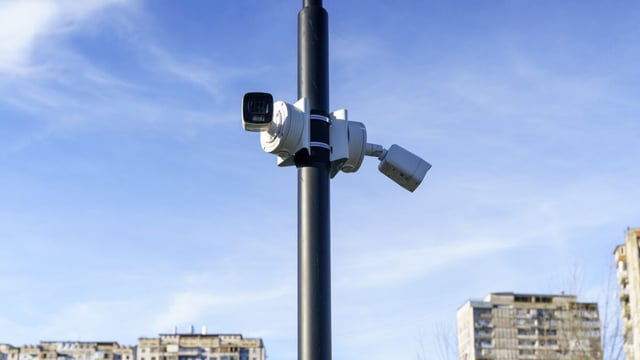
As a Miovision Core customer, an agency can add priority control without any additional hardware at the intersection. Cameras installed at junctions also gather pre-arrival data on incidents, and the system notifies operators within minutes if any signal goes offline, closing a visibility gap that the previous platform never addressed.
By utilizing technologies already present in emergency vehicles, the approach reduces per-vehicle and per-junction costs by eliminating the need for additional dedicated hardware.
The Subscription Model Shifts Maintenance Burden to the Vendor
A key structural difference from the previous deployment is the commercial model. The subscription model places responsibility for repairs and technology upgrades on the vendor, reducing the operational burden on agencies and providing a fixed, predictable cost structure that is critical for government budgeting. For agencies operating under tight staffing and financial constraints, the arrangement removes the risk of unbudgeted maintenance expenses that undermined the earlier system.
“When we saw Miovision’s Opticom system, it was a no-brainer. The fact that we don’t need resources committed to supporting the day-to-day operation of the system is a godsend because in public safety, you never have enough money and you never have enough people,” said Mike Pate, project manager at Harris County Emergency Service District No. 16, in the company’s June 2026 press release. “With the new system, we’ll know within minutes after they finish their work whether the intersection is back up or not. The visibility of the system’s effectiveness was an instant sell with the chiefs.”
The PCaaS (Priority Control as a Service) model also provides deployment flexibility, allowing agencies to leverage existing infrastructure for infrared, radio-based GPS, or centralized cloud-based preemption, and mitigates risk from future natural disasters or physical damage to traffic cabinets.
Scale and Demographics Frame the Operational Stakes
Harris County had a population estimated at 5,045,026 in 2025, making it the most populous county in Texas and the third most populous in the United States. Harris County grew by 48,695 residents in the year to July 2025, placing it first for numeric growth among all U.S. counties, and remains on track to surpass Cook County, Illinois, in population in the near future. That trajectory means demand on emergency services will continue to intensify, amplifying the operational value of preemption infrastructure.
A 2024 industry survey of 2,500 first responders found that nearly half of agencies reported worsened response times compared to the prior year, with traffic congestion cited as the single biggest operational challenge. At the intersection level, the Opticom EVP system has, in published deployments, reduced emergency vehicle delays by 25 percent and cut the risk of intersection collisions involving emergency vehicles by up to 70 percent.
Miovision’s Acquisition of GTT Underpins the Opticom Lineage
The Opticom brand has roots in Global Traffic Technologies (GTT), a Minnesota-based company that developed the infrared-based preemption system from which modern cloud EVP evolved. As previously reported by Kurrantly News, Miovision acquired GTT as part of a broader consolidation strategy that has also included the purchases of Traffop, RapidFlow, MicroTraffic, and Texas-based CJ Hensch & Associates. Opticom has evolved over more than 50 years from infrared to radio/GPS and now to cloud-based priority control, with agencies able to combine legacy and cloud deployments to introduce redundancy not possible in cloud-only architectures.