in Barcelona
 3 to 5 Nov 2026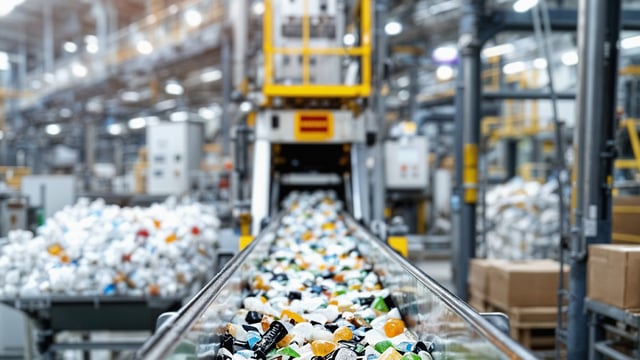
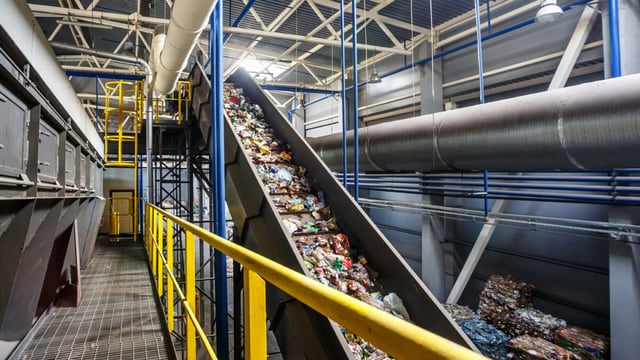
The Kent County Department of Public Works in Michigan is installing an AMP ONE municipal solid waste sorting system at its Waste-to-Energy Facility in Grand Rapids, deploying computer vision and pneumatic sortation from Colorado-based AMP to pull cardboard and select plastics out of bagged trash before it reaches the furnaces. The project, publicised in trade coverage on 10 August 2026 and authorised by the county’s Board of Public Works on 7 May 2026, is sized at roughly 25 tons per hour and is structured as a two-year pilot. It serves a county whose only open landfill is on a finite clock and whose combustion plant is capped by a fixed daily permit.
Why A County That Burns Its Trash Is Now Sorting It First
Kent County runs the only municipal solid waste incinerator in Michigan, and the six metro cities of Grand Rapids, East Grand Rapids, Grandville, Kentwood, Walker and Wyoming are contractually bound by flow control to deliver their waste there. That mandate gives the county a captive, predictable feedstock and a matching problem: the plant is the bottleneck, not the supply.
Removing corrugated cardboard and selected plastics before combustion does two things at once. It converts material that would otherwise be burned into salable commodities, and it changes the calorific profile of what remains, which in a mass-burn plant governs how many tons can be pushed through per day within permitted heat release limits.
Track tenders like this
New smart waste tenders across Europe, flagged daily with an AI summary.
The county frames this as landfill preservation rather than recycling expansion. Ash goes to South Kent Landfill, the last open landfill in the county, and every ton diverted upstream compounds through the system.
A Two-Year Pilot Where The Vendor Carries The Capital
The board voted unanimously to proceed with an AMP ONE sortation system as a two-year pilot at the Waste-to-Energy Facility, with a term sheet minimum of nine months inside an overall 24-month programme.
The cost of installation, maintenance and operation is borne by AMP, and that the county retains the option to negotiate keeping the equipment at the end of the term. That is a materially different risk profile from a conventional capital procurement, and it is the mechanism that lets a county test mixed-waste sortation without committing to a facility rebuild.
Board discussion also noted the arrangement doubles as a reference site for AMP, with the technology being evaluated for use at other waste-to-energy plants. Kent County is, in effect, providing the proving ground.
What 25 Tons Per Hour Means Against A 625-Ton Permit
The Kent County Waste-to-Energy Facility is permitted to process up to 625 tons of municipal solid waste per day and reduces that waste by roughly 90 percent by volume and 75 percent by weight, recovering about 4,500 tons of ferrous metal annually. It entered commercial operation in January 1990.
Board minutes put annual throughput at 180,000 to 190,000 tons against roughly 250,000 tons arriving each year, with the sortation system evaluated at about 50,000 tons annually. At 25 tons per hour across a single weekday shift, that figure is internally consistent and implies the line will touch roughly a quarter to a third of the incoming stream rather than the whole of it.
The gap between 250,000 tons received and 190,000 tons burned is the commercial logic here. Waste the plant cannot take is transferred out at cost, and the minutes indicate transfer and ash budgeting of around $4 million for the year.
How AMP ONE Handles Bagged Municipal Solid Waste
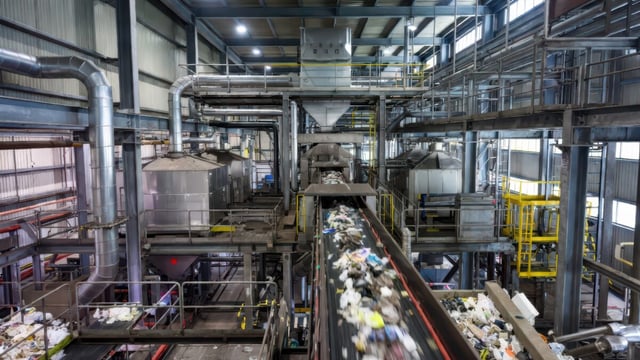
AMP ONE is designed to break open bagged trash and separate it into mixed recyclables, organics and residue using cameras, machine learning and compressed air jets rather than manual picking lines. The company positions the platform at scales from 10,000 to more than one million tons per year, with facilities commissioned in under twelve months.
The technical hurdle in mixed waste is contamination tolerance. Optical systems trained on clean single-stream material degrade quickly on wet, bagged, film-wrapped feedstock, which is why mixed-waste processing facilities historically struggled on uptime and product quality.
In Kent County the target output is narrower than a full materials recovery facility would produce, focusing on cardboard and selected polymers with clear end markets, which lowers the quality threshold the system has to clear.
The Second AMP Deployment In The County
This is not AMP’s first installation for the DPW. With grant funding from the Michigan Department of Environment, Great Lakes and Energy, the county previously acquired three AI-guided sorting robots and eddy current separation for its Recycling and Education Center, a 2009-vintage facility that county officials had described as constrained by both floor space and chronic difficulty staffing sorting lines.
That labour argument recurs in every AMP deployment and is arguably the stronger driver than commodity revenue. AMP’s own case material notes the county estimates 75,000 to 100,000 tons of recyclables reach landfill each year for lack of curbside access, particularly from multifamily housing and small commercial premises.
Virginia Sets The Benchmark This Project Will Be Measured Against
AMP’s reference project is in South Hampton Roads, where the Southeastern Public Service Authority signed a 20-year contract with AMP affiliate Commonwealth Sortation in November 2025 covering eight member communities and 1.2 million residents. The Portsmouth facility reached 108,000 tons of annual municipal solid waste capacity in April 2026 after acceptance testing, with the wider system designed for up to 540,000 tons once fully built out.
That programme has already changed household behaviour, with Suffolk ending curbside recycling collection on 1 July 2026 in favour of single-bin collection and post-collection sortation, a shift Kurrant covered in June. The Virginia projects also pair sortation with organics conversion to biochar, a revenue line absent from the Kent County pilot.
The distinction matters for anyone benchmarking the two. Virginia is replacing a lost waste-to-energy plant with AI sortation; Kent County is bolting sortation onto a working one.
The Regulatory Backdrop Kent County Cannot Control
Board minutes record that the waste-to-energy sector is pursuing both a letter of reconsideration and a petition for judicial review over a federal rule requiring 100 percent availability, seeking a return to a 95 percent threshold, alongside a challenge to nitrogen oxide requirements. Kent County described the outcome as outside its control.
That is the quiet strategic case for front-end sortation. If emissions and availability rules tighten the operating envelope of mass-burn plants, the only remaining lever on throughput is what enters the pit.
The facility has been operated under a long-term service agreement by Vicinity Energy since February 2023, an arrangement the company said would cut county operating costs while retaining the existing workforce.
What Success Would Look Like By 2028
Kent County has committed to reducing landfill waste by 90 percent by 2030, a target that current infrastructure alone cannot reach. A pilot recovering on the order of 50,000 tons a year of pre-combustion material is a step toward that goal, not a solution to it.
The decision point arrives at the end of the 24-month term, when the county must judge recovered commodity value, uptime, and any measurable gain in tons combusted per day against the cost of taking the system on permanently. Board members raised the question of whether the AI could be retrained to pull additional material types, which suggests the county sees the pilot as a platform rather than a fixed configuration.
For other counties running ageing mass-burn plants under tightening permits, that evaluation will be the number worth watching.