in Barcelona
 3 to 5 Nov 2026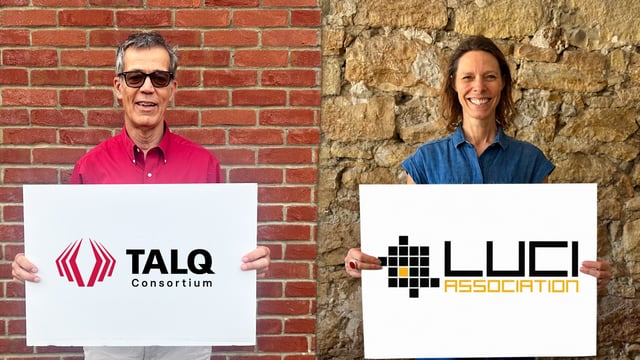
The TALQ Consortium, a global standards body for interoperable smart city technology, and the LUCI Association, a Lyon-based network of cities focused on urban lighting, announced on July 16, 2026 that they have entered a formal collaboration to help municipalities modernize street lighting infrastructure. Under the arrangement, TALQ becomes an Associated Member of LUCI while LUCI joins the TALQ Partner Program, effective July 2026. The partnership pairs TALQ’s vendor-neutral Smart City Protocol, used to manage interactive outdoor lighting and other connected infrastructure, with LUCI’s global network of local authorities and lighting professionals. Both organizations say the goal is to give cities clearer guidance on interoperable architectures as they weigh lighting upgrades against tighter budgets, rising energy costs and growing pressure to cut light pollution.
Why Cities Are Rethinking Lighting Procurement Now
Municipal lighting departments are under simultaneous pressure to cut energy costs, improve public safety and reduce their environmental footprint, often with legacy infrastructure that was never designed for connected controls. Procurement teams increasingly cite the risk of locking into a single vendor’s proprietary control system as a barrier to long-term flexibility, since replacing or expanding such systems later can be costly. That tension between near-term budget constraints and long-term technology flexibility is the backdrop the TALQ Consortium and LUCI Association cite for their collaboration.
What The Membership Arrangement Actually Involves
The collaboration is structured as a reciprocal membership rather than a merger or joint venture. TALQ’s status as an Associated Member gives it a seat within LUCI’s community of cities and associated industry members, while LUCI’s entry into the TALQ Partner Program gives the city network formal input into a technical standards body it does not itself govern. The Partner Program was created for municipalities, utilities and consultants who want influence over TALQ’s direction without producing TALQ-certified products themselves. The two organizations say the first joint outputs, described as shared publications and city-focused events, are expected in autumn 2026.
TALQ’s Protocol And Its Standing In The Industry
The TALQ Consortium, headquartered in Piscataway, New Jersey, develops the Smart City Protocol, an open, vendor-independent specification that lets a single central management system control outdoor lighting networks and other smart city devices from different manufacturers. The consortium reports supporting more than 80 international member companies through its certification and specification work. TALQ released version 2.7.0 of its specification in February 2026, adding support for DALI D4i functionality developed jointly with the DALI Alliance and the Zhaga Consortium, and the full data model remains publicly available on GitHub at no cost. Kurrant, an industry advisory and media firm that tracks smart city interoperability, has previously reported on how TALQ’s functional test cases help cities de-risk lighting investment decisions, a theme that overlaps directly with the procurement concerns the LUCI partnership is meant to address.
LUCI’s Role As A City-Led Advocacy Network
LUCI, short for Lighting Urban Community International, was founded in 2002 at the initiative of the City of Lyon and now brings together more than 70 member cities and towns worldwide alongside over 40 associated members from the lighting industry, design agencies and research institutes. The organization positions itself as the voice of cities on urban lighting policy, publishing advocacy documents such as the LUCI Declaration for the Future of Urban Lighting and convening the annual LUCI Cities & Lighting Summit, most recently held in Oulu, Finland in early 2026. Unlike TALQ, LUCI’s membership is city-led and its focus has traditionally centered on lighting strategy, culture and public space rather than technical protocol development, which is the gap this partnership is intended to bridge.
What It Means For Procurement Risk And Vendor Lock-In
For city lighting departments, the practical value of the partnership lies in pairing strategic guidance with technical implementation pathways. Cities that rely on LUCI for peer benchmarking and policy direction will gain more direct access to TALQ’s open interface specifications when drafting tenders, potentially reducing the chance of specifying a proprietary system that cannot later be swapped or expanded. Both organizations frame this as supporting more competitive procurement processes, since an open protocol allows multiple vendors to bid on compatible hardware and software rather than a single incumbent supplier.
“I’m delighted to make our collaboration with LUCI public, as right from the beginning it felt like a perfect match and all discussions were extremely constructive,” said Simon Dunkley, Secretary General of the TALQ Consortium, in the organizations’ joint July 2026 announcement.