in Barcelona
 3 to 5 Nov 2026
The Municipality of Punta Arenas has been awarded 332,107,699 Chilean pesos (roughly US$359,000) by Chile’s Subsecretaría de Desarrollo Regional y Administrativo, known as Subdere, to replace 600 first-generation streetlights in the city’s downtown core with LED fixtures and a remote telemanagement network. The announcement was made on July 15, 2026, at a press event covering a roughly 14-kilometer grid bounded by Avenida Independencia, Avenida Cristóbal Colón, Avenida Costanera del Estrecho and Calle José Ignacio Zenteno. City officials say the project, formally titled “Mejoramiento del Alumbrado Público con Tecnología LED y Sistema de Telegestión,” will make Punta Arenas one of the first municipalities in Chile to deploy remote managed lighting at this scale outside wealthier Santiago boroughs. Construction is expected to run 180 days once resources are transferred and the works are tendered.
Funding And Geographic Footprint
The 332 million peso allocation comes through Subdere’s regional infrastructure channel and covers the replacement of about 600 light poles concentrated in Punta Arenas’s central commercial district. The scope sits alongside a separate, larger Subdere-backed Programa de Mejoramiento de Barrios effort in the same commune, under which the agency has previously detailed over 1.15 billion pesos in LED lighting investment across outlying neighborhoods, a distinct earlier tranche not part of this telegestión award.
How The Telemanagement Layer Differs From Standard LED Retrofits
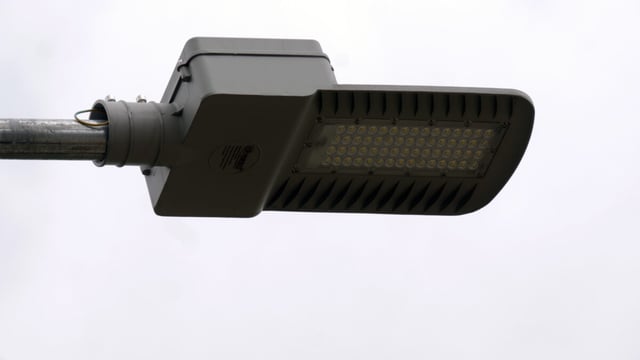
Each of the 600 new fixtures will carry a telegestión node, a networked controller that links individual poles to a centralized municipal monitoring platform. According to municipal officials, the system allows three core functions: automatic fault reporting when a light fails or goes dark, remote dimming and brightness scheduling tied to time of day or weather conditions, and granular tracking of electricity consumption per fixture. Municipal officials have separately said comparable LED retrofits elsewhere in the commune have cut electricity use by as much as 40 percent, though that figure was cited for the broader PMB lighting program rather than confirmed specifically for this 600-node deployment.
This project is heading to tender
New street lighting tenders worldwide, flagged daily with an AI summary.
Circular Reuse Of Retired Fixtures
Rather than scrapping the poles being replaced, the municipality plans to refurbish and redeploy the retired first-generation luminaires in peripheral neighborhoods judged to have weaker lighting coverage. Mayor Claudio Radonich framed this as a secondary benefit of the contract, extending the useful life of existing municipal assets rather than treating the retrofit as a one-way capital expense.
Officials Tie The Project To Public Safety And Local Jobs
At a press conference held at the Mirador Cerro de la Cruz, Radonich, regional presidential delegate Ericka Farías, Subdere’s regional unit chief Javier Labrín, and city councilman Germán Flores presented the award jointly. Radonich described the practical benefit of the automated fault-reporting layer directly: “Cuando haya una luz apagada ya no tendrán que avisarnos, porque el sistema nos informará automáticamente cuál está fallando para repararla de inmediato,” said Claudio Radonich, Mayor of Punta Arenas, at the July 2026 press conference announcing the project. Farías separately linked the upgrade to crime prevention in poorly lit areas and to short-term construction employment during the six-month build.
Where Punta Arenas Fits In Chile’s Smart Lighting Rollout
City officials have noted that telegestión platforms remain limited in Chile outside a handful of wealthier Santiago communes, citing Las Condes and Vitacura as the main municipalities that already operate remote lighting-control systems. That positions Punta Arenas, the capital of the Magallanes region, among a small early-adopter group outside the capital. Industry trackers of streetlighting deployments, including sector coverage from Kurrant, note that LED-plus-IoT-controller retrofits of this kind are among the most widely deployed smart city infrastructure categories globally, often serving as an entry point for wider municipal digitalization projects.
Procurement Timeline And Open Questions
Officials say construction will begin once Subdere formally transfers the funds and the municipality completes a public tender for contractors and equipment suppliers, with works targeted for the second half of 2026 and a 180-day build window. Neither the municipality nor Subdere had named the winning contractor, hardware manufacturer, or the specific telemanagement software platform as of the announcement, and no equipment vendor has been publicly confirmed for this contract.