in Barcelona
 3 to 5 Nov 2026
A federal audit published on April 27, 2026, by the U.S. Department of Homeland Security Office of Inspector General has concluded that AI-powered wildfire detection sensors developed and deployed under a nearly $3 million contract with N5 Sensors, Inc. failed to consistently detect fires or deliver timely alerts to first responders across multiple U.S. states. The DHS Science and Technology Directorate (S&T), which oversaw the program from 2020 through 2024, terminated its contract with N5 at the end of December 2024, and as of April 2025 had no plans to invest further in ground-based wildfire sensor detection technology.
A Program Built to Solve a National Crisis
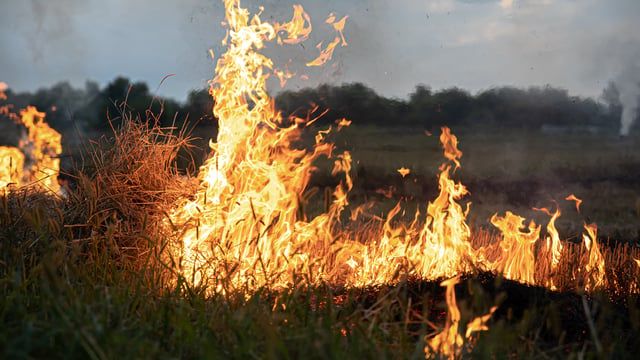
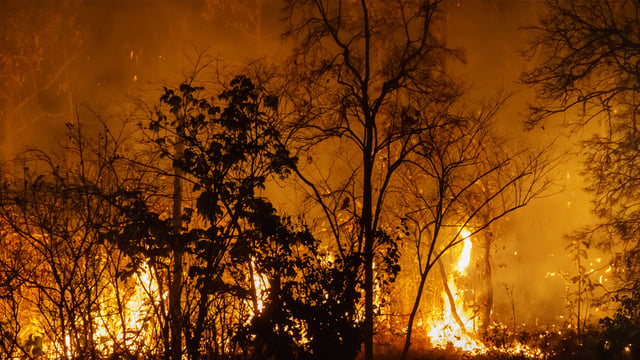
The scale of the wildfire problem in the United States is well documented. An average of 70,000 fires burn roughly 7 million acres annually, with the August 2023 Lahaina, Maui disaster alone claiming 100 lives, destroying more than 3,000 structures, and triggering federal rebuilding costs estimated by FEMA at over $2 billion.
Against that backdrop, the DHS Science and Technology Directorate launched a research and development effort in 2019 in partnership with FEMA and private industry. Beginning in 2020, S&T contracted with four companies, including N5, to develop sensors capable of detecting fires using artificial intelligence to analyze chemical particulates, air quality, temperature, and humidity, and then alerting state and local emergency partners via text and email. N5, a Maryland-based company, markets its technology as capable of detecting ignitions within five minutes when a fire is still only a few square meters in size.
Two Phases, 410 Sensors, $3 Million Spent
The program ran in two distinct stages. During the Alpha phase in 2022 and 2023, N5 tested 110 sensors in real-world conditions at multiple sites to collect baseline performance data. S&T then selected N5 to advance to a broader Beta phase, during which approximately 300 additional sensors were deployed across California, Colorado, Hawaii, Tennessee, and Canada. The Beta phase ran from fall 2023 through December 2024. Total contract expenditure across both phases came to nearly $3 million.
The sensors were not designed to alert the public directly. Instead, they were intended to push alerts to state and local emergency management partners, who would then manage public notification. The system used a web-based dashboard providing 24/7 monitoring alongside real-time text and email notifications.
Where the Technology Fell Short
The OIG’s fieldwork and site visits documented a pattern of failures that cut across multiple locations and operating conditions. In July 2023, a sensor at one Alpha phase location did not detect a fire that ignited approximately 3.5 miles away, even while a nearby camera system successfully identified the blaze and relayed images to first responders. One participating partner told auditors the sensors were, at best, a supplementary tool, and stated a preference for camera-based systems, which they chose to continue using after opting out of the sensor program.
A controlled burn demonstration held in Tennessee in December 2024, with four Beta phase sensors positioned just 20 to 25 feet from an ignition point, produced mixed results: the two sensors positioned downwind of the smoke detected the fire, while the other two did not. In March 2025, four Beta phase sensors placed within a 1.5-mile radius of a residential brush fire in Tennessee failed entirely to detect the event despite one sensor being positioned just 0.5 miles from the blaze.
The alert reliability data from one Beta phase partner between May 2024 and April 2025 was particularly stark: of 13 sensor alerts received, nine were false positives. Of the four genuine fire detections, three alerts arrived only after a 911 call had already been placed. In one case, a sensor just 500 feet from a structure fire did not issue an alert until 45 minutes after first responders had already been dispatched.
“The sensors are not doing what I thought the sensors would do,” one Beta phase partner told OIG investigators, according to the report.
Wind Dependency Exposed a Structural Limitation
The audit identified wind as the program’s core technical obstacle. Because the N5 sensors detect fires by analyzing smoke particulates carried through the air, their performance is fundamentally dependent on the wind direction at the moment of ignition. The final project report produced by S&T itself acknowledged instances where fires went undetected because wind was blowing smoke away from sensors.
One emergency management partner quoted in the OIG report described the problem in direct terms: “You can have all the data in the world to make the program successful, but if the wind blows a certain way, all the data is not going to help, and it is going to miss the sensors.”
S&T officials acknowledged to auditors that the sensors’ AI algorithms were expected to improve with more training data over time. By the end of testing, the sensors had accumulated more than 2 million data hours. However, neither S&T nor N5 could determine how many additional data hours would be required for the AI to reach reliable detection performance, and fires continued to go undetected even at locations where the sensors had substantial operational history. The OIG also noted that N5 lacked a data retention policy, which limited auditors’ ability to conduct a full performance analysis.
Importantly, an S&T official acknowledged that the sensors were never intended to operate as a standalone system, but were envisioned as one component within a broader integrated detection architecture. In practice, the sensors were deployed independently throughout the testing period without complementary technologies.
No Recommendations, No Response from DHS
The OIG issued the report without formal recommendations, noting that S&T had already wound down the program and had no plans to pursue further sensor-based wildfire detection funding. DHS declined to submit management comments. The report was notably delayed in publication due to three government shutdowns during fiscal year 2026, which collectively covered 56 percent of the fiscal year.
A Cautionary Signal for AI-Sensor Integration
The audit arrives at a moment when municipalities and federal agencies are investing heavily in AI-based wildfire detection, often positioning sensors as a key component of next-generation early warning systems. Santa Clara County’s recent approval of 30 N5 sensors at an estimated cost of up to $260,000, with installations expected across the county’s fire-prone eastern and southern areas, reflects continued commercial momentum for the technology even as the federal program has been discontinued.
The broader market is pursuing diverse approaches. Google’s FireSat initiative, developed in partnership with the Earth Fire Alliance and Muon Space, targets satellite-based detection of fires as small as five-by-five meters within 20 minutes. Camera networks such as ALERTWest, operated through the University of Oregon’s Oregon Hazard Lab, now span roughly 1,200 AI-integrated cameras across the western United States. Ground sensor systems remain active at the local level, while satellite-aggregation platforms such as Argentina’s Satellites on Fire have demonstrated the ability to detect fires ahead of NASA’s FIRMS alerts by significant margins.
The DHS audit does not invalidate ground-based sensor approaches broadly, but it does underscore a recurring theme in smart public safety deployments: hardware or software performance in controlled or ideal conditions does not guarantee operational reliability at scale. Integration with complementary systems, whether cameras, satellite feeds, or manned monitoring, appears to be the direction that more resilient detection networks are taking. Whether the federal government will return to funding ground-sensor research under a new architecture, or shift its attention entirely toward camera and satellite-based alternatives, remains to be seen.
Full report available at: https://www.oig.dhs.gov/sites/default/files/assets/2026-04/OIG-26-05-Apr26.pdf