in Barcelona
 3 to 5 Nov 2026
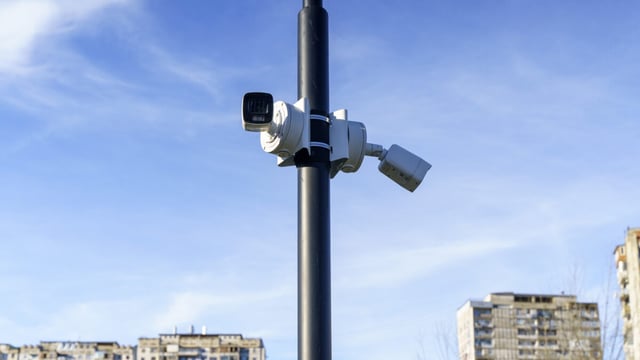
The U.S. Department of Transportation has allocated $982 million through the Safe Streets and Roads for All (SS4A) program to 521 communities across 48 states, 18 tribal nations, and Puerto Rico. The fiscal year 2025 funding round marks the fourth year of a $5 billion federal initiative established under the Infrastructure Investment and Jobs Act, with awards increasingly directed toward technology-driven safety solutions including lidar sensors, AI-powered detection systems, and connected surveillance infrastructure.
Policy Shifts Reshape Grant Criteria
The current administration has revised SS4A program requirements, eliminating environmental justice and diversity, equity, and inclusion (DEI) considerations that previously factored into award selection criteria. The Federal Highway Administration noted in its funding opportunity notice that applications proposing infrastructure that reduces vehicle lane capacity would receive less favorable treatment from reviewers.
Congress also reduced the minimum allocation for planning and demonstration grants from 40% to 30% of annual funding. The FY 2025 round distributed $295.7 million across 454 planning grants and $686.5 million through 67 implementation grants. Approximately $1 billion remains available for the program’s final funding cycle in fiscal year 2026.
This project is heading to tender
New smart mobility tenders worldwide, flagged daily with an AI summary.
Lidar Pedestrian Detection Leads Technology Deployments
Henrico County, Virginia secured $15 million to install lidar-based pedestrian detection systems at 80 intersections identified through high-injury network analysis. The county’s “Arrive Alive Henrico” safety action plan, adopted in May 2025, prioritizes engineering solutions including advanced sensing infrastructure capable of real-time pedestrian tracking and signal coordination.
Lidar technology offers advantages over traditional camera-based detection in low-visibility conditions and provides precise three-dimensional positioning data. Research published by the National Highway Traffic Safety Administration indicates that more than 20% of pedestrian fatalities occur at intersections, making these locations priority targets for detection system upgrades.
School Bus Surveillance Expansion
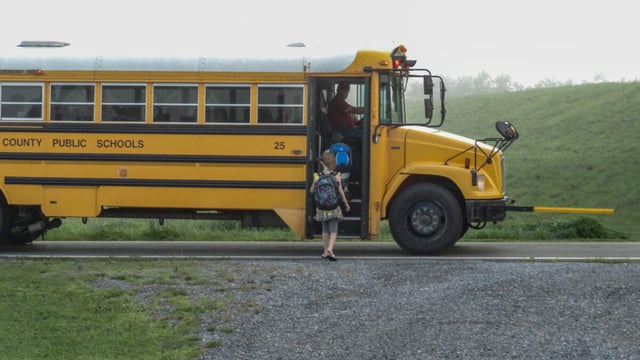
The town of North Kingstown, Rhode Island received $60,000 to equip all 33 school buses in its fleet with stop-arm cameras. The town’s application, developed collaboratively by public works, school district, and police department staff, targets behavioral change around school transportation zones that overlap with the municipality’s identified high-injury network.
Rhode Island enacted legislation in September 2025 requiring all school districts statewide to implement live video monitoring systems on buses by 2032. Providence, North Providence, Warwick, and Cumberland have already deployed such systems, collectively issuing nearly 7,500 violations to motorists since late 2024. The National Association of State Directors of Pupil Transportation Services estimates that school buses nationally experience more than 45 million illegal passing incidents annually.
Intersection Intelligence For High-Fatality Corridors
Phoenix was awarded $24 million for safety improvements targeting six high-injury intersections and two highway corridors. The city had previously secured $25 million through SS4A in 2023 for the ReVISIONing Indian School Road project, which includes pedestrian crossing enhancements, sidewalk additions, and lighting upgrades along a corridor between 91st and 39th avenues.
The Phoenix allocation reflects growing emphasis on data-driven infrastructure investment. The Governors Highway Safety Association reported that while pedestrian fatalities declined 4.3% in 2024 compared to the previous year, they remain nearly 20% above 2016 levels and reached a 40-year peak in 2022. Fatal pedestrian crashes at night increased 84% between 2010 and 2023.
Adaptive Signal Technology Gains Traction
The SS4A program explicitly encourages adoption of innovative technologies including adaptive signal timing systems that modify traffic light patterns based on real-time sensor data. Unlike traditional fixed-timer infrastructure, these systems can extend pedestrian crossing phases, prioritize emergency vehicle passage, and respond to unexpected congestion.
Cities including Las Vegas, Seattle, and Sun Prairie, Wisconsin have deployed AI-powered pedestrian detection systems that integrate with signal controllers to adjust timing dynamically. The Federal Transit Administration collaborated with the National Highway Traffic Safety Administration and Federal Highway Administration on FY 2025 award selections, emphasizing projects demonstrating evidence-based approaches to safety improvement.
Program Performance And Future Outlook
Since 2022, SS4A has distributed $3.9 billion to more than 2,000 communities, representing coverage for approximately 75% of the U.S. population. Implementation grant recipients in the current round addressed roadway segments that collectively experienced around 1,000 fatalities and 7,000 serious injuries over the preceding five years. Half of all awards will benefit rural communities, with more than $340 million directed to rural and tribal areas.
The program supports the DOT’s National Roadway Safety Strategy, which aims to achieve zero roadway deaths through a Safe System Approach. NHTSA preliminary data indicates that overall traffic fatalities declined below 40,000 in 2024 for the first time since 2020, with the fatality rate dropping to 1.20 deaths per 100 million vehicle miles traveled.