 in Barcelona
 3 to 5 Nov 2026
There's something special about being first just take a look at Barcelona one of the first in Europe to implement smart city technologies soon an economy that relied upon manufacturing and commerce became a testing ground for networking sensors and more and it didn't take long for the world to take notice the European capital of innovation award. This year goes to Barcelona. But in recent years, the city has been rocked at its core by politics and protests, leaving some to wonder if the city of the future is falling behind. Definitely, the experimentation, the support to start -ups that was happening has totally changed and now it's more like citizen-driven initiatives. Citizen-driven initiatives are at the heart of Barcelona. Digital Plan, a model for how City Hall will use technology to promote an open, collaborative and transparent government. It's the brainchild of Mayor Ada Colau, an activist turned politician elected against a backdrop of protests. In response to Spain's financial crisis, her backers wanted to regain Barcelona from the political and economic elites, leading to a big shift in the technology -led agenda that initially defined Barcelona's smart city strategy. You know, if- If you think about the government that went between 2011 and 2015, it was maybe a little bit more top-down, more welcoming with corporations, large corporations. Tomás is referring to the administration led by Javier Trias. Trias kick-started Barcelona's high-tech ambitions. He partnered with big tech companies like Cisco and Schneider Electric, and he carried over 80 projects to transform the city's services. Barcelona wants to be known as a city of culture, knowledge, creativity, innovation and well -being. Soon, sensors monitored everything from waste levels to noise in the streets. Having real -time data on the noise is very important because noise can arise, but one second after, it disappears. Barcelona considers noise... one of the most important environmental factors for public health, which is why the city has deployed 150 noise sensors throughout its borders. These sensors are manufactured by the Spanish company SEBA, a department within the City Council that analyzes this data and proposes new policies on how to address the noise pollution. And all of them, if you ask, they are PhD on acoustics and this is very important because they got the ideas very clear what they demand. and they don't want anybody to tell them that they are not right. However, that department isn't the only one with access to this noise data. Anyone can view information from Barcelona's sensor network on the open source platform Sintilo. The advantage of it being an open source software is that any city in the world can adopt and use the data and experiment with new solutions. The idea of open data and the idea of all this platform is... to make it as more as more transparent as as we can in 2012 barcelona unveiled its lighting master plan involved over 200 streets and the installation of over 10 000 new led lights so this is a vertical normal or standard public lighting installation okay but this one especially has communication system to control all the public lighting that you can see around here. The city also upgraded its lampposts to deliver a range of smart city services like Wi -Fi and data on air pollution. Right there what we have is the connection or one of the connections that we saw in the cabinet which with fiber optics you connect that to the Wi-Fi spot. We're also learning that Barcelona's smart lights were not deployed at large scale. Many of the smart lights we're seeing here are limited to the city center. estimates that only about five percent or two thousand lighting points under its management feature a node like this. I think in the future it will be here but nowadays only the city only this the city center is enjoying this. By 2015 the city focused its attention on expanding its city -wide wi -fi and that same year Juniper Research ranked Barcelona as the smartest city in the world. Do you think Barcelona is a smart- No, Barcelona is a very innovation city, always in mobility, for example, but it's very affected by the politicians. Yesus is a sales manager at World Sensing, the company behind the parking centers here outside the popular tourist destination, La Sagrada Familia. Here we have a lot of problems with the mobility of the buses, torrents buses. By this, the council decided three or four years ago to install a lot of sensors to control the time that the buses are stopped here. Now 500 of those sensors were also placed in the Le Quartz district, but under Kalao's administration, that changed. My opinion is that the city needs to invest in these technologies, but at the moment have other priorities. The government that came in in 2015, which is actually the current mayor, which is Ada Colau, was raising the flags of bottom -up processes, citizen participation, in some way was anti -corporations. Upon taking office, Colau's administration reviewed a lot of the smart city tactics and found that some solutions didn't lead to the results they promised. In the case of parking, the city found there wasn't much point in using sensors to direct drivers to spaces. in the city center when those spots filled within seconds of becoming available. In the city center of big cities it makes no sense to do quite the deployment of sensors to make guidance because at the end you have a lot of information that you can have with the smartphones. You know that it's almost always full. Now take a look at the Cintillo platform and you'll see a good number of Herbiotica sensors outside the city center. These sensors are part of Park in Rhymeotica. zones. A new initiative that lets drivers park for free at lots located outside the city center and near public transportation. Why we are doing that now? Because they are putting in place a new regulation for the 1st of January where certain type of cars will not be allowed to enter the city center, okay? And when the pollution will be very high, only the electrical ones will be allowed to enter. It's a type of initiative that City Hall says residents want after taking into consideration feedback from Decidium. This is a platform created by Kalao's administration that lets the public directly engage with the government in a way that mimics social media. It's very good for us because it's not anonymous, it's citizens with their names and surnames. They can debate, they can interact, they can propose new ideas, they can criticize. DECODE is another citizen-driven project. It stands for Decentralized Citizen-Owned Data Ecosystem. It aims to give citizens the power over how they want to share their data. There's just one problem. The decree that was passed by the Spanish government some days ago just forbids this. That's Ismael Pina-Lopez. He's a director general of citizen participation and electoral processes at the government of Catalonia. He filled me in on the details of a decree passed by the Spanish government in November. It declares there's only one digital identity system accepted by Spain and it also allows the spanish government to shut down digital services without a court warrant we believe that this is the future being able to participate everywhere without having to be worried about your identity your privacy or who you are and on the other hand to be able to be have more rich interactions this has been shut down and we will go to the constitutional jury to try if this is or not we believe it is not in the meantime barcelona is pushing ahead with this digital plan in 2019 despite losing the election by less than 5 000 votes callao kept her seat for a second term that same year catalonia was named as europe's 5g innovation hub cisco also opened a co -innovation center in barcelona signaling to some that a new balance is underway between the public and private You know, we cannot say, you know, get out of here, all these corporations, we don't want you in Barcelona, which in some cases it was taught to them. I think it's more like, you know, we want you to be here, but in our own terms. But what do those terms ultimately mean for a smart city's development? If they include more business-friendly policies like we've seen so far, that could be a good thing. After all, those kinds of policies under Barcelona's former mayor are what initially defined Barcelona in the smart city space. And the pullback under the current mayor, Ada Klau, has caused some of that tech to become outdated, as seen in the streetlights and parking sensors. It's also important to mention that a lot of the technology has been limited to the city center and largely revolved around pilot projects. And that lack of full-scale implementation has kept Barcelona from really obtaining the true benefits that that tech can offer, like real-time insights when it comes to traffic congestion or light failures across the city. It'll be interesting to see if the new terms will change any of that. But we want to hear from you. Be sure to hit the link below if you have questions. We'll do our best to get you answers. Till next time, I'm Diana Blass reporting for Current Insights.
Barcelona’s Smart City Strategy Goes From Tech To Citizen-Centric
In this video
-
 Tomás Díez
Director, Fab Lab Barcelona
-
 Marçal Serra Joan
Acoustics CTO, CESVA Instruments
-
 Michael Donaldson
CTO, Barcelona City Council
-
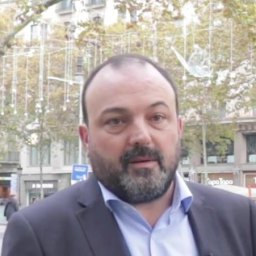 Daniel Bennasar Sans
Technical & Operations Director, Citelum Ibérica
-
 Jesús Barrachina Lisón
Sales Operations Manager, Worldsensing
-
 Marc Boher Genis
Chief Commercial Officer, Urbiotica
-
 Ismael Peña-López
Dir. General of Citizen Participation & Electoral Processes, Catalonia Government
About this video
Barcelona, a city that has always been at the forefront of smart city initiatives, is now undergoing a significant transformation due to changes in leadership, redirecting its digital strategies. Kurrant delves deep into this technological and political shift, examining its implications and effects.
Key insights are provided by Tomas Diez, Tomas Diez, the Director at Fab Lab Barcelona; Marçal Serra Joan, Acoustics CTO at CESVA Instruments; Michael Donaldson, CTO at Barcelona City Council; Daniel Bennasar Sans, Technical & Operation Director at Citelum Iberica; Jesus Barrachina Lisón, Sales Operation Manager at Worldsensing; Marc Boher Genis, Chief Commercial Officer at Urbiotica; and Ismael Pena-Lopez, Director General of Citizen Participation & Electoral Processes at the Catalonia Government.
This comprehensive exploration covers various aspects of the city’s transformation, making it a must-watch for urban planners, smart city enthusiasts, city managers, and anyone interested in the evolving dynamics of smart cities.
Read the transcript machine-generated
Latest Originals
See all 4:45
AI Agents in Digital Twins: Bringing Promises to Life?
 5:57
Nature as a Sensor: Rethinking Smart Cities, Utilities
 2:57
Audio, the Forbidden Fruit of Smart Cities in France
 2:56
Why did the metaverse fail?
 4:54
High-resolution, Predictive Weather Data: The Next Step for Mobility
 5:20
The State of the Smart Traffic Industry in 2026
Latest news
All news- European Commission Sets First-Half 2027 Target For EU Water Digitalisation Action Plan16 Nov 2026
- EIB Lends €95.5M To Nyíregyháza For Water, Wastewater And Stormwater Upgrades16 Nov 2026
- MTA Seeks AI Cameras On Subway Trains To Detect People On The Tracks16 Nov 2026
- Motive Puts AI Dashcam Video Inside Routeware Waste Software, Overage Detection Due In 202716 Nov 2026
Kurrant advisory
Planning a smart city or utility project? Talk to Kurrant.
Behind these interviews is Kurrant's advisory team, working with utilities, cities and the companies that serve them.
- Strategy AdvisoryKurrant is actively involved in resolving the challenges that cities, utilities and industry players are facing.
- M&A AdvisorySmart city and utility expertise for successful deals, turning insights into strategic gains.
- Engineering & ProcurementBetter engineering and procurement decisions, by identifying and developing digital and IoT solutions across use cases.
Or write to us: contact@kurrant.com
Send us a message