 in Barcelona
 3 to 5 Nov 2026
This is Lisbon, the coastal capital city of Portugal that's quickly become a tech city to watch. I really think that in Portugal we have conditions to be like a smart nation. Over the last three years, a growing number of tech companies have hit the scene. Welcome from hundreds of cities and countries. Lisbon became home to Web Summit, one of the largest tech conferences. Google set up shop on the outskirts of Lisbon. Other recent arrivals included Amazon, Cisco, Stradere, and Engie. Plus, the European Commission named Lisbon the green capital of 2020. Lisbon showed very clearly that they're willing to do it right now and right here, and also move fast for the future. We don't want this award to be something that finishes in 2020, and it's something that we will proudly be representing. It was a vindication. that just a decade earlier was better known for its economic troubles and sustainable wins. The 2008 debt crisis crumbled Portugal's economy. The country had no choice but to accept an international bailout that came with harsh, austerity measures. And that was doomsday. GDP fell by almost 8%. Employment declined by more than 13%. Unemployment surged from the 3.8%. It didn't take long for Portugal to carve its own path to recovery, and in 2015, under the newly elected Prime Minister António Costa, that happened. Portugal invested back into its economy, offered incentives to businesses, and reversed cuts to wages and pensions. I want them to remember Portugal as a dynamic, progressive, is open to business country. Today, Portugal's leadership in electric cars is just one example of the payoff that came from those investments. In 2015, Portugal unveiled its action plan for electric mobility. Our lightweight vehicles are all electrical or hybrid. It urged public and government entities to acquire an EV and offered tax breaks to companies and motorists who did so as well. And we just have a very small percentage of hybrid vehicles. for very long journeys. Portugal also laid the groundwork for an electric mobility network that links charging stations using a specific charging card. That network now scales across at least 25 municipalities, but there still aren't enough charging stations to meet the rising sales. The chargers is something that we are investing very much to have it citywide. Also mobility is a top investment area under Lisbon smart city strategy, which also saw an investment in electric bikes. expansion of bike lanes, the development of a low emission zone that prevented cars from entering certain areas of the city and the installation of a monitoring system to better control traffic. The strategy also prioritized the retrofit of buildings to meet clean energy standards and Lisbon collaborated with various stakeholders in the public and private sector to make it all happen. One of the most interesting projects that we have here and one of the most interesting measures was the energy efficiency. of the city hall. We were able to renew the windows, we switched the air conditioning systems, we installed PVs on the roof, and the numbers we have by now show a decrease of around 50 percent of energy usage. Now all together Lisbon plans to spend 307 million euros on smart city projects. This is in addition to funding Agat from the European Union under its Sharing Cities program. This is a 25 million... Euro project that allows cities like Lisbon to test out tech with the hope that these solutions can be replicated elsewhere. One of the more successful examples in Lisbon is the bike sharing system. We started testing with it and it immediately it started to grow and it's spreading all over the city. We have around, if I'm not mistaken, around 900 bikes on the street already. We have around 90, I believe, stations. Now part of what makes Lisbon smart city approach unique is its focus on use cases. The city is invested in an intelligent management platform that presents insights on the status of city services and emergencies in real time. The platform does this with data that's collected from sensors around the city. We got a look at the platform in action at Lisbon's Public Safety Office. They are creating occurrences, registering the occurrences in the city platform. The challenge is to create knowledge with these projects, to create insights with these projects that can help the city to be more efficient, to be more proactive. The sensors use cellular connectivity as a communication network, but that could soon change. Lisbon will launch a LoRa network in 2021 to optimize the way it exchanges data among its IoT devices. We, for now, have a limited capacity to implement the smart metering and the data. movement from all of these gadgets in the city. So for now we are only using cellular technology so we are waiting on some of the implementation. We are waiting for better communication. Also on the horizon an integrated operational center expected to cost around 3 million euros. This will be a central command center where employees from various city departments will work together as a united front using the intelligent management platform. as their guide. The Smart Integrate Operations Center is one of the users of the platform. It's the place where police, the fire department, and civil service department manage the city 24 hours a day. So, it's the center that has a specific goal. Now, right now, many of these solutions we talked about in this story are limited to Lisbon's downtown area. So while Lisbon... Brisbane may not be a smart city yet, it's certainly making the investments and the partnerships to get there. But we want to hear from you, be sure to send us your questions and really any comments with the link below. We'll do our best to get you answers and maybe put together another video. Till next time, I'm Diana Blass reporting for Current Insights.
Lisbon’s March From Financial Distress To Smart City Success
City StrategyConnectivityLisbonLoRaWAN
In this video
-
 Miguel Eiras Antunes
Head, Global Smart Cities, Deloitte
-
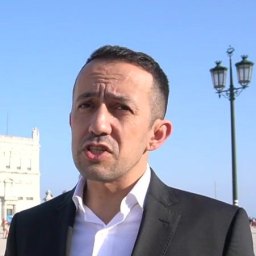 David Cunha
Senior Advisor for IT & Digital Transformation, Lisbon City Council
-
 Sofia Cordeiro
Senior Advisor, Environment Deputy Mayor's Office, Lisbon City Council
-
 João Tremoceiro
Director, Lisbon Urban Management and Intelligence Center, Lisbon City Council
About this video
A decade ago, Lisbon faced a daunting economic crisis, teetering on the brink of collapse. Fast forward to the present, and the transformation is nothing short of remarkable. This dramatic turnaround is the subject of a detailed analysis that examines Lisbon's strategic revitalization through a blend of public and private partnerships, with a keen focus on smart city technology and innovation.
Key to Lisbon's resurgence are its latest investments in cutting-edge technology, which include an intelligent management platform, an integrated operational center, and a pioneering LoRaWAN Network. These initiatives are not just technological advances but represent a profound shift in how the city operates and manages its resources.
The video is enriched with exclusive interviews from leading experts and pivotal figures in this transformation. Miguel Eiras Antunes, Head of Global Smart Cities at Deloitte, offers insights from a global perspective. David Cunha, Senior Advisor for IT & Digital Transformation at the Lisbon City Council, provides an insider's view of the technological evolution. Sofia Cordeiro, Senior Advisor at the Environment Deputy Mayor's Office, Lisbon City Council, sheds light on the environmental implications and benefits of these technologies.
This episode is an essential viewing for urban planners, technology enthusiasts, policymakers, and anyone interested in the dynamics of urban regeneration through technology. It's not just a tale of a city's recovery but a blueprint for how innovative technology, strategic planning, and collaborative efforts can resurrect and revolutionize an urban landscape.
Read the transcript machine-generated
Latest Originals
See all 4:45
AI Agents in Digital Twins: Bringing Promises to Life?
 5:57
Nature as a Sensor: Rethinking Smart Cities, Utilities
 2:57
Audio, the Forbidden Fruit of Smart Cities in France
 2:56
Why did the metaverse fail?
 4:54
High-resolution, Predictive Weather Data: The Next Step for Mobility
 5:20
The State of the Smart Traffic Industry in 2026
Latest news
All news- Bryan Texas Utilities To Replace 50,000 Smart Meters Over Five Years29 Oct 2026
- UK National Parks Launch Wildfire Resilience Programme In Cairngorms29 Oct 2026
- Ameresco Completes $5.9M Water Metering Upgrade Covering 8,000 Meters In Mustang, Oklahoma29 Oct 2026
- Victoria Adds 11 AI Bushfire Cameras To Seven-Unit Plantation Network In A$3.8M Programme29 Oct 2026
Kurrant advisory
Planning a smart city or utility project? Talk to Kurrant.
Behind these interviews is Kurrant's advisory team, working with utilities, cities and the companies that serve them.
- Strategy AdvisoryKurrant is actively involved in resolving the challenges that cities, utilities and industry players are facing.
- M&A AdvisorySmart city and utility expertise for successful deals, turning insights into strategic gains.
- Engineering & ProcurementBetter engineering and procurement decisions, by identifying and developing digital and IoT solutions across use cases.
Or write to us: contact@kurrant.com
Send us a message