in Barcelona
 3 to 5 Nov 2026
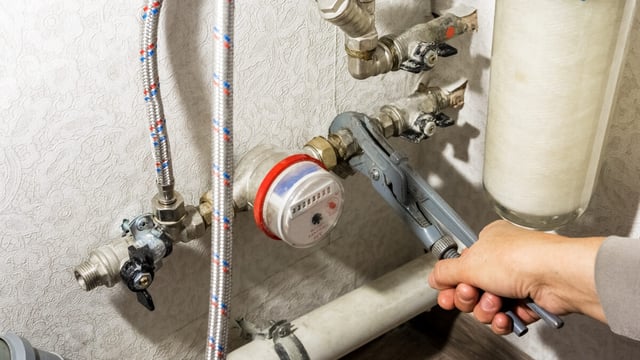
Maddalena, an Italian maker of water and thermal energy meters based in Povoletto, announced the signature of an exclusive distribution agreement with Biesenthal for the German water utility market. Biesenthal is a family-owned water metering company in Weißenthurm, Rhineland-Palatinate, that runs its own metrology laboratory for testing water meters. The two companies signed the agreement on 15 October 2026.
What The Agreement Covers
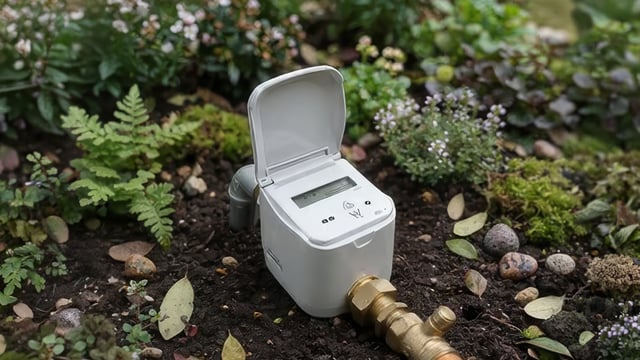
The deal covers every product in Maddalena’s catalogue for utilities, from conventional mechanical meters to smart meters. Maddalena says smart metering and remote reading are the main direction of the partnership, as German utilities gradually digitalise the meters they already have installed.
Maddalena already sells in Germany through its subsidiary Maddalena GmbH. Under the new agreement, Biesenthal becomes its sole partner for water utilities, advising customers on selecting, using and managing meters. Its laboratory can test meters locally, which matters in a market where metrological checks set the replacement cycle.
Why: Germany Replaces Its Water Meters Every Six Years
Under the German Measurement and Calibration Ordinance (MessEV), cold and hot water meters keep their calibration validity for six years. Utilities must then replace them, or extend their use by three years if a sample of meters passes a statistical test, which adds administrative work.
According to industry associations BDEW and DVGW, cited by consultancy Rödl & Partner in May 2026, German utilities replace more than 23,000 water meters every day. A Hamburg Institut study from 2017 put the average replacement age in Germany at about 7.7 years, against roughly 18 years in France and 23 in Spain and Portugal, where needs-based replacement or sampling is more common.
That cycle gives meter makers a large, steady replacement market. Each scheduled swap is also the point at which a utility can choose a remote-reading meter over a like-for-like mechanical one.
The Calibration Rule Is Under Pressure
The cycle may lengthen. On 28 April 2026, the Bavarian state parliament adopted a motion from the Freie Wähler and CSU groups asking the state government to push for a federal revision of the MessEV that would extend calibration periods for water meters.
Supporters argue the six-year limit was designed for mechanical meters with moving parts, while ultrasonic and magnetic-inductive meters have none. Rödl & Partner calculates that a one-year extension would avoid more than 7 million replacements a year, worth €560 million to €840 million at €80 to €120 per swap.
A longer cycle would reduce annual replacement volumes for distributors such as Biesenthal, while making the choice of meter at each swap last longer. For now, a water meter installed in Germany keeps its calibration validity for six years.