 in Barcelona
 3 to 5 Nov 2026
when you think of clean energy, you probably don't think of garbage trucks. In fact, they're among the least efficient on the road. So when New York City announced plans to electrify the entire fleet, it's not surprising where it began. But the city was in for a bumpy road as they quickly discovered that charging a truck like this is a lot harder than the standard sedan. garages are running out of capacity. New York City began its one year test with the Mac LR electric truck in November of 2020. It was the first electric garbage truck tested by a city in the United States, and New York had been prepping for a decade. Installing the DC fast charger was a race to try to make sure it was in place, ready to go. That garage did have ample power. No changes were required. And now as the city looks to expand its fleet and must tackle a key challenge that's come to light. Some garages are big, some garages are small, some garages are new, some garages are old. And some garages may have capacity, electricity, and some may not. As well as, is there space in the garage? And if there is, where is the best place to install all these chargers? So, how can you train? transform outdated infrastructure into modern charging hubs. For U .S. Energy Recovery CEO Carl Gasalik, the answer lies in batteries. And why that's helpful is if you think of electricity as the size of the hose that you have to a site and then you're getting billed for the amount of water that's passing through that hose, the challenge becomes when you install a bunch of DC fast chargers in particular, the requirement for the size of the hose is massive. and you need this inrush of power if you have 10 vehicles hooked up at the same time. But the reality is, even if you have DC fast charging and you have 10 of them, it's unlikely that you have 10 vehicles that all have the same demand, that they need 100% of charge at any given time. And so if you put a battery in the middle, the same analogy with the water, is you're filling that tank up. And then when you come and hook that DC charger up, it's needing that inrush of power from... the battery and feeding that directly into the vehicle to charge it without even having to upgrade the utilities on site. It's why analysts say fleet electrification is a major market opportunity. Not only will cities have to invest in the hardware like batteries and charging stations, but they'll also need to invest in software and services to better manage their batteries and grid capacities. In fact, analysts say that software and services for fleet electrification will amount to a $15 billion opportunity by 2030. And charging network providers like ChargePoint have taken notice. It recently acquired Vericity for 75 million euros in cash. They have a lot of really exciting vehicle-side capabilities. So battery health monitoring, very important when you're talking about using vehicles for work. So adding the Vericity team and customers and technology capabilities helps us get even closer to what's happening on the vehicle side of things. We have actually been delighted by the amount of municipal activity we've seen during COVID. We thought that there would be a greater slowdown than there has been. And what we've seen is that a lot of decision makers are using this as an opportunity to get a lot of construction projects done to start tackling their electrification plans. 150 fleet operators already use Vericity, including cities like Chicago, San Francisco, Toronto, and New York, working specifically with New York's MTA. But now through this acquisition, there's a strong likelihood the Department of Sanitation could use this software as well, since the department already uses ChargePoint's fleet solution to manage its operations. We primarily depend on our own data, even though the electric refuse truck. have telematics installed on them we collect our own data our own data is what time it left what time it returned what was the payload what was the state of charge at the beginning was the state of charge at the end how many stops when we plug it in at the end of the day we know how long that charge cycle was and how many kilowatt hours were consumed during that that charge cycle it's the kind of data fleet operators need to ensure their ev remain charged on the go. Variable route patterns are a top concern among fleet operators, specifically in departments like sanitation, that often invest in solutions to optimize their routes based on areas in need of collection, and that may go against a route best fit for an EV's battery. It might make sense for a city to connect its waste collection optimization with its fleet management to really maximize efficiencies. But in the meantime, New York was shocked to learn. The stated charge at the end of the... day is close to 50 % or slightly below 50%. So that tells us there's plenty of reserve. New York City has since completed its test pilot in Mack truck and it has gone on to order seven with plans to charge only at night. The city declined to comment on how much that cost, but it comes to the city plans to invest 75 million on electric vehicles and electric vehicle charging infrastructure. Meanwhile, other are taking notice. After all, New York City is home to the largest municipal fleet in the United States and its sanitation department is the largest in the world. Philadelphia recently announced that it will invest in electrifying its fleet. L .A. has done the same. Yeah, you can put an electric refuge truck in service in New York City and, you know, if you can make it work in New York City, you can make it work everywhere else. For more coverage like this, be sure to stick with Current Insights. If you have a question, go ahead and check out our website. question on this story, hit the button below.
NYC’s Fleet Electrification Underscores Big Market Opportunity
EV chargingMobilityNew YorkSmart Waste CollectionWaste
In this video
-
 Spiro Kattan
Deputy Director, Dept. of Sanitation of New York (DSNY)
-
 Carl Kasalek
CEO, US Energy Recovery
-
 Colleen Jansen
CMO, ChargePoint
About this video
The video addresses the ambitious goal of New York City to electrify its entire fleet by 2040, focusing on the significant infrastructure challenges that accompany such a transition. It presents NYC's first electric vehicle (EV) case study, featuring the country's first electric garbage truck, as a prime example of these challenges and potential solutions with the participation of Spiro Kattan, Deputy Director at the Department of Sanitation of New York, Carl Kasalek CEO at US Energy Recovery (Now WattLogic) and Colleen Jansen CMO at ChargePoint.
One of the main hurdles highlighted is the current state of infrastructure, which NYC identifies as a critical barrier to achieving a fully electric fleet. The video delves into the specific infrastructural needs for widespread EV adoption, such as charging stations and power grid upgrades. It emphasizes the importance of a robust and accessible charging network to support the operation of electric vehicles, particularly for heavy-duty municipal vehicles like garbage trucks.
Experts featured in the video suggest that software and service solutions are key to overcoming these challenges. They discuss how advanced software can optimize battery health and performance, extending the lifespan and efficiency of EV batteries. This aspect is crucial for large-scale fleet electrification, as it directly impacts the feasibility and sustainability of the transition.
The case study of NYC's first electric garbage truck serves as a real-world example of these concepts in action. The video explores how this pioneering project is navigating the challenges of electrification, including battery management and infrastructure adaptation. It also examines the broader implications of such initiatives for urban sustainability and reducing carbon emissions.
This video is a must-watch for city officials, environmental policymakers, fleet managers, and sustainability advocates. It provides valuable insights into the complexities of electrifying municipal fleets and the innovative solutions being explored to address these challenges. The NYC case study serves as an informative example for other cities embarking on similar green initiatives, offering lessons on infrastructure development, technology integration, and the overall transition towards sustainable urban mobility. Viewers will gain a deeper understanding of the practical steps and considerations involved in moving towards a fully electric fleet in a major urban center.
Read the transcript machine-generated
More in Waste
See all 7:30
Facing Mandatory Residential Biowaste Separation with Smart Solutions
 7:23
How Reykjavik Optimizes Litter Bin Waste Collection, Location
 6:51
IFAT ’22: Circular Economy Shines Light on Smart Waste
 2:08
Mark Dancy on the effectiveness of a pay-as-you-throw program
 8:06
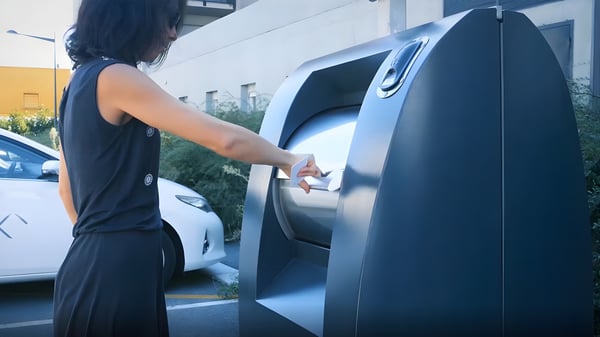
Can Pay-As-You-Throw with Access Control Reduce Waste?
 6:12
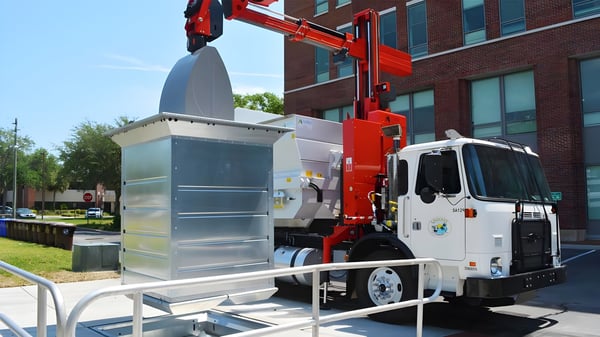
U.S. Cities Invest in Underground Waste Solutions
Latest news in waste
All news- Seoul’s Eunpyeong District Pilots Photo-Based Bulky Waste App Across 220,000 Annual Requests22 Oct 2026
- Kingston University Leads £3.6M National Waste And Recycling Robotics Adoption Hub20 Oct 2026
- Dortmund Installs 92 Sensor-Equipped Big Belly Bins In 14 Parks And Zoo For €367,00019 Oct 2026
- Iraq’s National Investment Commission Announces Smart Waste Collection Scheme For Karbala8 Oct 2026
Kurrant advisory
Planning a waste project? Talk to Kurrant.
Behind these interviews is Kurrant's advisory team, working with utilities, cities and the companies that serve them.
- Strategy AdvisoryKurrant is actively involved in resolving the challenges that cities, utilities and industry players are facing.
- M&A AdvisorySmart city and utility expertise for successful deals, turning insights into strategic gains.
- Engineering & ProcurementBetter engineering and procurement decisions, by identifying and developing digital and IoT solutions across use cases.
Or write to us: contact@kurrant.com
Send us a message