 in Barcelona
 3 to 5 Nov 2026
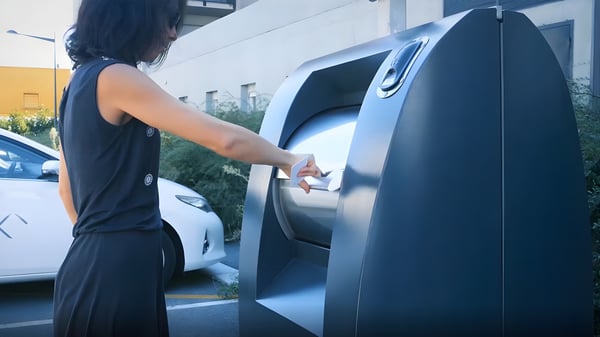
This will help any city that wants to reduce rats, that wants to beautify, that wants to be more efficient, but it is expensive. The biggest problem in America is that cheap has become synonymous with good for solid waste and all cheap is is overflowing dumpsters. Take a walk down a New York City street and you'll likely see this. Piles of trash and a rat. It's pretty much standard operating procedure in the States. Waste collectors pick up trash from the street, from dumpsters and from overflowing trash cans. But in Europe, it's a little different. Waste goes under the ground in massive containers capable of holding 50 times the amount of trash compared to a regular bin. It's a trend that took shape in European cities back in the 1980s and now cons... of dozens of players. So why, then, has the United States been slow to adopt this technology? And could that now be changing? Let's check it out. Now, this is all you see above ground. Since 2017, underground waste containers have been used in the city of Kissimmee, Florida, deployed by the locally owned company Underground Refuse Systems. The company is the exclusive distributor of Nord Engineering's underground waste solution in North Florida. America. The technology was already in use in France, Italy, Spain, Argentina and Turkey. Kiss Me Florida was its first U .S. testing ground, rolling out 17 underground containers. It's going to make it aesthetically pleasing to the downtown area. It keeps the smells more enclosed into the system. The number of containers here continues to rise. Many in the downtown area and four that serve a multifamily housing unit. Here, residents physically ca- carry their waste to these containers, which is in line with the trend in Europe where waste collectors tend to stop at voluntary drop -off sites rather than individual residences. The system has allowed for Kissimmee to cut its waste collection in half, plus the system is space -saving, holding as much as 15 large garbage cans. Kissimmee initially spent about $500 ,000 on 17 containers. much of it on its auto car truck. This is specifically designed with a special crane to lift the container and dispose of the waste. Kissimmee spends roughly $180 ,000 in the truck, in addition to $289,000 for special truck parts like the crane. These are cameras and lasers that line it up for the operator, and then it self -corrects, and there's monitors inside the truck that the... operator can see, make sure he's lined up right, make sure everything is being picked up right. Avrica's sensors are available as an add -on for the city to actively monitor the fill levels within the bins. They operate on a cellular network and share their findings on Avrica's smart waste management platform. Underground Refuge Systems will donate the sensors to a city for the year. At that point, if a city wants to continue using them, they'll pay a monthly fee for the service. Kissimmee is currently testing these sensors and Clearwater, Florida, will be next. We're trying to eliminate repeat trips to service what were essentially just a wire basket that people put trash in that we had to service three, four times a day. The city has invested just over a million dollars in the underground waste system and has so far installed them at busy beaches, a ballpark. We're here in the city of Clearwater at Daycare Ballpark, the home of the Philadelphia Phillies. spring training and basically areas with a high foot traffic stadium holes roughly 10 000. the city will install seven containers and outfit them with sensors once its cellular network is available and so far the impacts of the installations have been noticeable we service that container once a day and perhaps once every other day in fact we deployed big belly here in clearwater about eight years ago i think we have them in our downtown core and we have some out on Strip out on Clearwater Beach as well and they've worked great for us and we were looking at expanding the number of big bellies that we had until we saw this technology. This gives us so much more volume. But there are some areas where Clearwater will have to rely on big bellies. Our initial locations that we wanted to install this was along Mandalay Avenue on Clearwater Beach and it turns out we couldn't do it because of the underground infrastructure that's already there. Phones, gas lines. of that kind of stuff. So could this solution widely be deployed in the United States? It could be a widespread solution that that works for a lot of people not necessarily for everyone. Raleigh North Carolina being one of them in 2019 the city experimented with an underground waste collection system by Moloch. Two months later the city decided to scrap the system altogether. We had an oversight of reaching out to some key stakeholders and you know we received some concerns. Potential. vermin that may be attracted to it. Now Moloch's system does operate differently than the underground refuse system. For one, it's only 60 % underground. Raleigh is also a much larger city than Clearwater or Kissimmee and that points to the challenges of kick -starting new innovation in a mid -size to large city. So we've really focused on cities 25 ,000 to 150,000 because they can get to, yes, cities like New York. boston chicago los angeles you gotta have five meetings with the assistant director of pencil sharpening before you get to the assistant director of paperclips and we're not a charity we can't afford to waste our time that's why we love cities like kissimmee and clearwater and ennis that's right ennis texas is the latest city to invest in the underground refuse system now planning to deploy six containers as part of its renovation project of the downtown area so could this just be a hint of what's to come Be sure to stick with Curt Insights as we continue to dig into this story, and if you have a question or comment, hit the button below.
U.S. Cities Invest in Underground Waste Solutions
About this video
This video delves into the growing adoption of underground waste containers in the United States, a trend that is transforming urban waste management. It highlights the transition of three U.S. cities from traditional wire baskets to a more advanced solution provided by Underground Refuse Systems, incorporating technology from Nord Engineering. Additionally, the video discusses the option of integrating Evreka's filling-level sensors into these systems.
The adoption of underground waste containers in the U.S. is positioned within a broader context of waste management trends observed in continental European cities. These European models have increasingly embraced voluntary waste drop-off approaches, significantly incorporating filling-level sensors and 'pay as you throw' solutions. These innovations aim to optimize waste collection by monitoring waste levels and charging residents based on the amount of waste they dispose of.
We specifically focus on why cities like Clearwater and Kissimmee in Florida are now choosing to invest in underground waste container systems. It explores the benefits of such systems, including improved aesthetics, enhanced public hygiene, and reduced environmental impact due to decreased frequency of waste collection. The use of filling-level sensors allows for more efficient waste collection schedules, potentially leading to cost savings and a reduction in the carbon footprint associated with waste management.
Audiences interested in urban planning, sustainable city development, and innovative waste management solutions will find this video particularly informative. It offers insights into how cities in the U.S. are learning from European models to enhance their waste management systems. By exploring the motivations and benefits behind the adoption of underground waste containers and smart technologies like filling-level sensors, the video provides a comprehensive overview of the evolution of urban waste management practices. This makes it a valuable resource for municipal decision-makers, environmentalists, and anyone interested in the intersection of technology and sustainable urban living.
Read the transcript machine-generated
More in Waste
See all 7:30
Facing Mandatory Residential Biowaste Separation with Smart Solutions
 7:23
How Reykjavik Optimizes Litter Bin Waste Collection, Location
 6:51
IFAT ’22: Circular Economy Shines Light on Smart Waste
 2:08
Mark Dancy on the effectiveness of a pay-as-you-throw program
 8:06
Can Pay-As-You-Throw with Access Control Reduce Waste?
 6:07
Angers, France: The Next Intelligent Territory?
Latest news in waste
All news- Seoul’s Eunpyeong District Pilots Photo-Based Bulky Waste App Across 220,000 Annual Requests22 Oct 2026
- Kingston University Leads £3.6M National Waste And Recycling Robotics Adoption Hub20 Oct 2026
- Dortmund Installs 92 Sensor-Equipped Big Belly Bins In 14 Parks And Zoo For €367,00019 Oct 2026
- Iraq’s National Investment Commission Announces Smart Waste Collection Scheme For Karbala8 Oct 2026
Kurrant advisory
Planning a waste project? Talk to Kurrant.
Behind these interviews is Kurrant's advisory team, working with utilities, cities and the companies that serve them.
- Strategy AdvisoryKurrant is actively involved in resolving the challenges that cities, utilities and industry players are facing.
- M&A AdvisorySmart city and utility expertise for successful deals, turning insights into strategic gains.
- Engineering & ProcurementBetter engineering and procurement decisions, by identifying and developing digital and IoT solutions across use cases.
Or write to us: contact@kurrant.com
Send us a message