in Barcelona
 3 to 5 Nov 2026
Sensoneo, a Bratislava company that builds software for waste management and deposit return systems, is developing the central information system for DRS Hellas, the non-profit operator of Greece’s new deposit return scheme for drinks containers, Netweek reported on 17 November 2026. The work follows the licensing of DRS Hellas by the Hellenic Recycling Organisation (EOAN), whose board approved it on 9 November 2026.
Why: A 90% Collection Target From 2029
DRS Hellas was set up by beverage producers and retailers and reinvests any surplus in the system, according to the operator’s announcement. The scheme covers single-use plastic bottles and aluminium cans up to three litres, with a deposit of €0.10 on containers up to 0.5 litres and €0.15 on larger ones.
Its target is separate collection of at least 90% of these containers from 2029, the level the EU’s Packaging and Packaging Waste Regulation sets for single-use plastic bottles and metal drinks containers. Industry investment in the network is about €260 million, and it is sized for roughly 5 billion containers a year, AL Circle reported.
The central system is where deposits are charged, refunded and settled. Drinks producers and retailers have to connect their own systems to it before launch.
How The Platform Is Built
The system runs on Microsoft Azure and combines three applications. DRS 2.0 handles the core deposit functions, TBS 2.0 manages reverse logistics and collection route planning, and Microsoft Business Central handles finance and automated clearing.
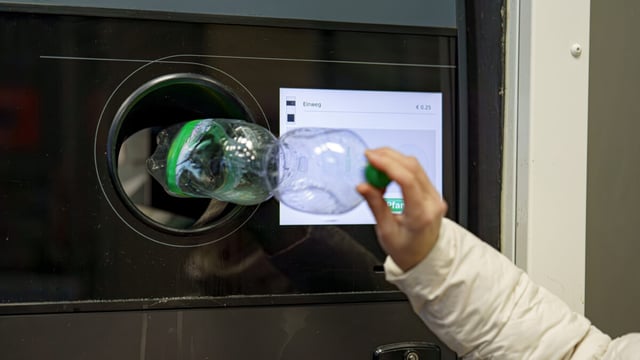
APIs link the platform to the ERP and point-of-sale systems of drinks producers and retail chains. Sensoneo says the platform works with reverse vending machines from any manufacturer as well as manual return points, and pools data on volumes, material types and machine status.
Containers are identified by barcode and the DRS mark. Deposit vouchers are issued and redeemed through a Central Redeem Server that retailer tills reach through encrypted API calls.
The server checks and locks each voucher, then deactivates it once used. Consumers can therefore redeem a voucher at any participating retailer, whatever the point of return, but only once.
Sensoneo’s Other National Schemes
As we reported, Eco-Ret Moldova selected Sensoneo on 6 November 2026 to build the central system for Moldova’s deposit return scheme. The company’s software also runs Romania’s RetuRO scheme, which launched with nearly 80,000 collection points, and Ireland’s Re-turn scheme.
What Happens Next
Before going live, DRS Hellas and Sensoneo plan phased integration tests with producers, retail chains and other partners to check data exchange and financial transactions. The network is to reach 8,700 return points within 2027, about 3,700 of them reverse vending machines and 5,000 manual points, with about 65% in place at launch.