 in Barcelona
 3 to 5 Nov 2026
I think what we typically do is a full pay-as-you-throw program. We will do what are called overflow, but where it's most effective, every single pound of trash that you throw away, essentially, you're paying for. There are other towns where they'll say you can throw away up to 64 gallons, and then anything above that you'll pay for. And those are less effective. And the ones that do 96 gallon and then they will call themselves pay as you throw. But fundamentally, if you have 96 gallons of trash a week, you're generating a lot of trash. So you're not really being impacted and your behavior isn't changing. So we'll see in communities anywhere from a 10 to 45 percent waste reduction. But if you have a full pay as you throw, you're typically going to end up with 40 to 45 percent waste reduction. What's interesting is that in the U .S., it's primarily smaller to mid -sized towns that do it. But internationally, Zurich has a program and Seoul, South Korea has a program. And they also saw when they initially started their programs, a 40 percent waste reduction, which is, you know, so human behavior around the globe is is really not that different. Once you start charging for things, people react to that. It's not it's it's common sense, but it just. I think the magnitude of the change is pretty shocking to people. One of the other things that we did in our talks with New York was we talked about counterfeiting pay -as -you -throw bags and that a city the size of New York would likely face that challenge. So we developed, again, a QR coding system where if they had an enforcement agent, they could scan the bag, know whether that bag was in the batch or not. then there'd be a second code with a date that would be, they'd be able to verify that that bag was made in our, you know, at a facility that the city had approved.
Originals Industry leaders Waste
Mark Dancy on the effectiveness of a pay-as-you-throw program
Industry leadersSmart Waste CollectionWaste
In this video
-
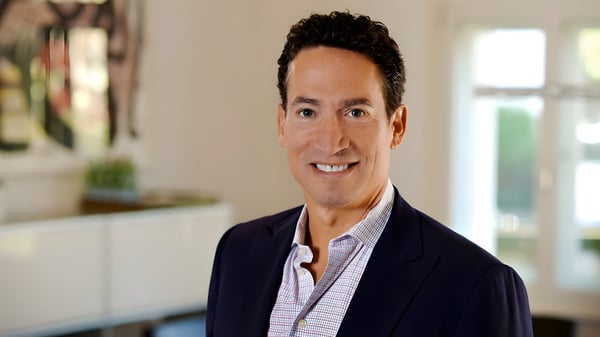
 Mark Dancy
President, WasteZero
About this video
In this segment of our coffee talk series, we delve deeper into the fascinating topic that was introduced in our recently released documentary. The focus of the documentary, and now our discussion, centers around the innovative efforts of various cities to reduce waste production.
One such effort that has garnered attention is the pay-as-you-throw program, which incorporates access control mechanisms to manage waste more efficiently. Mark Dancy from WasteZero shares his insights on the program's impact. Mark discusses not only the effectiveness of this approach in the United States but also its global implications and successes.
Furthermore, Mark sheds light on a particular challenge that emerged in the city of New York as a direct consequence of implementing this new waste management strategy. He elaborates on the security risk that arose.
This conversation provides an glimpse of innovative waste management strategies and their broader implications.
Read the transcript machine-generated
More from Industry leaders
See all 1:12
Paolo Nesi: Wi-Fi Vs. Cameras for People Counting
 2:39
Syliva Haack on urban resilience related to water infrastructure
 1:48
João Matos Discusses the Challenges of Wildfire Detection
 5:20
Ubiik CTO on Diversifying IoT Connectivity Technologies
 5:34
Keys to Success in Mobility and Smart City with Gianluca Longo
 7:42
VC Fund: B2B Companies Offer Smart City Perks
More in Waste
See all 4:24
Miami-Dade County Turns to Smart Solutions, AI to Improve Recycling
 4:38
AI Helps City of Basel Keep Streets Clean
 3:28
How Oxford Is Turning Canal Pollution Into a Smart City Opportunity
 4:35
Digitalizing Waste Management in Extreme Weather: Lessons from Lethbridge
 7:59
PortsToronto Uses Wastesharks to Keep Floating Rubbish at Bay
 7:30
Facing Mandatory Residential Biowaste Separation with Smart Solutions
Latest news in waste
All news- Seoul’s Eunpyeong District Pilots Photo-Based Bulky Waste App Across 220,000 Annual Requests22 Oct 2026
- Kingston University Leads £3.6M National Waste And Recycling Robotics Adoption Hub20 Oct 2026
- Dortmund Installs 92 Sensor-Equipped Big Belly Bins In 14 Parks And Zoo For €367,00019 Oct 2026
- Iraq’s National Investment Commission Announces Smart Waste Collection Scheme For Karbala8 Oct 2026
Kurrant advisory
Planning a waste project? Talk to Kurrant.
Behind these interviews is Kurrant's advisory team, working with utilities, cities and the companies that serve them.
- Strategy AdvisoryKurrant is actively involved in resolving the challenges that cities, utilities and industry players are facing.
- M&A AdvisorySmart city and utility expertise for successful deals, turning insights into strategic gains.
- Engineering & ProcurementBetter engineering and procurement decisions, by identifying and developing digital and IoT solutions across use cases.
Or write to us: contact@kurrant.com
Send us a message