 in Barcelona
 3 to 5 Nov 2026
Only about 15 % of the Earth's surface has access to terrestrial connectivity, the kind of coverage provided by cellular and IoT networks that struggle to perform in remote areas like this. But satellite communication could change that. Satellite networks have become more accessible than ever thanks to the rise of new market players. Pricey. geostationary satellites traditionally led the market with a focus on high data rate applications but recently those operators have shifted their offerings to include flexible data plans on a push to compete against a cost-effective offerings provided by low earth orbit satellites Leo technology isn't new but a recent brush and proposals has created an entirely new race to space what does this mean for IOT and broadband Let's take a deeper look. Geostationary satellites are located on a high orbit directly above the equator. They rotate with the Earth, continuously staying above at the same point. About three geo satellites can virtually provide a global network coverage, apart from the pole regions that they can't reach. They typically require a gateway, such as a VSAT dish or a BGAN terminal on the terrestrial side to establish... directional connection. They cost a few thousand euros to install. It's not the most cost-effective solution. Connectivity prices can exceed a hundred times the cost of a terrestrial one, depending upon usage, coverage, speed, and the operator. The need for a gateway is a top challenge for IoT devices that need to be distributed in large areas. Because the devices are not fully autonomous and they need to stay grouped within connection reach. Another challenge is latency, causing a delay that presents problems for applications like V2X. But Geo is still a reliable solution for broadband connectivity in IoT, especially considering its long presence in the market. Use cases involving time -critical data and high device density make the most sense, since these are instances where the high costs can be written off. Some examples include monitoring of oil and gas equipment, mines, vineyards, and critical infrastructure. Low-Earth orbit satellites are generally less expensive and much smaller than geostationary satellites. Unlike geosatellites, they circle around the Earth at lower altitudes in between 160 to 2 ,000 kilometers, about 120 to 1,200 miles, and take just about 90 minutes to circle the Earth. Individually, their coverage is limited, but when in constellation, they pass data between themselves like an orbiting mesh network providing a continuous global coverage. SpaceX Starlink and OneWeb are among the two most notable names in this sector, but unlike Starlink, OneWeb is gearing its internet services to businesses rather than consumers. Today there's a lot of expectations when it comes to this technology specifically in tackling the digital divide. and offering connectivity for technologies like v2x and we're learning some will focus on low power low data iot use cases swarm is one example the u .s based startup recently acquired by spacex offers ultra low bandwidth data service to its 120 sandwich size satellite constellations they provide near permanent global coverage for five dollars a month swarm adopted the lorwan protocol allowing its satellites to establish bi-directional communication with tiny low -power modules that once embedded into IoT devices and sensors allow direct device to satellite connectivity. Another interesting solution comes from a partnership involving the cloud provider Sennet, TrackAssure, Wild Networks and Utilsat in creating a hybrid connection that uses LoRaWAN devices capable of switching from a terrestrial network to a non-terrestrial one when coverage is not available. A small module developed by Wild Network will enhance the lower -weighing connectivity reach. When a shipping container reaches a port in Los Angeles and they drive three days inland, you will have a tracker on that container that will prefer the terrestrial network when it needs to communicate things like location, temperature, humidity. whether the cargo containers had a major shock, you know, been hit by something. So you'll prefer the terrestrial network until you need to communicate and you can't reach the terrestrial network, and you'll automatically go to the satellite network. Supply chain challenges will clearly benefit from this partnership, as will smart city use cases like this one. We're also working on a use case in the western United States. where there is a massive problem with forest fires. And so with this kind of technology, you can develop a very, very low-cost sensor. And you could put a sensor in every mile that's looking for smoke, that's looking for lightning strikes, and those kinds of things that can be predictive in terms of telling authorities whether you either have a fire or you have a chance for a fire. Details on pricing have yet to be announced, but we should learn more as the pilot are completed, but here's what we do know. This technology will be more expensive than the traditional terrestrial network, but it should be cheaper than the geosatellite connectivity. Luke Perard, Senior Vice President of IoT Business at Unisat, explained that today this satellite connectivity is unidirectional and based on a model of store and forward, which does not require continuous satellite coverage. That makes communication intervals adaptable. to different use cases. This allows clients to save more on connectivity costs. Satelliot is another player making moves in this space but with a slightly different solution. It's offering an NB -IoT hybrid terrestrial non -terrestrial network, eliminating the need for a proprietary module to connect the devices to the satellite. Today you could find some IoT satellite conservations. that deliver coverage everywhere. The problem with dogs it's they are proprietary then you have to be sure that once you buy an equipment okay this equipment will be just working with one constellation and that this if this constellation disappears like it's happening lately okay then you could do nothing with that with equipment. Satelli Ott like many of the other players we discussed so far is looking to make the connectivity more accessible by pushing the prices down. We are closing deals with the mobile operators in order that the ARPU or the satellite IoT is close to twice the one with the terrestrial, which is ten times lower than the current Our plan is to have the first commercial service, key So there has been tremendous movement in this space, and it's exciting to see what could happen next. New hybrid models are emerging, pushing prices down even further. And while it could be a while before satellite networks overtake terrestrial ones, it's certainly allowing for IoT applications to flourish in a way that wasn't possible before. For more coverage like this, be sure to stick with Current Insights. this story, hit the button below.
Satellites: A Game-Changer for IoT & Broadband
In this video
-
 Bruce Chatterley
CEO, Senet
-
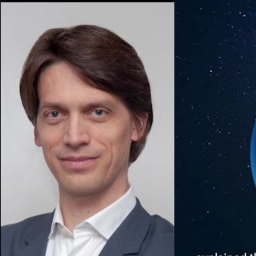 Luc Perrard
Senior Vice President of IoT Business, Eutelsat
-
 Jaume Sanpera
CEO, Sateliot
About this video
Satellite networks have long been a crucial technology for providing connectivity to some of the most remote and inaccessible areas on earth. Historically, the value of these networks was often overshadowed by their high costs. In this insightful video, viewers will be introduced to the transformative evolution of geostationary satellite offerings. The content delves deeply into the significant market impact that has unfolded following the entry of numerous low earth orbit (LEO) satellite players. This influx has sparked a new and competitive “race to space,” a phenomenon that is reshaping the landscape of global connectivity.
Additionally, the video highlights the burgeoning opportunities in the Internet of Things (IoT) arena, made possible by these advanced satellite networks. Previously unimaginable IoT possibilities are now within reach, thanks to these technological advancements. The video features insightful discussions from industry experts, including Senet’s Bruce Chatterley, Eutelsat’s Luc Perrard, and Sateliot’s Juan Sanpera. They offer their perspectives on the dynamics of this emerging market and the future trajectory of satellite connectivity.
This video is an essential watch for professionals in the smart city and telecommunications industries, as well as policymakers, researchers, and students interested in space technology and its applications. It's also highly recommended for entrepreneurs and business leaders looking to understand the potential of IoT and how satellite technology can open new avenues in various sectors.
Read the transcript machine-generated
Latest Originals
See all 4:45
AI Agents in Digital Twins: Bringing Promises to Life?
 5:57
Nature as a Sensor: Rethinking Smart Cities, Utilities
 2:57
Audio, the Forbidden Fruit of Smart Cities in France
 2:56
Why did the metaverse fail?
 4:54
High-resolution, Predictive Weather Data: The Next Step for Mobility
 5:20
The State of the Smart Traffic Industry in 2026
Latest news
All news- SWW Wunsiedel Hands Smart Meter Rollout For 14,000 Metering Points To Octopus Unit Energy Metering18 Nov 2026
- Moldova’s Deposit Return Operator Eco-Ret Picks Sensoneo To Build National IT Platform18 Nov 2026
- Lecce Pilots In-Ground Sensors To Flag Misuse Of 10 Disabled Parking Bays18 Nov 2026
- Jerusalem Completes Vehicle LiDAR Pilot To Build Digital Records Of Public Trees17 Nov 2026
Kurrant advisory
Planning a smart city or utility project? Talk to Kurrant.
Behind these interviews is Kurrant's advisory team, working with utilities, cities and the companies that serve them.
- Strategy AdvisoryKurrant is actively involved in resolving the challenges that cities, utilities and industry players are facing.
- M&A AdvisorySmart city and utility expertise for successful deals, turning insights into strategic gains.
- Engineering & ProcurementBetter engineering and procurement decisions, by identifying and developing digital and IoT solutions across use cases.
Or write to us: contact@kurrant.com
Send us a message