A three-year public-private initiative has launched in southern Spain to address one of the country’s most persistent infrastructure challenges: water losses from urban distribution networks. The SMARTFLOW project, led by Veolia and Cetaqua-Centro Tecnológico del Agua, will deploy AI-powered tools to detect leaks in real time across two coastal municipalities in Andalusia, targeting networks where seasonal tourism creates volatile demand patterns that make manual loss detection particularly difficult.
Andalusia at the Epicenter of Spain’s Water Stress Problem
Andalusia is not just facing water scarcity in the abstract. According to Spain’s national statistics institute, Andalusia recorded the largest volume of water losses from urban supply networks of any autonomous community, reaching approximately 129.6 million cubic meters in 2020.
Across Spain, water leakage runs at around 22%, well above the Netherlands’ rate of roughly five percent, and the structural causes are well documented. According to the Spanish Association of Water Supply and Sanitation, a large share of water supply networks have been in operation for more than 40 years , and underinvestment in maintenance has deepened the problem over time.
The challenge is compounded in coastal tourist zones. Municipalities along the Costa del Sol and in Almería province experience demand spikes during summer months that strain network capacity and mask leak signals in consumption data, making conventional monitoring tools less reliable.
Two Pilot Zones, One AI Platform
SMARTFLOW will be deployed in the Costa del Sol in Málaga and in Roquetas de Mar in Almería, both coastal tourist areas where seasonal water demand complicates resource management.
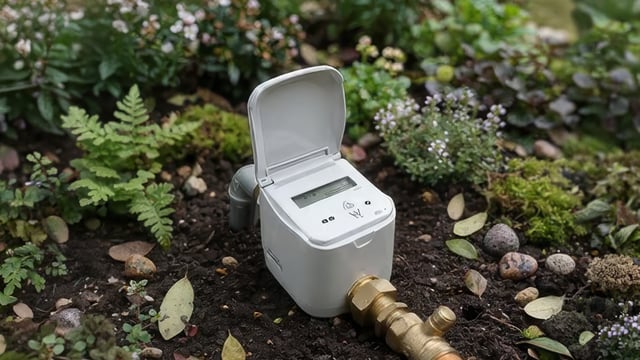
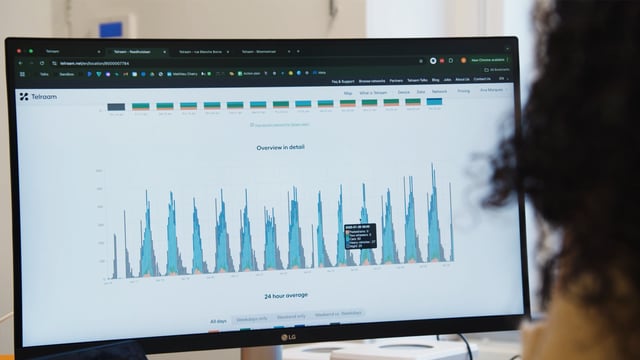
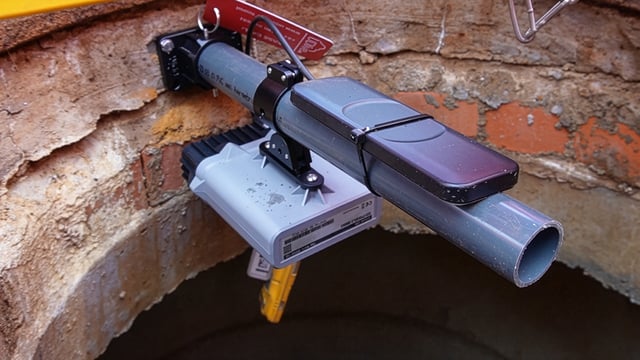
The technical architecture centres on integrating data streams from smart meters into a machine learning platform designed to flag anomalies in distribution networks and inside individual properties. The system will process flow and pressure data continuously, enabling utilities to identify and localize losses without waiting for visible surface breaks or customer complaints.
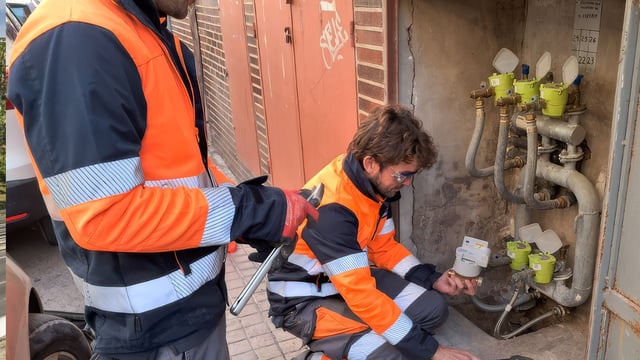
Over the project’s three-year duration, pilot deployments will allow the consortium to evaluate the performance of the smart sensors and the leak detection system, using results to refine AI algorithms and improve the precision of real-time loss localization.
The project also includes a consumer-facing application that will notify end users of suspected household leaks, provide water consumption guidance, and handle billing queries. A large language model (LLM)-based AI agent embedded in the app is intended to allow customers to interact with utility services through natural language, a feature that moves the initiative beyond pure network monitoring into active demand management.
A Public-Private Structure Built Around Complementary Roles
Veolia brings its operational water management expertise and its digital solutions division to the project, having established itself as a significant actor in Spanish water digitalization more broadly. As we previously reported, Veolia secured approximately 40% of all subsidies awarded to private operators under Spain’s PERTE Water Digitalization programme, capturing €76 million in grants across 17 projects spanning 209 municipalities and expected to reach more than 6.2 million inhabitants.
Cetaqua contributes the applied research and AI development layer. The centre applies artificial intelligence and next-generation software architectures to develop digital services that improve decision-making in water operations, from water quality prediction to network efficiency optimization and asset lifecycle management.
Hidralia, the Seville-headquartered utility that manages the integrated water cycle across seven of Andalusia’s eight provinces, provides the operational ground-level context and the service concession infrastructure through which the technology will be tested with real users and real networks.
Regulatory Alignment and Replication Potential
SMARTFLOW responds to the mandate to reduce water losses established under the revised EU Drinking Water Directive, and is aligned with Spain’s State Plan for Scientific, Technical and Innovation Research, particularly its Strategic Line for Water, Seas and Oceans, which identifies digitalization as a key element for sustainable management of the full water cycle.
The revised European Drinking Water Directive requires Member States to assess leakage levels from suppliers producing more than 10,000 cubic metres per day or serving more than 50,000 people, and to report findings to the European Commission by early 2026. By early 2028, the Commission will define a leakage threshold above which Member States must present an action plan. SMARTFLOW’s timeline therefore aligns with a period of increasing regulatory scrutiny of non-revenue water across the EU.
The project’s consortium has also indicated an intent to design the solution for portability. If validated in Andalusia’s demanding operating environment, combining high seasonal variability, aging networks, and water stress, the platform could be adapted for other Mediterranean regions facing comparable conditions.
Situating SMARTFLOW in a Broader AI-for-Water Trend
SMARTFLOW reflects a wider shift in how European water utilities are approaching loss reduction. The combination of smart meter data with machine learning-based anomaly detection is increasingly seen as a more cost-effective path than physical pipe replacement alone, particularly for densely built coastal networks where excavation is disruptive and expensive.
Comparable AI-assisted approaches have been deployed elsewhere in Spain with measurable results. has reported that its SIWA Leak Finder system, implemented by a utility in northern Spain, detected more than 10,000 events including leaks, pressure anomalies, and sensor failures since 2017, while also managing seasonal consumption changes driven by summer tourism. We also covered Microsoft and Aganova’s AI-powered leak detection initiative near Madrid, which uses acoustic and pressure sensors to identify pipe-level failures in trunk mains.
What distinguishes SMARTFLOW is the integration of an end-user engagement layer alongside the network monitoring component, a design choice that reflects growing recognition that reducing non-revenue water requires not only detecting utility-side losses but also making household-level leak management accessible to consumers.