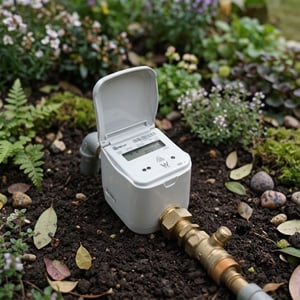
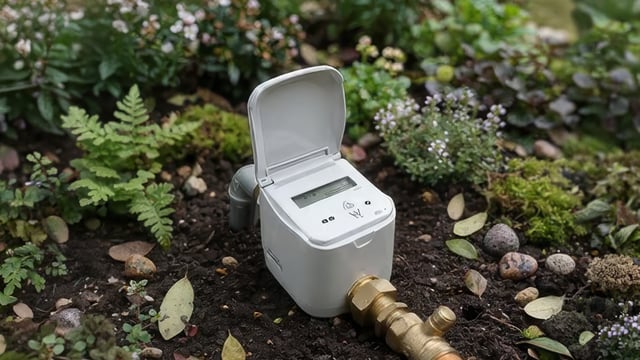
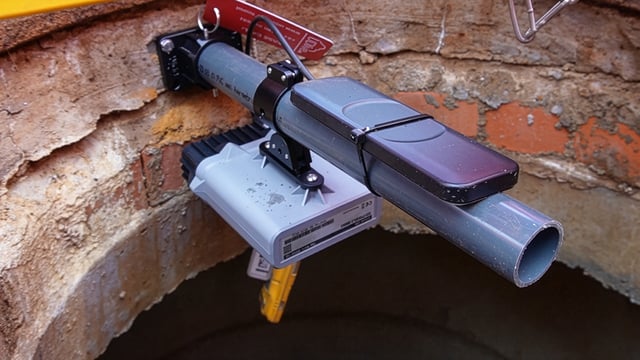
The Government of the Balearic Islands will invest €1,043,757.83 to digitalise the drinking water network of Andratx, a Mallorcan municipality of roughly 12,000 residents, replacing its entire meter park with 6,864 ultrasonic devices that transmit consumption data in near real time over Narrowband IoT (NB-IoT). The project, presented on 13 April 2026 by the regional Director General of Water Resources, Joan Calafat, is funded through the Sustainable Tourism Tax (Impuesto de Turismo Sostenible, ITS) under the 2024–2025 ordinary call.
A Tourism Levy Bankrolls Drought-Era Network Modernisation
The funding mechanism reflects an established Balearic policy of routing tourism levy revenues into environmental and water infrastructure. The ITS, in force since 2016, has historically directed the largest share of its annual disbursements to water cycle and conservation projects across Mallorca, Menorca, Ibiza and Formentera. In Andratx, a coastal municipality whose summer population swells well above its registered census, the case for tighter consumption visibility has sharpened against a backdrop of recurring drought across the archipelago.
The investment forms part of a wider strategy by the regional government to reinforce hydraulic infrastructure throughout the Illes Balears. It follows a separate €4.3 million ITS-funded sanitation upgrade announced for Andratx earlier in 2026, indicating a layered approach to the municipality’s full water cycle.
Ultrasonic Metering and the Case for NB-IoT in Tourist Municipalities
The 6,864 new devices will be ultrasonic meters, a technology that uses sound-wave transit-time measurement rather than mechanical impellers. Ultrasonic meters typically retain accuracy across very low and very high flow rates, contain no moving parts subject to wear, and are widely specified by European utilities pursuing non-revenue water reductions.
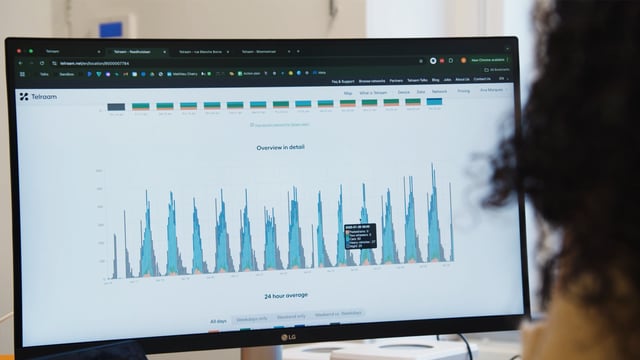
Connectivity will run over NB-IoT. A management platform will sit on top of the meter fleet, providing 24-hour network monitoring, near-immediate leak alerts, and the elimination of manual meter reads. Reduction of non-revenue water and improved billing accuracy are the principal commercial outcomes targeted.
Layered on Top of an Existing ACCIONA Digitalisation
Drinking water distribution and sanitation services in Andratx are operated under concession by ACCIONA, which in 2021 completed an earlier phase of network digitalisation in the municipality covering GIS-based mapping of mains and service connections, micro-sectorisation, and the installation of district flow meters. The new ITS-funded programme effectively extends that work to the customer endpoint, closing the loop between bulk network telemetry and individual consumption. It has not been publicly disclosed which meter manufacturer, telecoms operator or systems integrator will supply the 6,864 devices and the management platform.
Andratx in the Context of Spain’s Smart Metering Push
Andratx joins a growing list of Spanish utilities scaling NB-IoT smart metering. Madrid’s Canal de Isabel II is rolling out hundreds of thousands of NB-IoT meters under contracts split among Vodafone, Telefónica and Orange, while Global Omnium has partnered with Telefónica on a 450,000-meter programme covering its Valencia-area concessions. At European level, Suez and Vodafone have committed to deploying more than two million NB-IoT meters by 2030, with Spain among the target markets.
By population served, Andratx is a small project relative to those programmes. Its strategic interest lies elsewhere: it is a discrete, fully-funded, single-municipality replacement of an entire meter park in a tourism-dependent coastal jurisdiction with acute summer demand peaks. As such, it functions as a useful reference case for the dozens of similarly sized Balearic and mainland Mediterranean municipalities weighing comparable upgrades.
What to Watch Next
Three open items will determine how cleanly the Andratx model can be replicated. First, the tender outcome and the identity of the meter vendor and connectivity provider, which will signal whether the project follows Canal de Isabel II’s multi-operator split-lot template or consolidates with a single supplier. Second, the published baseline and target figures for non-revenue water, against which the system’s leak-detection performance can be measured. Third, the rollout schedule, which will indicate whether the 6,864 swap-out can be completed within a single low-season window.