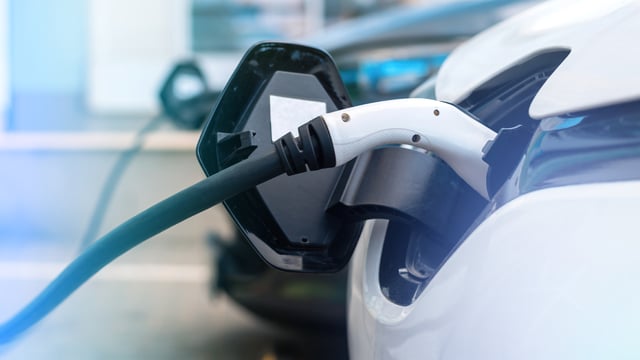
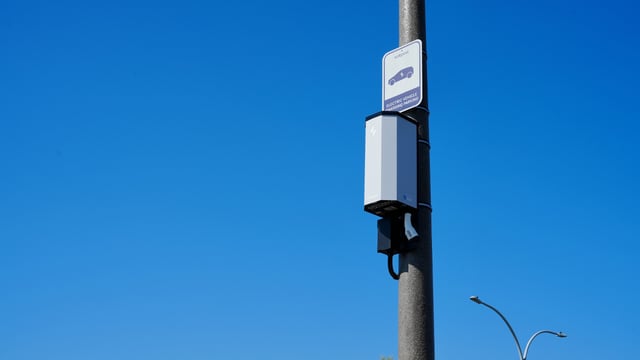
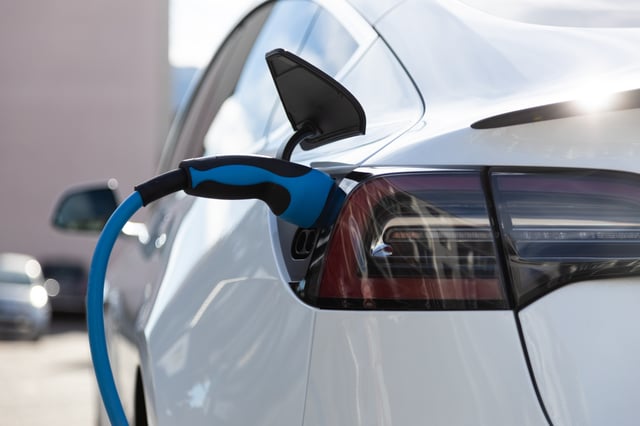
The City of San Diego is moving forward with a new wave of electric vehicle charging infrastructure at nine public facilities, backed by more than $16.5 million in county air quality grants. The funding will support 67 new charging ports across a network of community recreation centres and libraries, with construction set to begin later this year and full operations expected by 2028.
Grant Funding Rooted in Air Quality Priorities
The capital comes from two separate programmes administered by the San Diego County Air Pollution Control District under its Clean Air for All initiative. The Community Air Protection Program is providing $9.6 million for chargers across five sites, while the Carl Moyer Memorial Air Quality Standards Attainment Program is contributing $6.9 million for four additional locations. Both programmes are designed to accelerate the retirement of fossil-fuel-dependent transport in communities with disproportionate pollution burdens.
The grant terms explicitly require deployment to prioritise underserved communities. Most of the nine sites fall within Council Districts 4 and 8, areas that have historically received less clean mobility infrastructure relative to wealthier parts of the city.
Concession Model Keeps Capital Risk Off the City’s Books
EVerged, the city’s contracted charging partner, will cover 25% in matching funds across all nine sites and is responsible for financing, permitting, installing, operating, and maintaining the equipment for the full duration of its 10-year concession agreement with the city. The city provides access to its parking lots and retains a share of revenue, but bears no upfront capital expenditure for the programme.
This structure, established through a concession agreement formalised in 2024 with True Upside Consulting LLC (the legal entity behind EVerged’s operations), was designed to reduce municipal financial exposure while accelerating deployment. City analysts have noted that even under a conservative downside scenario, the city’s maximum liability would be capped well below the full infrastructure replacement value, given the availability of state and federal EV infrastructure grants.
Nine Sites Across Underserved Neighbourhoods
The geographic clustering of the 67 ports reflects the grant conditions but also aligns with the city’s Climate Action Plan, which targets net-zero community-wide emissions by 2035 and identifies transportation decarbonisation as a core lever. San Diego ranks among the top five US metro areas for EV sales, but EV adoption within the city has remained disproportionately lower in lower-income and higher-density residential neighbourhoods, where home charging is often not an option.
Phase One of a Decade-Long Buildout
This grant-funded tranche is part of a broader ambition under the city’s Public Electric Vehicle Charging Program, which aims to install hundreds of chargers at city-owned properties over the next decade. San Diego holds more than 400 city-owned parking lots, with nearly 100 situated at recreation centres and libraries forming the priority phase of rollout. Subsequent phases will expand coverage to beaches, municipal offices, fire and police stations, and parks.
EVerged has already completed an initial round of upgrades at 12 existing city sites, replacing legacy chargers at locations including the San Diego Central Library and Mission Bay. The nine new sites represent the first significant greenfield expansion under the programme. Total planned capacity across all phases runs between 750 and 800 charging ports at 59 locations, covering both NACS (North American Charging Standard) and CCS/J1772 connector formats to serve the full range of current EV models on the market.
Equity as a Structural Design Principle
The programme’s equity framing goes beyond grant compliance. San Diego’s interim director of the Sustainability and Mobility Department has previously noted that placing chargers at every library and recreation centre is a deliberate strategy to ensure infrastructure reaches lower-income areas, where the shift to electric vehicles is expected to accelerate once charging access improves. The city’s Climate Action Plan explicitly identifies EV charging access in disadvantaged communities as a condition for equitable transportation decarbonisation.
This approach mirrors patterns seen in other major US cities and internationally. Dubai Municipality recently launched a comparable community-facility-centred EV charging initiative covering parks and recreational sites, and European operators such as WAAT have drawn large-scale investment specifically by targeting underserved residential settings including social housing.
The San Diego model, combining public grant funding with a private concession operator absorbing infrastructure and maintenance risk, represents a replicable structure for municipalities seeking to expand public charging without direct capital outlay.