The Maricopa County Department of Transportation (MCDOT) in Arizona is moving its Connected Vehicle Acceleration Zone (CVAZ) into the equipment phase, a federally funded program slated to fit up to 750 physical and virtual roadside units and roughly 400 onboard units across Phoenix-area corridors.
To supply that hardware, the county has brought on Cohda Wireless, the latest vendor named in what MCDOT has structured as a multi-supplier buildout. The selection advances one of the largest vehicle-to-everything (V2X) deployments in the United States, with installations planned for transit, emergency response and freight fleets.
The work runs under the U.S. Federal Highway Administration (FHWA) program “Saving Lives with Connectivity: Accelerating V2X Deployment,” which is funding reference deployments meant to serve as national templates in Arizona, Texas and Utah.
From the Anthem Test Bed to a County-Wide Rollout
MCDOT’s connected-vehicle work is not new. Since 2008 the agency has run its SMARTDrive Program, evaluating V2X applications along a 5.3-mile corridor of eleven connected intersections in Anthem, north of Phoenix.
That research has been carried out with the Arizona Department of Transportation (ADOT), the University of Arizona and the Arizona Commerce Authority’s Institute of Automated Mobility, with an early focus on emergency-response safety.
The test bed produced applications for reducing emergency-vehicle collisions, granting signal priority to transit and freight, and alerting drivers to nearby pedestrians and cyclists. CVAZ is the step that takes those results off the test corridor and onto live county and city streets.
Four Safety Applications Across Four Jurisdictions
The deployment centers on four applications: emergency vehicle preemption, freight signal priority, transit signal priority, and vulnerable road user alerts.
Installations are planned for the cities of Phoenix, Tolleson and Avondale, along intersections on Grand Avenue (U.S. 60), and across parts of unincorporated Maricopa County. The county describes the buildout as roughly 750 signalized intersections fitted with V2X infrastructure and about 400 connected vehicles spanning emergency, transit and freight fleets, figures that line up with the roadside-unit and onboard-unit counts cited at the vendor stage.
The intended outcomes are faster movement for emergency vehicles through intersections, steadier transit schedules, fewer freight delays, and earlier warnings near people on foot and on bicycles.
Why Dual-Mode Radios Matter at County Scale
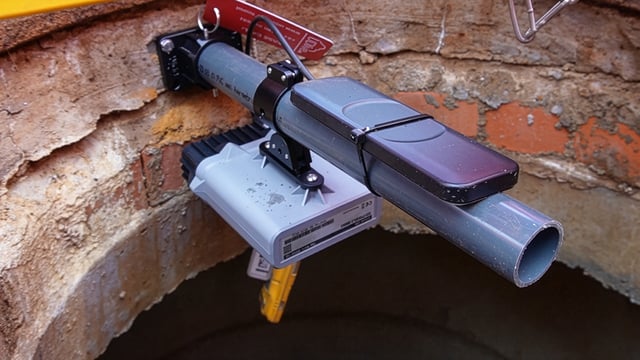
The county’s hardware order covers MK6 Road-Side Unit (RSU) and MK6 On-Board Unit (OBU) kits across the CVAZ application zones. The MK6 platform carries both dedicated short-range communications and cellular V2X (C-V2X), plus LTE/5G and Wi-Fi/Bluetooth, in a single unit, allowing an operator to run more than one communication mode on the same hardware.
The program is structured as a multi-vendor deployment, and Cohda’s hardware addresses a different layer of the system than the contract MCDOT awarded earlier in the rollout. In May the county selected OmniTrust to supply the security and authentication backbone for the same 750-intersection network, the credentialing layer that verifies which vehicles and roadside devices are cleared to communicate. Cohda’s MK6 radios are the equipment that carries those messages, and they are expected to integrate with the county’s chosen roadside processing environment. The company says the arrangement is intended to lower integration risk and speed installation, and that the Maricopa project will rely primarily on the 5.9 GHz band.
“Maricopa County is one of the largest counties in the United States, and CVAZ reflects the scale and seriousness of the country’s commitment to connected transport,” said Dr. Paul Gray, chief executive officer at Cohda Wireless, in the company’s announcement of the selection.
A $60 Million Federal Template for V2X
CVAZ is one of three projects sharing a roughly $60 million package announced by the FHWA in June 2024. Maricopa County’s share was $19.6 million, which the county describes as a $20 million cooperative agreement with the U.S. Department of Transportation.
The other awards went to the Texas A&M Transportation Institute, for a deployment around Houston and College Station, and the Utah Department of Transportation, which is equipping corridors that extend into Wyoming and Colorado.
Federal officials have positioned the three sites as national models intended to show how interoperable V2X can be deployed at scale and adapted by other states.
How Maricopa Compares to Other U.S. V2X Efforts
Maricopa’s plan is larger in device count than most earlier U.S. pilots. Denver, for instance, has spent about $12 million since 2018 building out its connected-vehicle network, while Peachtree Corners, Georgia has tested C-V2X devices aimed specifically at protecting pedestrians and cyclists at its Curiosity Lab.
The Maricopa effort differs mainly in breadth. It folds all four priority applications into one program and spans several jurisdictions rather than a single city or campus.
The reliance on 5.9 GHz spectrum and the split between separate hardware and security vendors also turns the project into a working test of whether equipment and credentialing from different suppliers can interoperate at county scale, the question that has slowed wider V2X adoption across the country.