Ulisses, a Milan-based startup specializing in vehicle and asset tracking and smart mobility, closed a €1,088,050 seed round, drawing backing from a national accelerator, a government-linked sustainable mobility body, and more than 30 angel investors. The raise marks the conclusion of the company’s IoT research and development phase, including the granting of a European patent for a proprietary low-power 2.4 GHz mesh network technology, and positions the company for commercial expansion across rail, logistics, automated warehousing, and smart parking in Italy and beyond.
Institutional And Angel Backing Reflects Cross-Sector Interest
The round included the ARGO Accelerator and the National Center for Sustainable Mobility (MOST), as well as over 30 angel investors coordinated by Stefano Ceci of Stesodado Mentor Capital.
A Proprietary 2.4 GHz Mesh Patent Underpins The Platform
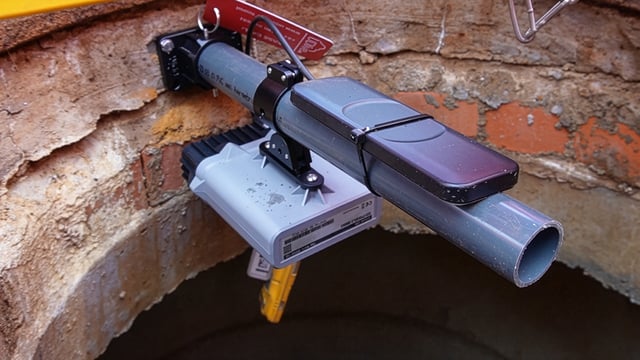
The fundraise coincides with the completion of Ulisses’s IoT research and development work, which resulted in the European patenting of a proprietary technology based on low-power 2.4 GHz networks, designed to ensure precision, operational continuity, and reliability even in complex industrial and logistics environments.
The 2.4 GHz frequency band is widely used in consumer Bluetooth and Wi-Fi applications, but Ulisses’s approach involves a proprietary protocol layered over that spectrum rather than standard Bluetooth or Wi-Fi stacks, enabling tighter control over mesh behavior and power consumption. The company’s adaptive mesh architecture self-balances the network and maintains high reliability in both indoor and outdoor environments, including dynamic or high-density operational settings. The infrastructure was also designed to reduce energy consumption, installation times, and deployment complexity compared to more traditional location technologies.
This architecture distinguishes Ulisses from LPWAN-based competitors using LoRa or NB-IoT, which offer greater range but lower location granularity, and from UWB systems, which offer precision but require dense fixed infrastructure and carry higher deployment costs. The mesh self-healing capability is particularly relevant for rail yards and warehouse environments where asset density and metal obstructions challenge conventional RF propagation.
From Marina Berths To Freight And Rail
Ulisses was originally founded to digitize mooring management in Italian tourist marinas, a niche that gave the company early experience with outdoor, waterside IoT deployments. Over time, its technology demonstrated broader applicability, and the company now serves the rail sector, automated warehouses, advanced logistics, and smart parking.
The platform combines physical devices and software to locate vehicles and objects in real time and generate movement data, with functions including geofencing and flow analysis. The operational goal is to enable organizations to optimize processes, reduce downtime, and improve efficiency.
The pivot from marina management to industrial verticals follows a pattern common among Italian IoT startups that develop robust RF and positioning capabilities in constrained physical environments, then redeploy those capabilities in higher-value sectors. Rail and automated warehousing both present demanding requirements for asset location, including the need to track rolling stock, maintenance equipment, and pallets across large, signal-attenuating spaces.
IoMobility Award Recognition Validates Smart Parking Application
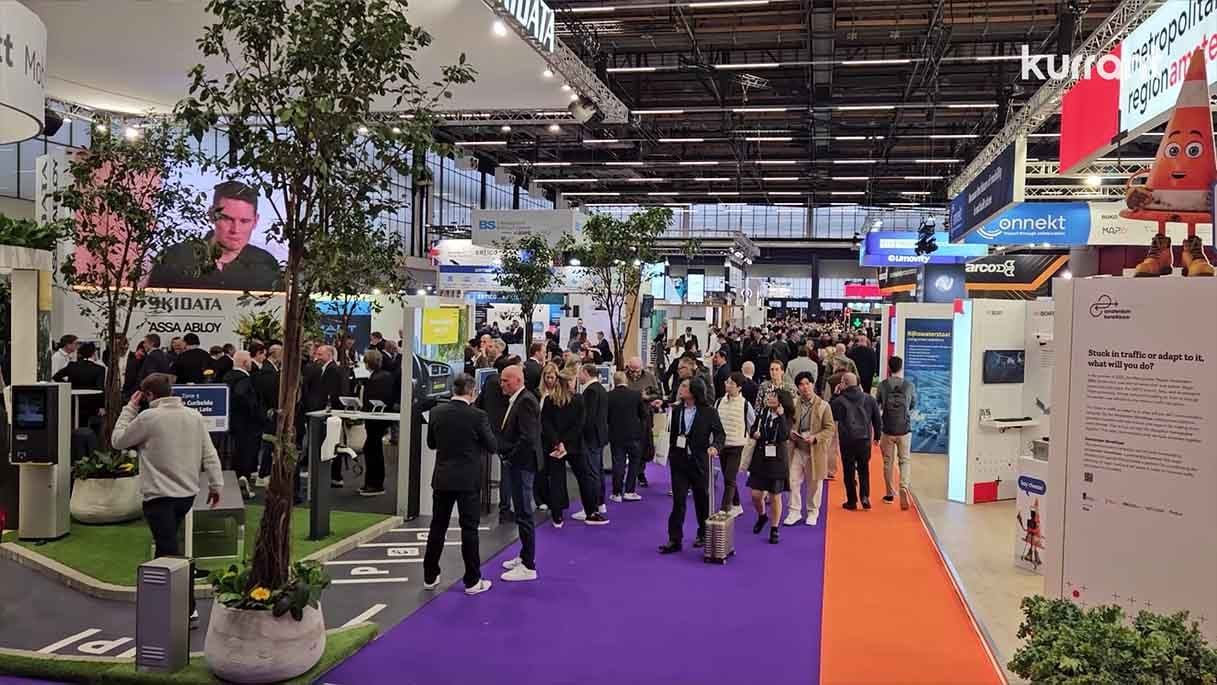
In the smart parking segment, Ulisses received recognition at the IoMobility Awards 2026 for an application dedicated to managing yellow lines and reserved parking spaces for specific user categories and residents. Organized by Innovabilify and MGH7 Venture Capital, the 2026 edition of the IoMobility Awards was held at the Next Mobility Exhibition at Fiera Milano, one of Italy’s principal events focused on the future of mobility.
The recognition is noteworthy given the competitive field. The Innovative Parking category award went to ParkSmart, a Catania-based company developing hardware and software systems for computer vision integrated with smart payment systems. Ulisses’s acknowledgment in a category dominated by vision-based entrants underscores the viability of mesh RF approaches as an alternative to camera or magnetic sensor-based parking detection, particularly in residential zones where privacy constraints may limit video deployments.
A Growing Market With Demand For Scalable Industrial Solutions
The global asset tracking market reached an estimated $32.45 billion in 2026 and is projected to climb to $54.29 billion by 2031, reflecting a compound annual growth rate of approximately 10.8%, driven by e-commerce expansion, falling sensor prices, and growing insurer requirements for real-time visibility. Transportation and logistics account for the largest share of end-user revenue, making Ulisses’s focus on freight and rail commercially well-timed.
Within the IoT-specific tracking segment, demand is being shaped by the shift toward subscription software models and cloud deployment. Hardware continues to dominate revenue, yet the transition toward subscription software is accelerating as predictive analytics and API integrations unlock recurring margins. Ulisses’s combined hardware-and-software platform is designed to participate in this shift, providing the fixed device layer while generating ongoing data and analytics revenue.
“Ulisses has developed cutting-edge, scalable technology with a robust and credible engineering foundation,” said Mattia Tartaglia, CEO of Ulisses, in the company’s June 2026 press release. “The asset tracking and smart mobility market is today looking for reliable, scalable solutions that are genuinely integrable into existing processes and solutions.”
Commercial Expansion And Long-Range Mesh Development Planned For 2026
For 2026, Ulisses intends to strengthen its commercial structure, accelerate growth in industrial and logistics markets, and continue developing its long-range IoT mesh infrastructure. The seed capital will be directed primarily toward sales team build-out and business development rather than further core technology research, as the European patent filing indicates that the R&D cycle is effectively complete.
The company’s dual-track positioning, as both a logistics tracking vendor and a smart mobility infrastructure provider, reflects a deliberate strategy to avoid dependence on any single vertical. Rail, warehousing, and smart parking each carry distinct procurement cycles and buyer profiles. Spreading across these segments adds sales complexity but also reduces the concentration risk that has affected single-vertical IoT startups when infrastructure spending slows.
Whether the €1.09 million raise is sufficient to drive meaningful commercial traction across multiple sectors in parallel will depend on how quickly Ulisses can convert its angel investor relationships into commercial pilots. The presence of former Telepass and Fiera Milano executives on the cap table offers credible pathways into tolling, mobility services, and large-venue asset management, three areas where real-time location data commands tangible operational value.