The Detroit City Council voted 5-4 on June 30, 2026, to extend its contract with SoundThinking, Inc. for the ShotSpotter acoustic gunshot detection system, keeping the technology active across approximately 39 square miles of the city through the end of March 2027. The nine-month extension adds roughly $2.1 million to an existing four-year agreement that cost the city $7 million in total since 2022, and it preserves the system’s deployment in neighborhoods that the Detroit Police Department identifies as highest-risk for gun violence. The vote followed hours of public comment and marks the third consecutive time the council has approved continuation of the program by the same narrow margin.
ShotSpotter’s Architecture and How It Operates in Detroit
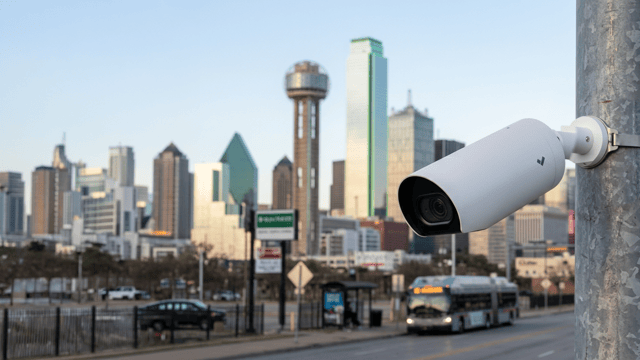
SoundThinking’s ShotSpotter system uses an array of acoustic sensors mounted on streetlights and utility poles. When a loud impulsive sound is detected, the sensor array triangulates its origin and forwards the audio to the company’s 24-hour Incident Review Center, where trained analysts confirm whether the event constitutes gunfire before pushing a verified alert to law enforcement, typically within 60 seconds of the shot. Detroit’s deployment became fully operational in March 2021, initially covering 6.48 square miles in the 8th and 9th Precincts on the city’s far west and east sides. Following the contested October 2022 council vote, coverage expanded to its current footprint of approximately 39 square miles, about a third of the city’s total area. Between 2024 and 2025 alone, SoundThinking data shared with the city recorded 24,225 ShotSpotter-triggered incidents responded to by the Detroit Police Department.
Cost Pressure and a Vendor That Refused to Renegotiate
The $2.1 million price for nine months drew immediate resistance even from council members who have historically backed the program. Council President James Tate, who supported ShotSpotter in the 2022 expansion vote, opposed the renewal this time, citing the vendor’s unwillingness to offer concessions. “I have a challenge with that dollar amount. It’s not about the technology,” Tate said. “When asked, would they renegotiate the contract, the answer was no, because we’ve been giving you a deal in the first place, so that leads me now to a situation where I cannot support this particular amendment.” Tate was joined in opposition by Councilmembers Gabriela Santiago-Romero, Denzel McCampbell, and Mary Waters. The majority that carried the vote accepted the police department’s argument that the extension is a bridge measure while the city runs a competitive procurement process to evaluate alternative gunshot detection vendors.
Performance Data That Divides the Council
Police leadership presented operational evidence on both sides of the ledger. First Assistant Chief Franklin Hayes testified that in at least one documented case, a ShotSpotter alert in an area with vacant land and no occupied homes led officers to an injured gunshot victim who would otherwise not have been found, because no 911 call was placed. Detroit Police Chief Todd Bettison has stated publicly that the system contributed to dozens or hundreds of arrests, with figures of 78 and 256 cited at different council briefings in 2026, without reconciliation between those numbers. Skeptics on the council pointed to a more sobering data point. “When the department’s own data shows that 911 calls are faster, that arrests only follow two to 3% of the alerts, that aid is rendered to victims that are less than 1% of the calls or cases that they get, and that we have no performance benchmarks that exist to either discontinue or wind down the program, that is alarming to me,” said Councilman Denzel Anton McCampbell, in remarks reported by WDIV ClickOnDetroit. An independent academic study covering ShotSpotter’s first two Detroit deployment years found that of 5,853 alerts reviewed, just two resulted in at least one arrest, though the researchers caution that arrest rate is not an appropriate primary measure for the technology’s public safety value.
Transparency Litigation Casts a Legal Shadow
The vote takes place against a backdrop of ongoing legal exposure. In October 2025, the Michigan Court of Appeals ruled that the Detroit Police Department had “repeatedly violated” the city’s Community Input Over Government Surveillance (CIOGS) ordinance during the 2022 contract extension and expansion, by failing to post the required Surveillance Technology Specification Report on the city’s website at least 14 days before public hearings took place. The two-judge majority sent the case back to Wayne County Circuit Court to determine remedies, while stopping short of voiding the contracts already in effect. The ruling, which emerged from a lawsuit filed by the Detroit Justice Center, the Sugar Law Center, and attorney Jack Schulz on behalf of city residents, introduced a further transparency concern: the DPD has acknowledged it does not have precise knowledge of where all SoundThinking sensors are physically located, a detail the company treats as proprietary. For the June 30 vote, the council proceeded under the current legal status, but the unresolved Wayne County case means the city’s compliance posture remains in question as it negotiates a long-term replacement contract.
Privacy Debate Mirrors Broader Regulatory Trends
Concerns about acoustic sensors operating continuously in public spaces have surfaced in Detroit across multiple council cycles and are consistent with a wider regulatory pattern. Opponents of the ShotSpotter extension, including ACLU of Michigan policy strategist Gabrielle Dresner, argued that false alerts can trigger unnecessary police responses and reinforce the perception that certain communities pose inherent risk. SoundThinking maintains that ShotSpotter sensors do not capture human speech, store audio only for 30 hours, and share solely short clips surrounding confirmed gunshot events with law enforcement. These assurances have been independently audited by New York University’s Policing Project. The tension between acoustic monitoring and community privacy has also attracted regulatory attention in other jurisdictions: as Kurrantly News reported in March 2026, France’s data protection authority (CNIL) issued guidance that effectively prohibits any system architecture linking audio sensors to video surveillance on public streets, a posture that would bar ShotSpotter-equivalent deployments on French roads without specific legislative authorization.
Market Context: SoundThinking Navigates High-Profile Contract Losses
SoundThinking (Nasdaq: SSTI) reported record full-year 2025 revenues of $104.1 million, a 2% increase over 2024, according to the company’s March 2026 earnings release. The company projects 2026 revenues of $109 million to $111 million. However, SoundThinking is navigating significant customer concentration risk: New York City accounted for 29% of 2025 revenues after Chicago decommissioned ShotSpotter in September 2024, ending a relationship that had cost the city roughly $53 million since 2018 and that the company classified as approximately 10% of its prior-year revenue. According to SEC filings, ShotSpotter was active under contract across over 1,092 square miles, spanning 178 cities and 22 universities and corporations in the United States and internationally as of December 31, 2025. The company reported a GAAP net loss of $9.4 million for the year and disclosed material weaknesses in its internal financial controls. Beyond ShotSpotter, SoundThinking has broadened its SafetySmart platform to include CrimeTracer (law enforcement search), CaseBuilder (case management), ResourceRouter (patrol optimization), SafePointe (AI weapons detection), and PlateRanger (license plate recognition), positioning itself as a multi-product public safety SaaS company. Competing acoustic gunshot detection offerings have also expanded: Flock Safety, which raised $275 million in a 2025 funding round, has entered the segment with a system that integrates acoustic detection with license plate readers and AI-based incident analysis.
Detroit Initiates Competitive Sourcing for a Long-Term Solution
The nine-month timeline is explicitly tied to Detroit’s procurement process. The council majority accepted the extension on the condition that the police department complete a competitive bid evaluation and return with a long-term vendor recommendation before the March 2027 expiration. Detroit’s homicide rate hit a 60-year low in 2025 and nonfatal shootings are also down significantly, trends that broadly track nationwide crime patterns and that opponents of the contract argue make the cost harder to justify. Community violence intervention organizations, including FORCE Detroit, testified in favor of keeping the technology, arguing that ShotSpotter alert data helps non-police outreach groups identify where gun violence is concentrated and direct resources proactively, independent of police response outcomes.