The Ajuntament de Torredembarra, a coastal municipality of roughly 18,200 residents in the Tarragonès county of Catalonia, has awarded a €300,711.70 works contract to digitalise and improve control of its low-pressure drinking water distribution network, with the aim of identifying leaks and burst pipes as they happen rather than after they surface. The contract was awarded on 30 March 2026 and formalised on 10 April 2026, according to the contract record published through the Diputació de Barcelona’s CIDO service. The project is financed under Spain’s Recovery, Transformation and Resilience Plan using NextGenerationEU funds, and forms one of three parallel water infrastructure packages the council is running this year.
A Tourist Town Where Winter Data Cannot Explain Summer Demand
Torredembarra sits on the Costa Daurada between Tarragona and Roda de Berà, and its resident population has grown roughly 45% since 2004. Second homes and summer tourism push actual occupancy far above the registered figure for several months a year, producing a demand curve that a network designed around annual averages struggles to track.
The council’s own justification for the tender points to that seasonality alongside high urban density. It also concedes that the network currently offers limited visibility into consumption patterns and the hydraulic behaviour of individual zones, and lacks the systematic data needed to flag incidents or leaks quickly.
What The Contract Buys: Sectorisation, Metering, Quality Sensing And Remote Reading
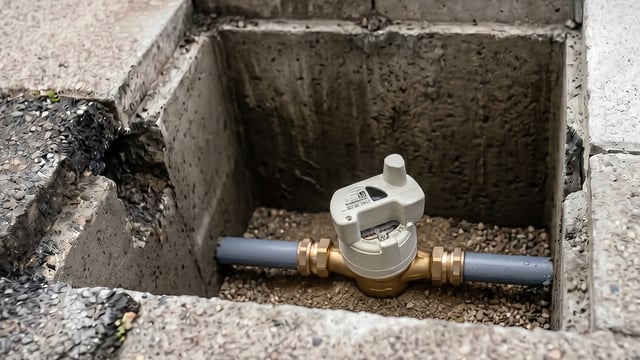
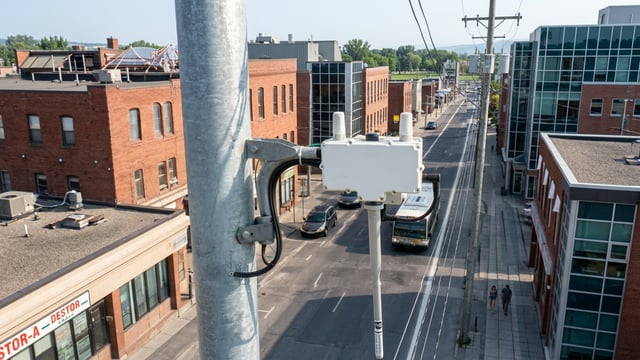
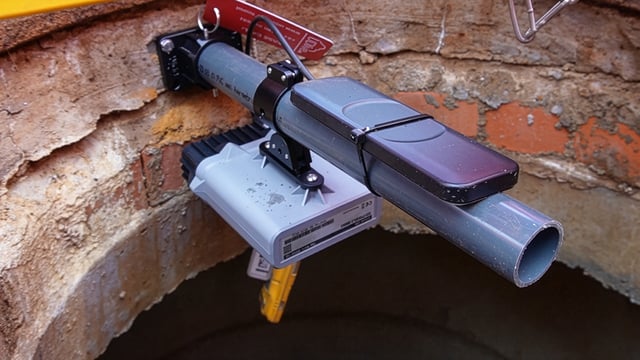
The scope covers functional sectorisation of the distribution network, installation of measurement and control equipment, continuous water quality monitoring, leak detection, and expansion of existing remote meter reading and data management systems. Together these are intended to give operators a reliable, continuous picture of the network rather than periodic snapshots.
Sectorisation is the structural piece. Dividing the network into metered districts allows minimum night flow to be compared against billed consumption zone by zone, which is how a background leak becomes visible before it becomes a burst.
The council has not published a device count for the digitalisation package, so the number of sensors, loggers or smart meters involved remains unstated in public documentation.
Agbar Bid Alone, In A Market Veolia Already Dominates
The contract went to Sociedad General de Aguas de Barcelona, S.A.U. (SGAB), better known as Agbar and part of the Veolia group, which is also the incumbent operator of the municipal water service. It was the only bidder in an open simplified procedure, tendering €248,522.07 excluding VAT against a base budget of €278,422.36, a discount of about 10.7%.
That single-bidder outcome is not an outlier. Veolia has emerged as the dominant private beneficiary of Spain’s water digitalisation programme, and Kurrant reported that the group captured roughly €76 million across 17 PERTE projects, around 40% of all subsidies awarded to private operators, with more than €19 million of that directed to Catalonia.
Three Works Packages Tie Digital Control To Supply Autonomy
The digitalisation contract runs alongside a €396,890.47 package for pipe renewal, sectorisation and pressure regulation, also awarded to SGAB, of which €216,000 comes from the Agència Catalana de l’Aigua. That work replaces ageing sections on avinguda Sant Jordi and the carrers Baix de Sant Pere, Tarragonès and Bergantí, and creates four new control sectors at Els Munts, plaça Aragó, Nova Torredembarra and Marítima sud.
Pipe renewal and sectorisation are “fundamental for modernising the network and improving its performance,” said Raúl García, then Councillor for Technical Services at Torredembarra Town Council, in the council’s February 2026 announcement.
The third package reactivates the Pujol 1 and 2 groundwater wells, out of service since 2010, for €182,817.75 with €160,000 from the ACA. The council estimates the wells could yield up to 400,000 cubic metres a year and cut dependence on bulk supply from the Consorci d’Aigües de Tarragona by around 30%, which makes accurate network-side loss accounting a direct input to how much imported water the town needs to buy.
Benchmarks: What Comparable Catalan Deployments Have Delivered
Torredembarra’s spend sits in the middle of a crowded Catalan field. L’Escala completed a €153,000 digitalisation project built on three telecontrolled sectors and 44 acoustic leak detection units, delivered in two months, while Piera is spending €726,780 across 170 kilometres of pipe with network efficiency at roughly 72%.
At the larger end, Veolia’s A-MEDI project covered eight municipalities in the Garraf, Alt Penedès and Alt Camp for €7.15 million, deploying more than 14,300 smart devices and reporting supply network efficiency above 74%. Deltebre, meanwhile, reports lifting network efficiency from 30% in 2023 to about 50% during a €1.9 million rollout including 2,422 smart meters.
The national baseline is unflattering. Analysis of Spanish supply data puts non-revenue water at 23.5%, well above the roughly 10% typical of the best-performing European countries, with only about 17% of Spain’s 248,245 kilometres of distribution network renewed or built in the previous decade.
Recovery Funds Set The Clock, EU Policy Sets The Direction
Torredembarra’s project draws on the PERTE for the Digitalisation of the Water Cycle, coordinated by Spain’s Ministry for Ecological Transition and the Demographic Challenge and co-funded through NextGenerationEU, which has channelled €750 million in direct aid to the sector. Recovery-fund justification deadlines are the practical constraint on schedules of this kind, which is part of why small councils are tendering in tight windows.
The regulatory direction is also hardening. The European Commission opened a call for evidence in May 2026 on an EU-wide action plan for digitalising the water sector, citing estimates that automated leak detection alone can cut losses by 7% to 14% and digital monitoring a further 5% to 8%.
For a town whose population effectively doubles each summer, the operational test will be whether the new sectors and sensors shorten the interval between a pipe failing and a crew arriving during the weeks when the network is under most stress.