in Barcelona
 3 to 5 Nov 2026
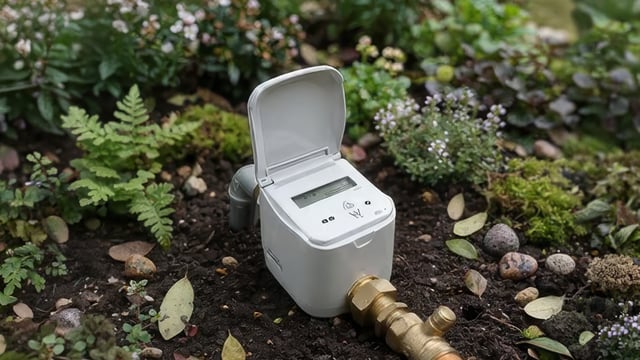
La Font d’en Carròs, a municipality of approximately 3,800 residents in the La Safor comarca of Valencia province, is replacing its entire conventional water meter stock with 2,250 remote-reading devices under a €312,000 investment managed by Veolia, the concessionaire responsible for its municipal water service. The deployment represents full network coverage for a compact urban distribution system, and positions the municipality within a Spanish policy framework channeling European recovery funds specifically toward smaller local governments that would otherwise lack the capital base for large-scale metering modernization.
Small-Municipality Policy Framework Drives the Investment
The Generalitat Valenciana has operated a dedicated grant program for water cycle digitalization in municipalities under 20,000 inhabitants since 2023, financed through the EU’s NextGenerationEU mechanism under Component 5 of Spain’s Plan de Recuperación, Transformación y Resiliencia. The total pool for the Valencian regional program was extended in 2025, reaching €7.3 million and broadening eligibility to 32 localities. That framework allows concession operators such as Veolia to apply alongside or on behalf of local governments, covering actuations in data acquisition, metering infrastructure, and network monitoring. The La Font d’en Carròs deployment fits squarely within those criteria: a single-operator concession replacing manual meter reading with continuous, automated telemetry across an entire municipal network.
2,250 Meters and What Full Coverage Means Operationally
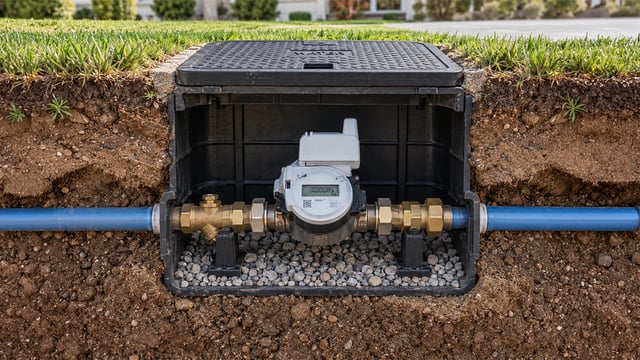
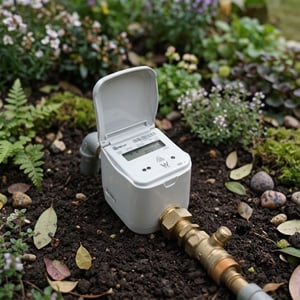
Deploying 2,250 smart meters in a municipality of roughly 3,800 inhabitants implies near-total coverage of all residential and commercial supply connections, leaving little room for a phased approach. Full-park deployments of this kind shift the operational model fundamentally: leak detection, anomaly identification, and billing all become data-driven functions rather than scheduled field activities. Remote meter reading systems allow consumption data to be gathered and transmitted remotely, securely, and without the need for physical on-site inspections. For a water operator managing a compact distribution network, that translates into reduced operational costs and earlier identification of non-revenue water losses, which remain a significant challenge across Spanish municipal networks.
Spain’s Smart Metering Market Acceleration
The La Font d’en Carròs rollout reflects a broader acceleration in Spanish smart water metering that has significantly outpaced earlier projections. Spain’s smart metering penetration in water utilities rose from approximately 19% to 38% in roughly two years, with Canal de Isabel II surpassing one million smart meters in December 2025 and targeting 100% coverage of its 1.6 million supply points by end of 2026. Comparable deployments are proceeding across regions: Veolia recently completed installation of approximately 1,000 smart meters with remote-reading systems in Marcilla, Navarra, under a grant of €198,530 covering 90% of eligible costs, part of the same NextGenerationEU PERTE framework. The pattern across these projects is consistent: European capital subsidizes 80 to 90 percent of eligible costs, the operator or municipality co-finances the remainder, and the concession manager integrates the new meter park into a centralized operations platform.
Broader Program Architecture and State-Level Funding
Spain’s PERTE for Water Cycle Digitalization, coordinated by the Ministry for Ecological Transition and Demographic Challenge, carries a total investment envelope of approximately €3.5 billion following a 2023 addendum approved by the European Commission, organized across four lines: improved water governance, basin-authority digitalization, support to urban and industrial users, and capacity-building in digital competencies. In January 2026, Spanish Prime Minister Pedro Sánchez met with Veolia CEO Estelle Brachlianoff at La Moncloa to discuss the company’s plans in Spain and the execution of NextGenerationEU funds for water cycle modernization and resilience projects. That meeting reflects the political salience of the program at the highest level of government, and underscores how dependent Spain’s water digitalization pipeline has become on a small number of large private operators with the project management capacity to absorb and execute complex multi-site deployments.