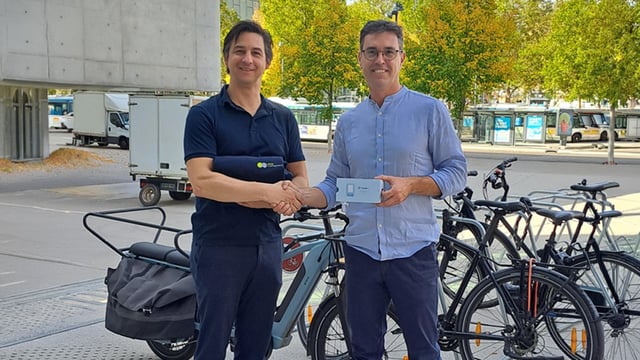
Hamburg’s State Office for Roads, Bridges and Waterways (LSBG), an agency under the city’s Ministry of Transport and Mobility Transition, has formalized a strategic partnership with PTV Group, part of the traffic technology brand Umovity, to develop a cloud-based, AI-powered transport management platform for the city. The agreement, signed as a letter of intent by LSBG chief digital officer Christoph Heel and PTV Group chief executive Christian U. Haas in Karlsruhe in December 2024, centers on a cross-modal traffic management system now described publicly as a citywide Mobility Operating System. The project builds on years of joint work between LSBG and PTV, including the #transmove forecasting initiative, and positions Hamburg as a reference city for Umovity’s combined software and hardware portfolio.
Why Hamburg Is Positioning Itself As A Testbed
Hamburg has set out climate and livability targets that include expanding public transit, promoting cycling and walking, and digitalizing and electrifying transportation. The city hosted the UITP Summit 2025, a global public transport gathering, which LSBG and PTV used to showcase progress on the mobility platform. Officials frame the effort as a way to consolidate previously siloed traffic data and planning tools into a single operational layer for the city’s roads, bridges and waterways network.
What The Mobility Operating System Actually Does
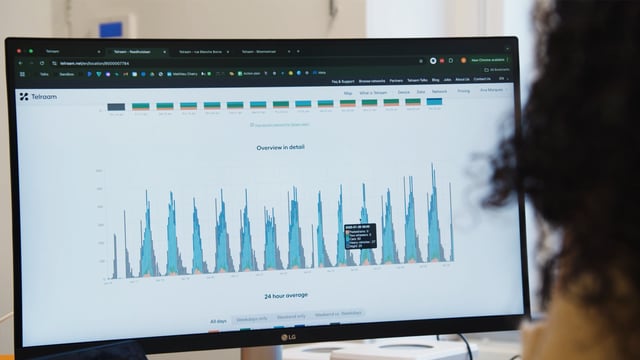
The platform pulls real-time data from multiple sources into a unified management layer rather than relying on a single sensor network or control room. According to ITS International, the underlying software applies agent-based modeling, AI techniques, real-time traffic modeling and scenario simulation to generate short-term forecasts and recommended actions. Outputs are intended to serve both road users, who receive journey-time and congestion information, and transport planners coordinating roadworks or new infrastructure such as cycle paths.
The Technology Stack Behind The Partnership
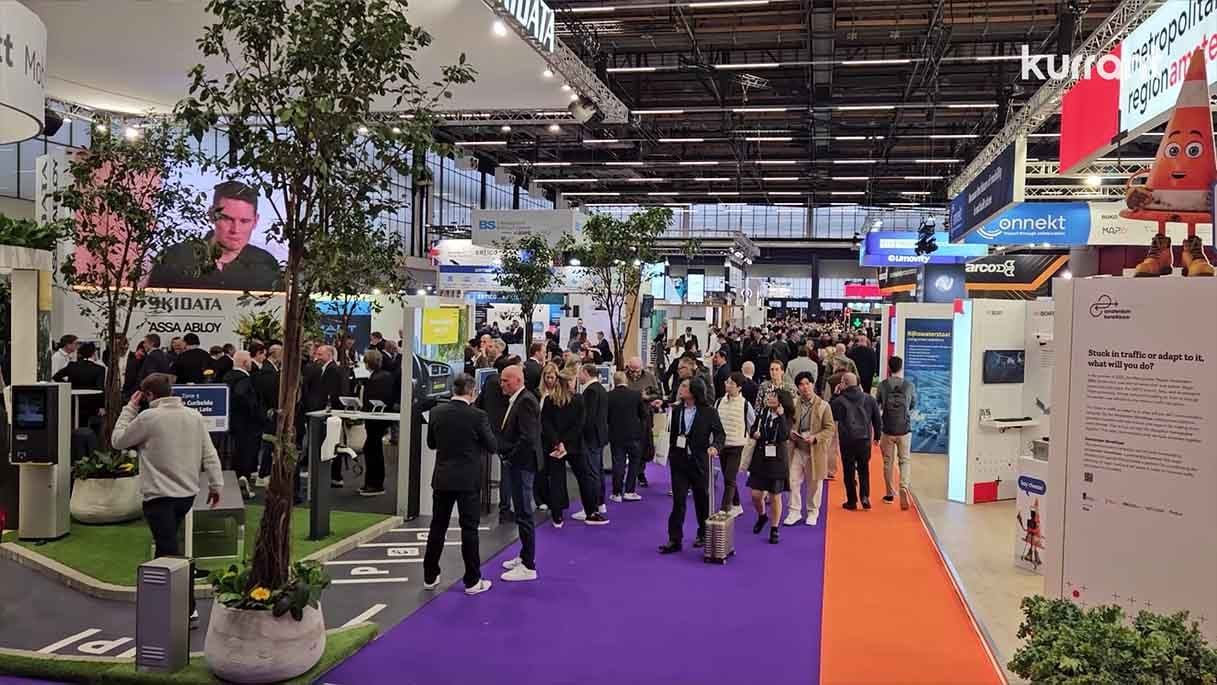
Umovity was formed in 2023 as a joint brand uniting PTV Group’s planning and simulation software with Econolite’s traffic hardware and detection sensors. On the software side, PTV Optima already underpins the #transmove platform, visualizing live traffic conditions and short-term forecasts for Hamburg. Umovity has also begun integrating PTV’s Flows monitoring and prediction software with Econolite’s Centracs Mobility adaptive traffic management platform, and the company markets PTV Flows paired with Centracs Mobility as enabling proactive, network-wide signal optimization rather than reactive control.
Detection Hardware In The Broader Umovity Portfolio
On the hardware side, Econolite introduced two detection products in 2025 that Umovity has featured alongside the Hamburg case study at industry events: the EPIQ Radar, which includes a built-in 1080p camera streaming at 30 frames per second, and the Autoscope OptiVu AI-powered HD video detection sensor. Neither PTV Group nor LSBG has published a public figure for how many of these sensors, if any, have been or will be deployed as part of the Hamburg project specifically.
Market Context And Comparable AI Traffic Programs
Hamburg’s Umovity project sits within a broader wave of municipal AI traffic deployments. Separately, Hamburg is also among 18 cities participating in Google’s Project Green Light adaptive-signal pilot, alongside Bangkok, Bangalore and Haifa, which Kurrant reported has driven travel-time and emissions reductions at pilot intersections in Bangkok. The two initiatives are distinct: Project Green Light focuses on signal-timing recommendations layered onto existing infrastructure, while the LSBG-Umovity partnership aims at a broader planning-to-operations platform spanning multiple transport modes.
Benchmarks And Unanswered Questions
Neither party has disclosed a total contract value, project timeline for full deployment, or a target number of intersections, sensors, or corridors to be covered under the Mobility Operating System. Umovity has stated its simulation software has already helped Hamburg reduce emissions and improve traffic flow, but has not published supporting figures or an independent evaluation.