A new academic-industry research hub focused on decarbonising the UK’s transport networks has secured £46 million in funding, led jointly by Heriot-Watt University in Edinburgh and the University of Glasgow. The initiative, named TransiT, brings together eight universities and 67 industry and government partners to build digital twins of road, rail, air and maritime systems. Roughly £20 million comes from the UKRI Engineering and Physical Sciences Research Council (EPSRC), described as its largest single investment to date in transport digital twinning, with the remaining £26 million contributed by partners across the digital, energy and transport sectors. The hub was announced in August 2024 and is intended to run a multi-year programme testing low-carbon transport scenarios virtually before they are deployed in the real world.
Why Simulation Is Replacing Real-World Transport Trials
Transport accounts for roughly a third of the UK’s carbon emissions, and TransiT’s directors argue there is no longer time for extensive physical pilot schemes. “Transport accounts for about a third of UK carbon emissions and, with global temperatures rapidly rising, we have run out of time to carry out real-world transport trials and learn from them,” said Professor Phil Greening, logistics expert at Heriot-Watt University and joint director of TransiT, in comments published in UKRI’s official announcement. The hub’s stated approach is to model transport interventions digitally first, then identify the lowest-cost and least-risky pathway before committing to physical infrastructure changes.
How The Digital Twin Architecture Is Meant To Work
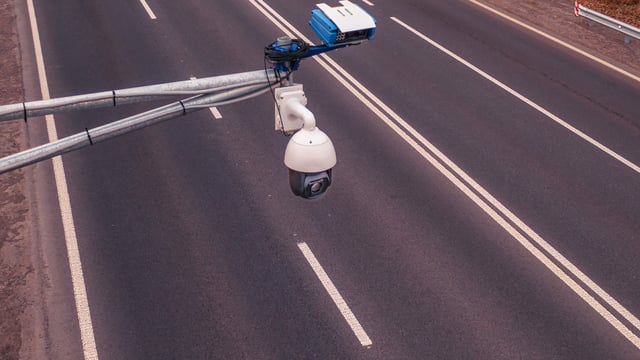
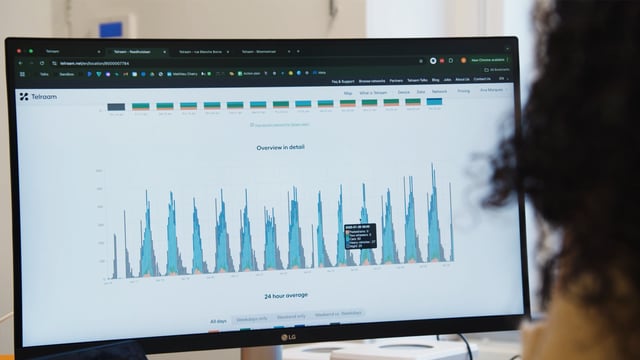
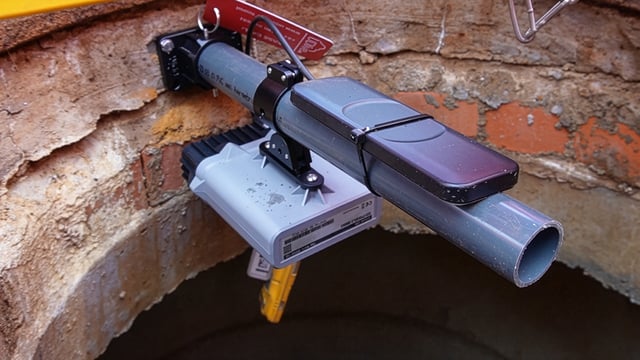
Digital twins are virtual replicas of physical transport assets, built from data streamed by sensors on infrastructure such as motorways, railways, shipping lanes and flight paths. Individual models of specific transport systems are meant to be linked together to produce a composite view of the wider network, according to Heriot-Watt University’s project description. The stated goal is near real-time feedback loops, where the twin analyses live data, tests scenario changes and returns recommendations to physical infrastructure, such as updating digital road signage with faster routes out of congestion.
Testing Systems That Do Not Yet Exist At Scale
A distinguishing feature of TransiT’s remit is modelling transport components that are still emerging, including electric road systems and alternative fuel infrastructure. Researchers say simulating these systems digitally allows engineers to compress testing timelines that would otherwise require years of physical trials. The hub also plans to develop a “personalised digital twin assistant” for travellers, described by Professor David Flynn of the University of Glasgow, joint director of TransiT, as functioning similarly to a streaming recommendation engine by learning a traveller’s mobility needs and preferences to suggest end-to-end journey options.
The Eight-University Research Consortium
TransiT’s academic base spans Heriot-Watt University (logistics and freight), the University of Glasgow (digital twinning and cyber-physical systems), the University of Leeds (transport decarbonisation policy, via its Institute for Transport Studies), the University of Birmingham (rail, via the Birmingham Centre for Railway Research and Education), Cranfield University (aviation), University College London, the University of Cambridge (road freight, via the Centre for Sustainable Road Freight) and Durham University (public transport engineering, including hydrogen transport work through the Durham Energy Institute).
Which Vendors Are Underwriting The Technology Stack
Industry participants named alongside the funding announcement include Amazon Web Services, Bentley Systems, Intel Corporation, Mott MacDonald, National Highways, Nokia, NVIDIA, Siemens Mobility, Transport for London and WSP. Their combined presence spans cloud infrastructure, engineering software, semiconductor and AI compute, network connectivity and transport operations, indicating the hub intends to build a full simulation and data pipeline rather than a narrow academic modelling exercise. Public procurement records for individual TransiT contracts with these vendors have not yet been published.
Where This Fits In The Broader Digital Twin Market
TransiT’s funding lands amid a wider push by transport authorities and cities to adopt digital twin platforms for infrastructure planning. Madrid’s city council, for instance, is separately constructing a federated municipal digital twin under a wider digitalisation strategy, as reported by Kurrant, reflecting growing government appetite for twinning technology beyond research settings. EPSRC executive chair Professor Charlotte Deane has framed digital twins as a way to cut the cost and time of testing network changes, arguing that transport operators using the approach will be able to move faster toward low-carbon services, according to the UKRI announcement.
What Comes Next For The Hub
TransiT describes itself as one of the largest transport research consortiums of its kind in the UK. Its early outputs are expected to include scenario models for logistics routing, electric road system deployment and public transport engineering, feeding into policy recommendations for government and industry partners. No public timeline for specific pilot deployments or interim funding milestones has been released as of this writing.