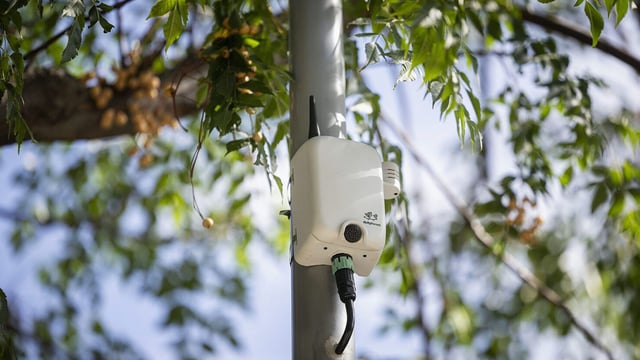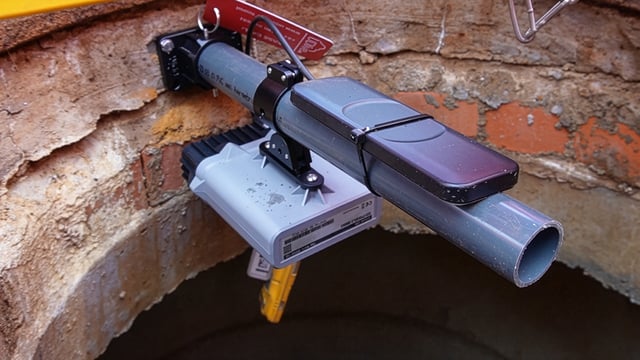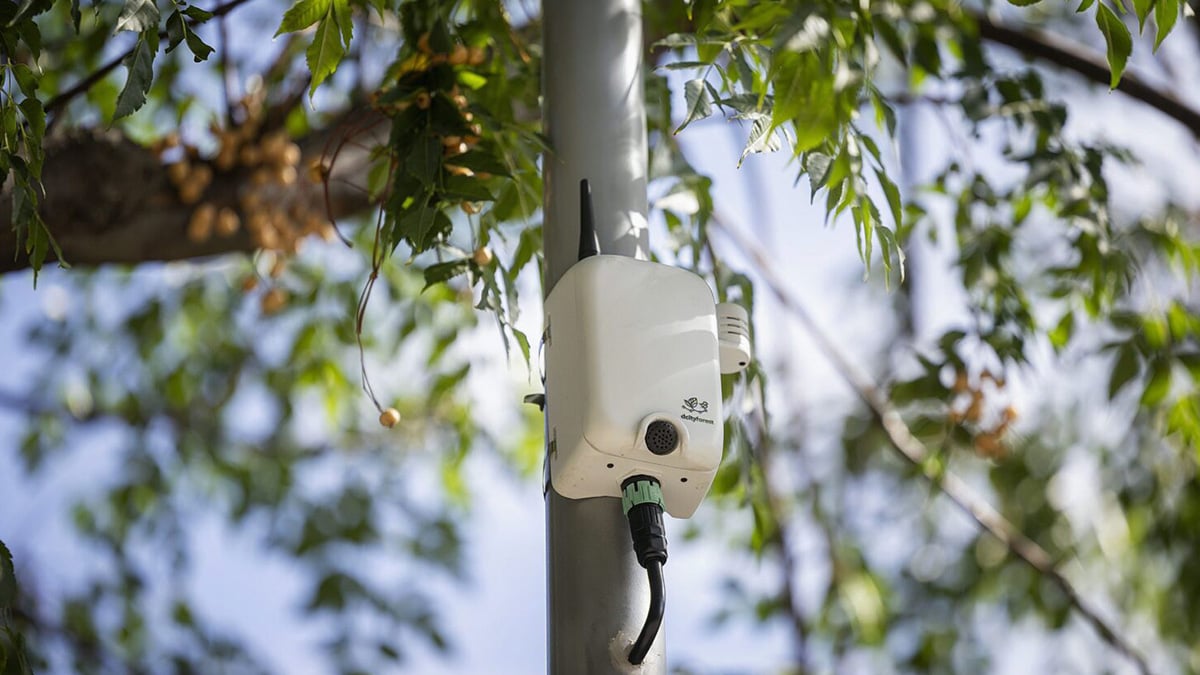
The Madrid City Council has installed a network of 15 artificial intelligence powered acoustic sensors across two of the capital’s largest green spaces, Madrid Río and the Valdebebas-Felipe VI Forest Park, to monitor bird and bat activity in real time. Officials presented the project on August 26, 2026 at the Madrid Río Interpretation Center. The system has already logged more than 12,000 wildlife observations since deployment, covering over a hundred bird species and two dozen bat species combined.
Two contrasting parks chosen to stress-test the technology
City officials selected Madrid Río, an intensively used urban riverside park, and the larger, quieter Valdebebas-Felipe VI Forest Park in the Hortaleza district specifically because their ecological and usage profiles differ. Seven sensors were installed in Madrid Río and eight in Valdebebas-Felipe VI. The comparison is meant to validate how the monitoring network performs under different levels of human activity and habitat density before any wider rollout.
Sensors identify species without recording or storing any audio
The core innovation is a device that processes bird calls and bat ultrasound instantly using AI-based classification algorithms, identifies the species, and discards the raw sound signal without ever saving it. Officials describe this as a privacy safeguard that removes the need to store audio files, since only the identification result and associated metadata are retained. Each detection is logged with the exact date, time, temperature, relative humidity, and atmospheric pressure, allowing researchers to correlate species activity with environmental conditions.
Antonio Morcillo, Deputy Director General of Parks and Nurseries at the Madrid City Council, said the approach lets technicians study species “without needing to capture them or interfere with their biology, development, or habits,” according to comments reported around the project’s August 2026 presentation.
More than 12,000 observations in the first months of operation
In Madrid Río, the sensors identified 66 bird species across 1,564 observations and 13 bat species across 221 observations. The most frequently detected birds there included the Eurasian magpie, European serin, and European goldfinch, while the most common bats were Nathusius’s pipistrelle and the greater mouse-eared bat. In the larger Valdebebas-Felipe VI park, the network recorded 103 bird species and 6,885 observations, plus 23 bat species and 3,578 observations, figures that officials say reflect the park’s more natural, less disturbed habitat rather than a direct quality ranking between the two sites.
Data feeds a digital twin built for municipal environmental management
All sensor output flows automatically into a platform centered on a digital twin that visualizes identified species and their spatial and temporal distribution. The platform includes dashboards with heat maps, statistical tables, and a geographic information system that supports filtered queries by species, habitat, or location. City technicians can use these tools to evaluate the ecological quality of different urban habitats and inform decisions on new green space design.
Generative AI is layered on top for automated reporting
Beyond detection, the platform applies generative AI to turn raw sensor data into structured technical reports through prompt-based queries, a feature the city says reduces the manual workload for environmental management staff. This mirrors a broader industry pattern of pairing edge-based bioacoustic classification with generative reporting tools to compress the time between raw ecological data and actionable policy input.
Vendor and technology origin
Coverage of the presentation from Madrid officials describes the sensors as designed and manufactured entirely in Spain, though local press reports covering the launch did not name a specific manufacturer. A company called Dcityforest is associated with the deployment.
How the approach compares with Veolia’s Leko bioacoustic sensors
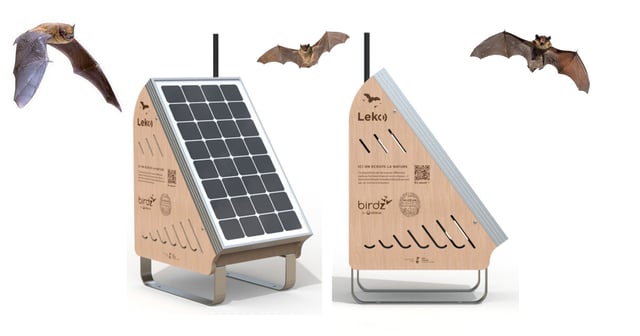
Madrid’s project echoes a technology path already commercialized in France and the United Kingdom by Veolia, whose Veolia’s Connected Solutions subsidiary (Previously Birdz) developed the Leko sensor with France’s National Museum of Natural History. Leko is solar-powered and can identify 87 animal species from their ultrasonic emissions, and Veolia has deployed it at sites including its Kingswood office in the UK, a hazardous waste facility in Arkansas, and on public buses in Rouen through a partnership with transport operator Transdev. Network Rail has run a parallel four-year trial of remote acoustic sensors with the Zoological Society of London, using pre-trained models such as BirdNet and BatDetect to process the recordings on Google Cloud. Compared with these programs, Madrid’s system differs in one notable respect: it processes and discards audio on the device itself rather than retaining recordings for later machine learning analysis, a design choice framed around privacy rather than model retraining.
What comes next for the monitoring network
Officials have indicated that once the pilot phase concludes, the sensor network could expand to additional green spaces across Madrid and be adapted to track other urban wildlife, including foxes, amphibians, and reptiles, extending the model beyond birds and bats.