in Barcelona
 3 to 5 Nov 2026
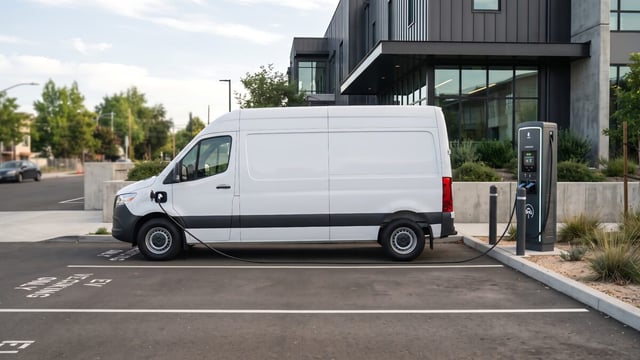
The Australian Renewable Energy Agency (ARENA), the federal funding body based in Canberra, announced on 21 October 2026 a grant of A$4 million to the charging company JET Charge for Realising Electric Vehicle-to-Grid Services 2 (REVS2), a project that will place up to 130 electric vehicles and bidirectional chargers in the Australian Capital Territory Government fleet. ARENA describes it as the largest commercial vehicle-to-grid (V2G) deployment in Australia, and its stated purpose is to establish how a large fleet can be paid for supporting the electricity grid while still meeting its transport duties, according to the ARENA media release as republished by Mirage News.
A Commercial Question Following a Technical Proof
REVS2 follows the first Realising Electric Vehicle-to-Grid Services (REVS) project, which ARENA announced on 8 July 2020 with A$2.4 million in funding for a consortium led by ActewAGL and including the Australian National University, JET Charge, Evoenergy, SG Fleet, the ACT Government and Nissan. That trial used 51 Nissan LEAF vehicles with bidirectional chargers, and its finding that electric vehicles could export electricity safely to the grid is the technical premise on which the new project rests.
The second project is therefore aimed at economics rather than feasibility, and JET Charge Chief Executive Tim Washington framed it in those terms in the announcement.
“Now we need to prove it makes commercial sense,” said Tim Washington, Chief Executive of JET Charge, in ARENA’s October 2026 media release.
The scale has grown from 51 vehicles to up to 130, an increase of up to 155 per cent, while ARENA’s A$4 million compares with the A$2.4 million committed in 2020, a rise of about 67 per cent in ARENA’s commitment between the two projects.
Fleet Duty Cycles Define the Revenue Case
The ACT fleet is an operationally specific test bed because many of its vehicles are used in daytime services such as in-home health visits and then sit at government buildings after business hours, which leaves long overnight periods in which stored energy can be returned to the grid, according to The Driven. The same report states that the project will run for three years, to 2029, and lists AGL among the partners alongside ARENA, JET Charge and the ACT Government.
Kristian Handberg, JET Charge’s future business general manager, told The Driven that the company is investigating how V2G could work for business and that the outcome is not a given, a position consistent with the project’s framing as a test of revenue and cost reduction rather than a demonstration of capability.
Alex Grant, ARENA’s general manager for transport, said the agency does not want the industry to wait until the end of the project before acting on what it learns, according to the same report.
Policy Context Around the ACT Fleet
The ACT Minister for Climate Change, Environment, Energy and Water, Suzanne Orr, said in the announcement that more than 40 per cent of newly registered vehicles in the territory so far this financial year are zero-emission battery electric vehicles, a share that supplies the vehicle base from which future fleet turnover will draw. She also stated that ACT fleet vehicles fed power back into the grid during an outage in February 2024, which gives the territory an operating precedent from the first REVS project.
ARENA has built the surrounding programme in sequence. It funded the national Bidirectional Charging Roadmap in 2025, and the REVS2 announcement coincided with Australia’s first Open Charge Alliance Plugfest in Canberra, an event that tests interoperability between chargers, charge management systems and grid platforms and that is supported by the ARENA-funded Vehicle-Grid Network project.
Market Context for Bidirectional Charging in Australia
Residential V2G is moving in parallel: The Driven reports that the retailer Amber Electric expanded its residential V2G test by a further 1,000 electric vehicles in the month before the REVS2 announcement. A household programme and a government fleet programme face different constraints, because a fleet operator has predictable plug-in times and a single procurement decision, while a household supplies variable availability across many customers.
Interoperability is the constraint most visible in the ARENA programme, and the Plugfest is a direct response to it: a fleet of up to 130 vehicles that relies on chargers, management software and grid platforms from different suppliers carries integration risk that only standardised communication can reduce. The REVS2 grant also sits within a wider ARENA effort to move V2G from trial status to routine use, which is the language ARENA CEO Darren Miller used in the announcement when he said the project helps move the technology towards wider adoption.
What the 2029 Results Will Need to Show
The February 2024 outage episode showed that vehicles in the first fleet could supply power when the network needed it, but a single event of that kind produces no revenue series from which a business case can be built, and REVS2 is designed to supply the continuous operating data that the first project did not.
The measure that will decide whether REVS2 changes procurement decisions elsewhere is the net value earned per vehicle after battery degradation, charger cost and the availability that fleet duties leave free, set against the 51-vehicle benchmark from 2020 that established technical feasibility but not a payment model. If the three-year results show that overnight dwell time at government buildings converts into grid revenue or lower operating costs at a scale that justifies bidirectional chargers over standard units, the 130-vehicle ACT fleet will serve as the first commercial evidence for other Australian fleet operators weighing the same upgrade.