Kapsch TrafficCom, the Vienna-listed intelligent transport systems supplier, announced on 13 October 2026 that it will supply roadside units for the Avondale corridor of the Maricopa County Department of Transportation Connected Vehicle Acceleration Zone, a multi-vendor vehicle-to-everything programme that its release describes as covering up to 750 intersections and approximately 400 vehicles across the Phoenix metropolitan region.
The programme is a USD 19,6M award that the U.S. Department of Transportation announced on 21 June 2024 as part of a $60M package that also funded projects in Texas and Utah, and Kapsch’s release does not state the value of its own contract, the number of roadside units it will install, or the length of the Avondale corridor.
What The Roadside Units Are Expected To Do
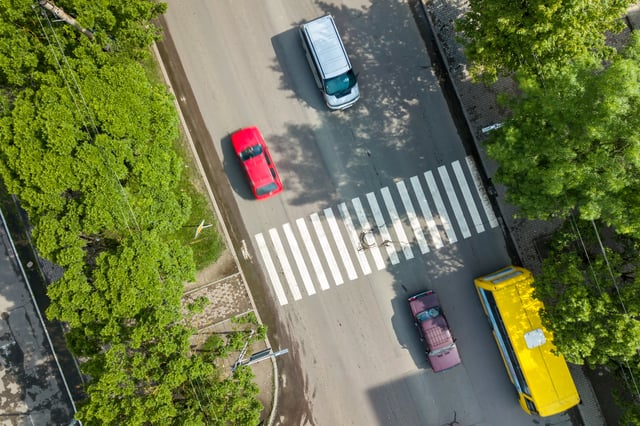
According to the company, the units will support emergency vehicle preemption, transit signal priority, freight signal priority and alerts for vulnerable road users such as pedestrians. The first three change signal timing for a vehicle class detected approaching an intersection, while the fourth warns equipped vehicles when a person is crossing, and each application depends on vehicles carrying compatible onboard equipment.
That dependency explains the second headline number. Roughly 400 vehicles is a small fleet against a county that recorded 4,4M residents in the 2020 census, so the programme is better read as a test of whether equipment from several suppliers works together than as a measure of congestion relief at metropolitan scale.
A Scope Figure That Differs Between Sources
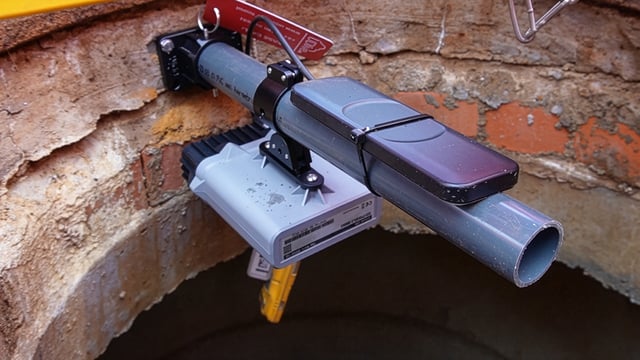
The federal announcement describes the deployment as linking 750 physical and virtual roadside units with about 400 onboard units, mainly over 5.9 GHz communications, whereas the Kapsch release refers to up to 750 intersections. A virtual roadside unit is a software function rather than a separate box at the kerb, so the two descriptions are not equivalent, and the number of physically equipped intersections cannot be established from either document.
The federal text lists the locations as Phoenix, Tolleson, Avondale, unincorporated Maricopa County and the US 60 highway operated by the Arizona Department of Transportation, which places the Avondale work within a wider multi-jurisdiction footprint.
A Crowded Partner Group
The programme partners listed by Kapsch are the cities of Phoenix, Avondale and Tolleson, the Arizona Department of Transportation, the Valley Metro Regional Public Transportation Authority, the Maricopa Association of Governments, the University of Arizona and the University of Michigan Transportation Research Institute.
The company says it applied the same outcome-measurement standard on the Columbus Smart Corridor in Ohio, which would give the Arizona work a direct comparison point if results from both projects were published in a compatible format.
Open Questions
Public programmes of this type are usually judged on measured results, such as reductions in emergency vehicle response time, transit delay at equipped intersections and pedestrian conflicts, and the announcement contains no baselines or targets for any of them. The federal goals of reducing fatalities and creating a national model are stated, but neither document attaches a number to them.
What will determine whether this deployment advances the case for interoperable V2X is whether Maricopa County publishes vendor-by-vendor performance data, including failures in cross-vendor communication, because a result reported only as an aggregate would not show whether interoperability was achieved.