in Barcelona
 3 to 5 Nov 2026
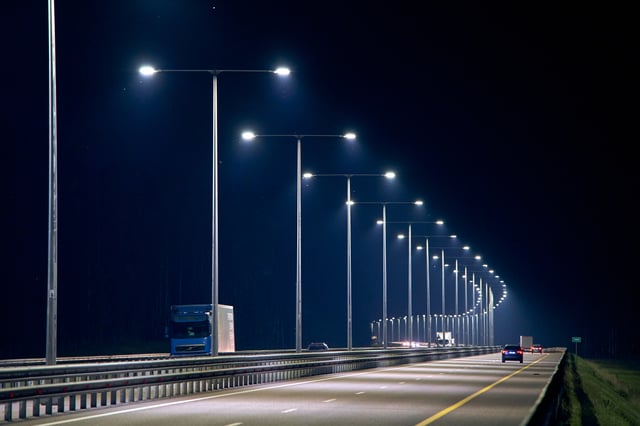
Itron, Inc. announced on 2 November 2026 that the Australian Capital Territory Government’s City and Environment Directorate will add 16,000 networked lighting controllers to its streetlight estate in Canberra, lifting the number of lights fitted with Itron technology from about 31,000 to more than 47,000, which the company puts at nearly 60% of the more than 83,000 streetlights the territory owns and maintains. The expansion is delivered through Omexom, the VINCI Energies brand that holds the contract with the directorate and acts as Itron’s primary delivery partner, and it extends a programme that has run for seven years. Itron, which is headquartered in Liberty Lake, Washington, and listed on NASDAQ under the ticker ITRI, said the new controllers will connect to its CityEdge software platform and its Gen5 network.
From a 2019 energy performance contract to a territory-wide control layer
The Canberra programme began in April 2019, when Itron announced that it would supply a multi-purpose, open-standards industrial IoT network and its Streetlight.Vision central management software to what it described as the largest standalone smart lighting project in Australia. The commercial structure was a seven-year energy performance contract, the first of its kind in Australia and Oceania according to Itron, under which Electrix, the VINCI Energies unit responsible for the work at that time, would operate, maintain and upgrade the network on behalf of Transport Canberra and City Services.
That arrangement made the contractor responsible for outcomes rather than for hardware alone, through metering on each light to track energy use and a digital maintenance system that detects lamp failures and cable faults in real time without waiting for a resident to report an outage. The November 2026 announcement names the City and Environment Directorate as the territory counterparty and Omexom as the contract holder, which reflects the same delivery chain under current organisation names.
What 16,000 additional controllers change in the estate
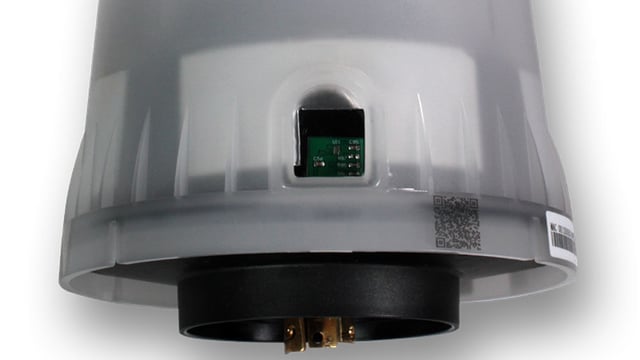
An external networked lighting controller is a device fitted to a luminaire that switches and dims the lamp on command, reports its energy draw and relays fault data to a central system. On Itron’s figures, the roughly 31,000 controllers already in service cover about 37% of the estate, and the 16,000 now planned raise coverage to more than 47,000 lights, or about 57% on a simple division of 47,000 by 83,000, against the “nearly 60%” stated by the company.
The arithmetic matters because the remaining estate, roughly 36,000 lights, is the share that stays outside the central platform. Dimming schedules, fault dispatch and energy measurement can be run from a single system only for the lights that carry a controller, so the size of that remainder sets the ceiling on what the programme can report territory-wide.
The technology stack: CityEdge, Gen5 and a multi-application network
Itron describes the Gen5 network as a multi-transport, multi-application platform and CityEdge as the software that manages connected devices on it, and the company says the Canberra network is intended as a foundation for a wider ecosystem of connected devices. The 2019 announcement had already pointed in the same direction, with a planned Smart City Lab for testing applications such as waste management, traffic monitoring and pollution sensing on the same network.
The November 2026 announcement concerns lighting controllers, so any additional applications described by Itron remain a capability of the platform rather than a procured service. Each would need its own business case from the directorate, in the way the lighting extension has been scoped as a continuation of an existing contract.
Vendor structure and market context
The delivery model gives each party a distinct role: Itron supplies the controllers, network and software, Omexom installs, operates and maintains them as contract holder, and the City and Environment Directorate retains ownership of the 83,000-light asset. The structure follows the performance-based lighting model in which an integrator carries operating risk and is paid against measured availability and energy outcomes.
Networked controllers have become a common upgrade path for public authorities that have already converted to LED and want to add dimming and fault reporting without replacing luminaires, because the controller can be fitted to an existing fixture. Canberra’s seven years of operation give the directorate a baseline that most authorities starting from conventional switching do not have, and the decision to add 16,000 units rather than rebuild the programme indicates that the first 31,000 have met the directorate’s operating requirements.
Benchmarks that will measure the extension
Three measures will show whether the extension performs as the first phase did: the share of controllers reporting to the platform at any given time, the verified reduction in energy per light against the pre-controller baseline, and the median time between a fault occurring and a repair crew being dispatched. Each can be produced from the system itself and compared with the record of the original 31,000 lights.
The count of connected lights against the 47,000 target, and the movement in energy consumed by the streetlight estate once the 16,000 controllers are commissioned, will give the clearest early reading of whether coverage near 60% changes the economics of the remaining 36,000 lights.