in Barcelona
 3 to 5 Nov 2026
The Fujairah Environment Authority (FEA) and the Fujairah Research Centre (FRC) jointly launched the UAE’s first unified digital pollen atlas on 22 June 2026, establishing a national reference system that integrates a live pollen database, geographic information systems, airborne pollen monitoring, and real-time air quality indicators. The platform, unveiled at a dedicated event at the Philosophy House in Fujairah before an audience of scientists and researchers from across the country’s universities and research institutions, positions Fujairah as the UAE’s primary hub for aerobiological data infrastructure.
A National First in Environmental Data Integration
Until now, UAE laboratories and environmental agencies lacked a unified, locally calibrated reference system for pollen identification and airborne monitoring, relying instead on databases built around other climatic regions. The two Fujairah institutions positioned the new platform as a national scientific resource that moves pollen identification, long a specialist laboratory task, onto a searchable digital system. The launch converts years of incremental data collection at the FRC into a permanent, queryable infrastructure available to researchers, public health bodies, and environmental policymakers nationwide.
Rather than functioning as a traditional static catalogue, the platform serves as a long-term scientific data management ecosystem, integrating a national pollen database, GIS, comprehensive airborne pollen records, and live air quality indicators.
AI Classification Trained on UAE-Specific Field Records
The platform’s technical core relies on artificial intelligence and machine learning to automate pollen classification at scale. By training models on expert-validated microscopic images and locally gathered field samples, the system avoids the accuracy gap that arises when off-the-shelf models trained on foreign flora are applied to the UAE’s distinct botanical environment. The architecture reduces dependence on imported scientific references that do not reflect the region’s ecological conditions.
The FRC has invested in identifying and characterising pollen through laboratory analysis, DNA barcoding, and increasingly artificial-intelligence and machine-learning tools, collaborating with universities including the University of Sharjah as well as botanists and beekeepers to widen its reference data. A collaborative research grant between the University of Sharjah and the Fujairah Research Centre has already supported published work on cutting-edge honey authentication techniques.
GIS Mapping Spans Coast, Mountain, and Urban Terrain
Through extensive GIS mapping, the platform connects pollen and plant distributions to precise locations across the UAE’s diverse terrains, spanning coastal zones, mountain ranges, and urban centres. This spatial framework overlays pollen concentration data with seasonal climate patterns and air quality variables, such as particulate matter levels and dust events, transitioning the system from a baseline database into a predictive tool and establishing regional seasonal calendars. The geospatial layer lays the foundation for future environmental health alerts and allergy-risk mapping at the sub-regional level.
Fujairah is geographically distinct as the only emirate on the UAE’s east coast, occupying the Hajar mountain range foothills that border the Gulf of Oman. That terrain diversity makes it a particularly data-rich starting point for a national environmental atlas intended to scale across all seven emirates.
Solar-Compatible Hardware Engineered for Extreme Conditions
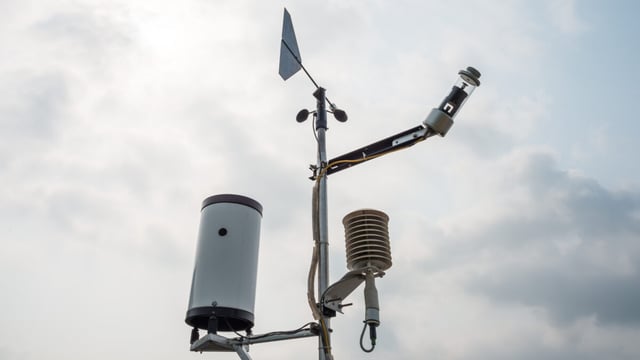
A locally designed airborne pollen trap is a hardware centrepiece of the initiative. The device was engineered specifically to withstand the UAE’s extreme heat, high humidity, and dust loads while remaining compatible with solar power, enabling reliable sample collection from both remote and urban deployment sites. The data produced by the trap feeds the platform’s microscopic library and its AI-ready datasets, creating a locally sourced evidence base rather than one assembled from climatically incompatible foreign collections.
This engineering specificity addresses a known limitation in aerobiology monitoring across arid Gulf states. Research on atmospheric pollen in desert-climate countries in the region has consistently highlighted the importance of local monitoring data, noting that pollination seasons and pollen concentrations vary significantly between countries and between cities within a single country due to distinct bioclimatic and biogeographical conditions.
Honey Authentication and Biodiversity Research Among Key Use Cases
Beyond respiratory health and air quality monitoring, the platform has direct commercial relevance for the UAE’s honey sector. Pollen identification underpins the authentication of honey, a product of growing commercial and cultural interest in the Gulf. By determining the botanical origin of the pollen a honey contains, laboratories can verify which flowers it came from and help confirm its quality and provenance, an area where DNA barcoding and chemical analysis have become important tools internationally. A local atlas gives UAE laboratories a regional reference against which to test samples, rather than relying on catalogues built for other climates.
The FEA and FRC previously set a Guinness World Record in February 2026 at the second Fujairah International Bee Research Conference by hosting the world’s largest scientific workshop on pollen in honey, bringing together 358 scientists, experts, researchers, and students in a large-scale masterclass in melissopalynology. The digital atlas formalises and extends the research infrastructure that underpinned that event.
Alignment with Fujairah Strategy 2028 and Federal Food Security Goals
The platform’s launch directly references two policy frameworks. According to FEA Director H.E. Aseela Abdullah Al Moalla, the project aligns with the objectives of Fujairah Strategy 2028 and the UAE National Food Security Strategy 2051. The federal food security strategy, introduced in 2018, aims to make the UAE the world’s best in the Global Food Security Index by 2051 by developing a comprehensive national system based on enabling sustainable food production through modern technologies. Biodiversity data and pollinator health monitoring form a foundational layer beneath any long-term food production resilience plan.
“This project represents a strategic step toward strengthening digital environmental infrastructure and advancing data-driven environmental knowledge,” said H.E. Aseela Abdullah Al Moalla, Director of the Fujairah Environment Authority, in the official launch press release. “By providing reliable scientific data, the platform supports environmental planning, enables informed decision-making, contributes to the conservation of natural resources, and enhances quality of life for current and future generations.”
Part of a Wider UAE Push to Digitise Environmental Governance
The pollen atlas fits a broader pattern of UAE-wide investment in digital environmental infrastructure. In October 2025, the UAE launched a national Measurement, Reporting and Verification system for greenhouse gas emissions, cutting the time needed to prepare national emissions inventories from 15 months to three and streamlining the workflow from 11 steps to four automated ones. The pollen atlas extends that trajectory into biodiversity and aerobiology, domains that have until now lacked a national digital backbone.
The FRC’s role as a multi-disciplinary scientific institution has grown in step with Fujairah’s positioning as a research emirate. Fujairah, the only emirate on the country’s east coast, has increasingly cast its research centre as a hub for environmental, marine, and agricultural science. The pollen atlas deepens that institutional identity with a platform designed to generate compounding scientific value as its dataset grows over time.