in Barcelona
 3 to 5 Nov 2026
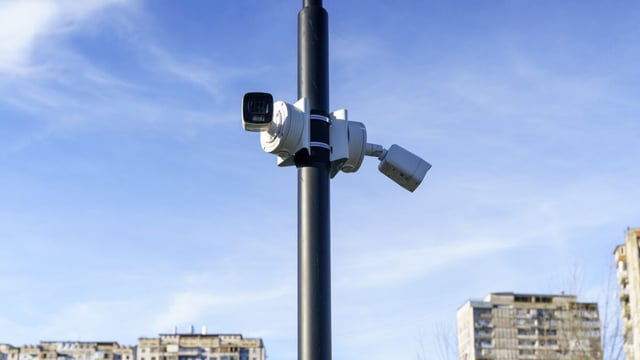
The Town of Hideout and Deer Valley East Village in Wasatch County, Utah, are set to install three AI-powered wildfire detection cameras this summer, backed by $300,000 in private funding from resort developer Extell Development Company and its affiliated nonprofit, the Mountainside Resort Foundation. The deployment, facilitated through camera platform provider ALERTWest, will place two units within the resort area and one in the residential community of Hideout, with all installations targeted for completion before the 2026 fire season.
A Community at Persistent Fire Risk
Hideout sits in what fire management agencies classify as the wildland urban interface (WUI), a designation applied to areas where residential development meets undeveloped terrain and where wildfire risk is structurally elevated. According to the town’s wildfire risk data, the vast majority of Hideout homes face high exposure to fire, a finding that has accelerated a sequence of municipal safety measures over the past two years.
Those measures have included the adoption of a defensible space ordinance in late 2025 and a community-funded effort to establish permanent fire station infrastructure along the SR-248 corridor. In 2024, residents and local stakeholders raised funds for Station 56, a temporary fire station near Jordanelle State Park intended to reduce emergency response times while a permanent facility is developed. The camera initiative extends that pattern of multi-pronged risk mitigation into the realm of early detection technology.
The context is broadly consistent with trends across Utah. The state’s 2025 fire season produced burned acreage surpassing the combined total of the three preceding years, according to reporting from community briefings on the camera project. Within the Jordanelle basin, where both Hideout and Deer Valley East Village are located, the convergence of rapid resort construction, residential growth, and dry mountain terrain has intensified the stakes of early fire identification.
How the ALERTWest Platform Operates
ALERTWest, a subsidiary of California-based wireless internet provider DigitalPath, operates a networked camera and AI detection platform developed in close partnership with CAL FIRE and the University of California San Diego. The company launched formally in 2023, following the success of the ALERTCalifornia program, which now manages more than 1,060 monitoring cameras across California and serves over 2,500 credentialed users from state, federal, local, and private agencies.
The system takes a panoramic scan from each camera every two minutes. An AI model then processes those images for smoke signatures during daylight hours and thermal anomalies at night. Confirmed detections are reviewed by ALERTWest operations staff before alerts are transmitted to local fire departments and emergency managers, a human verification step intended to reduce false alarms. The company reports that its daytime detection model outpaces 911 call reporting in more than 30% of confirmed fire events, based on feedback from CAL FIRE. Its nighttime model has demonstrated detection capability at distances exceeding 50 miles in documented cases.
In the Lake Tahoe region, where ALERTWest has operated since 2014, the camera network has enabled firefighters to contain more than 150 fires before they reached one acre in size, according to figures cited at Hideout’s April 22, 2026 wildfire town hall. That performance record formed a central part of the case presented to municipal and resort officials for adopting the technology in the Jordanelle basin.
ALERTWest’s expansion in Utah is not limited to this project. A separate $1 million federal grant is funding 19 additional ALERTWest cameras across remote areas of the state through a partnership involving the Utah Education Network, the Bureau of Land Management, the Utah Division of Forestry, Fire and State Lands, and the Utah Department of Transportation. That programme, which includes integration of hundreds of UDOT traffic cameras into the ALERTWest situational awareness platform, reflects a growing recognition of the state’s camera coverage gaps relative to neighbouring western states.
Private Capital and Regional Coordination
The $300,000 initial funding package comes from two sources: Extell Development Company, the New York-based developer responsible for Deer Valley East Village, and the Mountainside Resort Foundation, a nonprofit established by Extell founder Gary Barnett. Extell is currently midway through one of the most significant resort expansions in North America, more than doubling Deer Valley’s skiable terrain to approximately 5,726 acres and delivering a new base village that is among the first luxury alpine developments of its scale on the continent in decades.
Camera placement at the resort has been confirmed at two sites. The Hideout camera location remains under review, with ALERTWest set to conduct a viewshed analysis to identify the optimal installation point. Ski runs at the resort have been identified as natural fire breaks, and snowmaking infrastructure has been flagged as a potential supplementary mitigation and firefighting resource.
After the initial year, ongoing maintenance costs are estimated at approximately $27,800 annually, a figure that Hideout’s leadership intends to distribute across the broader beneficiary community. Neighbouring developments including Skyridge, Victory Ranch, and Talisker are expected to be approached for cost-sharing contributions, given their exposure within the same risk zone.
AI Detection Becomes a Baseline Investment Across the West
The Jordanelle basin deployment is part of a larger shift toward AI-assisted early detection across western communities and utilities. Kurrant has previously tracked parallel deployments in this space, including AI camera rollouts expanding across the western US, Rancho Palos Verdes’ $700,000 Pano AI camera network in California, and Rocky Mountain Power’s AI-enhanced wildfire detection programme in Utah. On the satellite side, Vancouver-based SenseNet raised $14 million in 2025 to scale its integrated ground sensor and satellite detection platform, while Argentine startup Satellites on Fire has demonstrated satellite-based fire detection running ahead of NASA’s FIRMS alert system by an average of 35 minutes.
Camera-based and satellite-based systems increasingly operate as complementary layers rather than competing solutions. Ground-level cameras offer verified, high-resolution smoke detection at or near the ignition point, while satellite platforms deliver broader territorial coverage and predictive fire behaviour modelling. For a WUI community like Hideout, where proximity to wildland terrain makes early ground-level ignition detection the most operationally decisive capability, the camera-first approach is technically consistent with the risk profile.
ALERTWest’s publicly accessible platform currently serves feeds from more than 1,600 cameras across Oregon, Washington, California, Idaho, Colorado, Hawaii, Montana, and Nevada. The Utah installations being undertaken through both the Jordanelle project and the concurrent federal grant programme represent a substantive expansion of that coverage into a state that had comparatively limited camera-based fire monitoring infrastructure before 2025.