in Barcelona
 3 to 5 Nov 2026
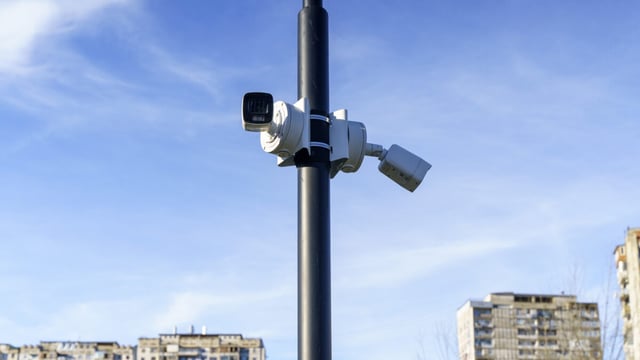
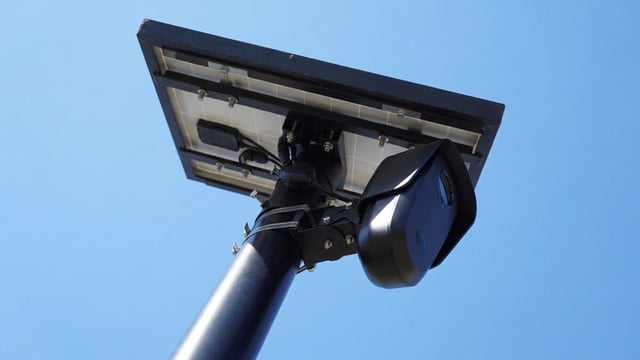
Automotus, a curb management company working under a test arrangement with the New York City Department of Transportation, took down the two CurbSight computer-vision cameras it had run on Broadway between West 74th and West 75th Streets in Manhattan during the week of 21 October 2026, ending a six-month pilot in a city of 8,804,190 residents without a single ticket or fine having been issued, according to West Side Rag. The installation tracked double parking and loading-zone behaviour at a retail block anchored by a Fairway Market and a Citarella, and the department has not yet published what the cameras recorded.
Two Cameras Covered One Retail Block and Issued No Penalties
The cameras were mounted in spring 2026, but Automotus announced the deployment on 4 August 2026, roughly four months after installation and after a delay attributed by I Love the Upper West Side to the department’s approval process. The company’s press release also places the equipment on parts of West 74th Street between Broadway and West End Avenue, and describes the New York deployment as limited to data collection.
Margot Zuckerman, director of growth and strategy at Automotus, presented the pilot to the Community Board 7 Transportation Committee on 13 October, where she said the company aims to optimise public curb use and reduce congestion. West Side Rag reported that the reason for removal was simply that the installation had reached its end date, and neither Automotus nor the department cited a complaint, a permit problem or a legal challenge.
What the System Measures and What the Vendor Says It Deletes
According to the company, CurbSight uses computer vision to log parking occupancy, vehicle dwell times, illegal and double parking and overall traffic flow, and the department receives a real-time dashboard and historical data to judge curb performance and compliance. I Love the Upper West Side reported that the system also records each vehicle’s make, model and colour, while cyclists and pedestrians are counted without identifying details.
On privacy, Automotus states that video is processed on the camera, that faces and unrelated licence plates are blurred, and that unneeded data is typically deleted within 12 hours. Those descriptions are vendor-supplied and have not been independently audited, while I Love the Upper West Side reported that the city owns the data and that Automotus says it does not resell it. A Community Board 7 committee member has asked that the board be allowed to share the resulting data with residents, and no release date for the department’s findings has been set.
State Legislation Keeps the Programme at the Data-Collection Stage
West Side Rag reported that the city cannot extend the programme from observation to enforcement until Albany acts on Senate bill S8665, introduced on 7 January 2026 by State Senator Julia Salazar and still under review. In a January 2026 opinion piece, Salazar and Assembly Member Steven Raga described the bill, which has the Assembly companion A5440, as a way to ticket curbside violations by camera in New York City.
The same piece cited a figure of 2.87 percent of 588 illegal parking complaints resulting in tickets, and credited the city’s bus-lane cameras with a 40 percent fall in violations, though those are the authors’ advocacy figures rather than audited department data. Unlike the sensors the department used in an earlier trial, Automotus can generate automated citations and invoices, which is why the legal gap matters to this particular vendor.
Vendor Results From Other Cities Remain Self-Reported
West Side Rag cited a case study reporting a 43 percent drop in double parking in Fort Lee, New Jersey, after automated billing began, a figure published by the vendor and not verified by a third party. Automotus has also worked with municipalities in Pennsylvania, Georgia, Kentucky, Nebraska, Florida and California, and Kurrant previously reported that Pittsburgh extended an Automotus loading-zone pilot into camera-based enforcement of street-cleaning rules in April 2025.
Procurement has been less smooth in New Jersey. On 10 June 2026 the Jersey City Council pulled an award resolution for a camera-assisted parking enforcement pilot after the mayor’s office found a donation from an Automotus executive that the vendor had not appropriately disclosed during the city’s pay-to-play vetting, according to Business Administrator Ruby Choi, and the council added a new request for proposals to the agenda instead.
The Department Already Runs Larger Computer-Vision Sensor Networks
The department has used computer-vision sensors for curb and traffic analysis before, and West Side Rag reported that a 2023 pilot with VivaCity used 12 sensors before the city installed them at 80 further locations in June 2026. That scale dwarfs a two-camera deployment on one block, and it indicates that the city is comfortable collecting anonymised counts at volume while the question of automated penalties remains with the legislature.
Community voices on the Upper West Side were split in the coverage, with a StreetopiaUWS organiser calling the technology a scalable resource for double parking and a resident asking whether reports had reached the community board and whether the data would be public. The Upper West Side block was chosen, according to West Side Rag, because its concentration of retail generates heavy loading and delivery activity, which makes it a demanding test of how often trucks occupy travel lanes. The department declined to comment on specifics beyond noting its prior use of such sensors, and Automotus declined an interview with West Side Rag.
The test now moves to analysis, and the decision that follows depends less on the cameras than on whether the department’s findings can show a measurable change in double-parking at the Broadway block, and whether Albany passes S8665 before that evidence is made public.