in Barcelona
 3 to 5 Nov 2026
Nyquis, a San Francisco-based developer of high-resolution monitoring equipment for electricity distribution networks, announced on 5 November 2026 that it has raised $6.3 million in seed funding. The round was co-led by Gigascale Capital and South Park Commons, with Allison Pickens Ventures, Friale, Sovereign’s Capital, Pioneer Fund, Script Capital and Lost Coast Ventures also participating.
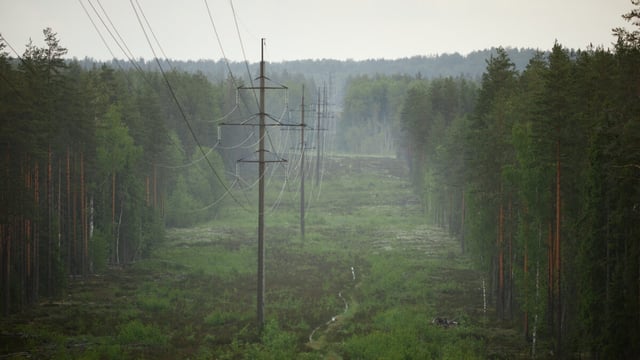
The company sells a substation-mounted sensor, the Nyquis Node, that samples voltage and current waveforms on each distribution circuit. It flags electrical anomalies that conventional protection relays never trip on, including vegetation contact and deteriorating connections, two recognised ignition sources in utility-caused wildfires.
A Substation Sensor That Reads Waveforms Instead Of Waiting For Relays
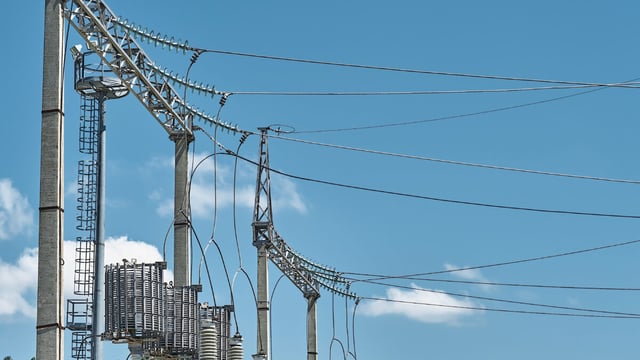
According to Nyquis, each node sits in a substation equipment rack and monitors one circuit. It connects to the existing voltage and current transformers without any change to protection settings, which keeps the device outside the relay engineering and testing cycle that slows most new substation hardware.
Building in this space?
Kurrant Ventures backs start-ups digitalising cities and utilities, and opens doors to the operators that buy from them.
- Latitudo 40
- GoodVision
- Meersens
- Cortexia
The node samples time-synchronised waveforms at about 10 kHz and processes them at the edge, reporting over Ethernet with a response time under 800 milliseconds. Pulse 2.0 reported that installation takes about 15 minutes, with no shutdown and no rewiring.
The detection layer relies on machine-learning models trained on more than 200,000 simulated faults, and Nyquis says it can flag anomalies below 1 amp. That is the range where a branch resting on a conductor can arc for hours while drawing far too little current to trip an overcurrent relay or blow a fuse.
Otero County Pilot Supplies The First Field Results
The first published deployment is at Otero County Electric Cooperative, a Cloudcroft-based cooperative serving more than 16,000 homes and businesses across four counties in south-central New Mexico. Its territory includes forested mountain terrain where wind events regularly push vegetation into overhead lines.
During a windstorm, the system recorded more than 50 high-impedance fault events linked to branches touching lines and narrowed them to four locations. Cooperative crews repaired three sites and the signals from those sites stopped, while the fourth location kept alerting, according to the company’s account reported by Pulse 2.0.
Nyquis says its equipment now monitors approximately 800 miles of power lines.
“The goal is to find the problem while the lights are still on,” said Daniel J. Hunter, co-founder and CEO of Nyquis, as quoted by Pulse 2.0 in its 5 November 2026 report on the round.
Founders Bring Field Electrical Work And Utility Research Experience
Hunter is a former electrician from Humboldt County, California, who co-founded Yoshi Mobility and built its electric vehicle charging division. He later worked as a researcher at Stanford University, according to the company’s mission page.
Chief technology officer Steve A. Bukowski, PhD, PE, has more than 30 years of experience in power systems and digital signal processing. His previous roles include principal investigator at Idaho National Laboratory and director of new technology at El Paso Electric, the utility serving west Texas and southern New Mexico.
Investors Back Capacity Planning As Well As Fault Detection
The company plans to use the funding for a next-generation sensor, a larger machine-learning fault training set and more utility deployments. It is also developing capacity-planning products that use live measurements to estimate spare distribution capacity for data centres and electrification loads, according to Pulse 2.0 and Startup Researcher.
That second product line places Nyquis in the interconnection and hosting-capacity market. Piq Energy, for example, raised a $5 million seed round in July 2026 to speed up grid interconnection studies.
Gigascale Capital was founded by Mike Schroepfer, the former chief technology officer of Meta. It closed a $250 million second fund in June 2026 focused on energy, grid and critical minerals, with a portfolio that includes Commonwealth Fusion Systems and Form Energy.
South Park Commons was founded in San Francisco in 2016 by former Dropbox executives Ruchi Sanghvi and Aditya Agarwal. It closed a $275 million third fund in 2025 and was reported by Bloomberg in January 2026 to be raising a $500 million fourth fund.
Wildfire Liability Sets The Budget For Detection Tools
The commercial case rests on the scale of utility wildfire spending in the western United States. Pacific Gas and Electric’s 2026-2028 Wildfire Mitigation Plan carries $18.88 billion in three-year costs and about 1,100 miles of undergrounding.
Southern California Edison has acknowledged that its equipment may have been associated with the ignition of the January 2025 Eaton Fire in Altadena, and Jefferies has estimated its potential liability at $13.5 billion. The utility’s direct compensation programme had paid $175 million to more than 1,200 claimants by 21 May 2026, according to Edison.
Undergrounding at that scale takes years. Utilities are therefore also buying monitoring that can locate developing faults on overhead lines that will stay in service through several more fire seasons.
Competing Approaches Range From Poles To Substations
The closest venture-backed competitor is Gridware, which mounts Gridscope sensors on individual poles. It raised a $26.4 million Series A in January 2025 and a $55 million round in November 2025 led by Tiger Global and Generation Investment Management, and reports tens of thousands of devices installed.
Pole-mounted sensors localise faults precisely but require hardware along the whole feeder. A substation device covers an entire circuit from one rack and depends on analytics to infer where along the line an event is occurring.
The established benchmark for the substation approach is Distribution Fault Anticipation, developed at Texas A&M University by B. Don Russell and Carl Benner with funding from the Electric Power Research Institute. It also uses existing substation current and voltage transformers and has reached roughly 1,000 deployments worldwide through Power Solutions Inc., according to EPRI.
Vegetation analytics provide a third route. Overstory raised $43 million in November 2025 for satellite-based vegetation intelligence that utilities use to prioritise trimming before contact occurs.
Distribution Fault Anticipation took roughly 15 years of field research to reach utility adoption at scale. The measure for Nyquis will be how quickly it moves from a cooperative serving 16,000 customers to investor-owned utilities with thousands of circuits, where its sub-1-amp detection threshold has to hold on noisier, more heavily loaded feeders and its alerts have to be ranked well enough for crews to act on them during red-flag wind events.