in Barcelona
 3 to 5 Nov 2026
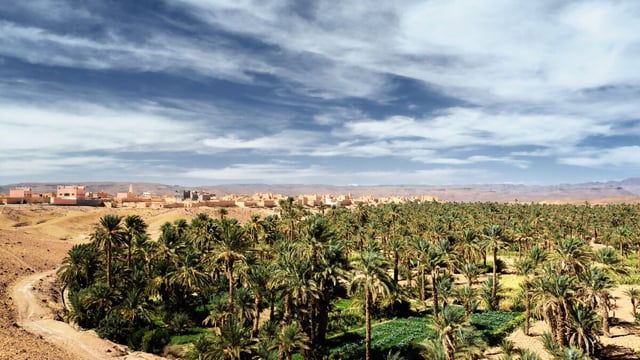
Oman’s Ministry of Agriculture, Fisheries Wealth and Water Resources and the state-owned utility Nama Water Services signed an agreement in Muscat on 11 November 2026 under which the utility will finance, install and operate smart meters on approximately 1,000 licensed groundwater wells, the first phase of a national digital platform built to measure abstraction from the aquifers that supply most of the Sultanate’s water.
Installation of the first phase runs from 1 January 2027 to 31 December 2028, and the meters will report over a LoRaWAN wireless network to a cloud platform hosted inside Oman, according to the Oman News Agency announcement of the signing.
Utility Carries The Capital Cost, Ministry Writes The Well Rules
The agreement was signed for the ministry by Eng. Ali bin Mohammed Al Abri, Undersecretary for Water Resources, and for Nama Water Services by its Chief Executive Officer, Qais bin Saud Al Zakwani. Nama Water Services will fund the project, supply and install the meters, operate them and manage the digital platform, while the ministry supervises delivery and develops the regulations that govern groundwater wells.
This project is heading to tender
New smart water tenders worldwide, flagged daily with an AI summary.
That division places the cost of the metering layer on the national water utility rather than on individual well owners, and leaves the ministry to convert the resulting consumption data into licensing and allocation decisions.
The first phase targets licensed wells across five categories of use: auxiliary wells that feed aflaj, the gravity-fed channels that still irrigate many of Oman’s oasis settlements; wells supplying water bottling plants; wells serving investment and development projects; wells held under usufruct contracts; and wells on productive farms.
LoRaWAN Links Remote Wellheads To A Locally Hosted Platform
Readings will travel over LoRaWAN, the low-power wide-area protocol designed for battery-powered devices dispersed across large rural areas, to a cloud environment hosted within the country. The ministry stated that the platform will comply with national standards on the confidentiality and protection of personal data and on cybersecurity, with encryption applied under the supervision of the competent authorities.
The protocol is already part of Nama Water Services’ toolkit. The utility’s customer metering programme combines 4G, NB-IoT, LoRaWAN, remote reading systems and hybrid solutions, selected by area type, coverage quality, energy consumption and connectivity, according to Oman Observer reporting in June 2026 that put Nama’s smart water meter coverage at approximately 99.5%.
In July 2026, Nama joined Future Cities Company (Tadom), representing OTEC, and the Algiers water and sanitation company SEAAL in a memorandum of understanding for a LoRaWAN-based automated meter reading and advanced metering infrastructure pilot covering 100 accounts in the Algerian capital, with data routed to a local cloud, Times of Oman reported.
Globally, more than 30 million of the 150 million LoRaWAN devices in service are meters, with water metering leading demand, according to figures released by the LoRa Alliance on 10 November 2026.
Groundwater Supplies Most Of Oman’s Water And Has Been In Deficit Since The 1980s
Groundwater accounts for between 78% and 83% of Oman’s total water supply, according to official estimates compiled in a report on groundwater use and policies in Oman published by the International Water Management Institute, with agriculture absorbing a similar share of supply. The same report records that abstraction has exceeded natural recharge since the late 1980s, that the National Well Inventory of the early 1990s identified about 130,000 active irrigation and livestock wells, and that the 1997 National Aflaj Inventory counted 3,108 operational aflaj.
The report also states that farmers pay no fees for abstraction from their own wells, and that well permitting is governed by Ministerial Decision No. 264/2000. Metering at the wellhead converts a permit into a measured volume, and the first-phase categories combine commercially exploited wells, such as bottling plants and investment projects, with the auxiliary wells that sustain aflaj flows.
Nama Arrives With Urban Metering Close To Saturation
Nama Water Services enters the groundwater programme from a customer metering base near full coverage. Kurrantly reported on the utility’s programme to install more than 400,000 smart meters, with over 320,000 already fitted in Muscat and 70,000 in South Batinah at the time, and the Authority for Public Services Regulation has reported 99% smart meter adoption in the water sector in its review of the 2021 to 2025 period, alongside OMR 8.8 billion of investment planned across regulated sectors for 2026 to 2030 and 97 water projects worth OMR 966 million under way.
The utility has also contracted out operations in part of its service area. During the Sultan’s state visit to Paris on 29 June 2026, Nama awarded a 15-year performance-based contract worth RO 878 million, about €2 billion, to a consortium led by SUEZ with National Trading Company and the National Energy Center, covering Muscat, North Sharqiyah and South Sharqiyah, home to 2.3 million people or about 43% of Oman’s population.
That contract includes operation of 240 wells and more than 400,000 smart meters and sets a target to reduce water losses from 34% to 11% by 2040, as Kurrantly covered alongside a smart meter manufacturing partnership between Oman’s National Energy Centre and French group Sagemcom.
Phase One Sets The Baseline For Regulating Abstraction
At approximately 1,000 wells, the first phase covers a small fraction of the well population recorded in national inventories, and its categories concentrate on licensed, commercially significant or aflaj-linked abstraction points where the ministry already holds a regulatory relationship with the well owner.
The two-year installation window will give the ministry operating data on meter performance, LoRaWAN coverage at remote sites and data delivery to the national platform, the three conditions any wider rollout across the governorates will depend on.
The test of the programme will come when metered abstraction from the first 1,000 wells, due to be fully installed by 31 December 2028, is set against the groundwater regulations the ministry is now responsible for drafting, in a country whose early-1990s inventory counted about 130,000 active wells drawing on aquifers that have been in deficit for more than three decades.