in Barcelona
 3 to 5 Nov 2026
The Ajuntament de Puigcerdà, the town council of a municipality of 10,035 inhabitants in the Baixa Cerdanya area of Girona province, Catalonia, is carrying out a drinking-water network project budgeted at about €373,000, of which the Agència Catalana de l’Aigua (ACA) is subsidising 67.75%. According to Regió7, which reported on the programme on 22 October 2026, the works are being delivered with Veolia and are scheduled to run until the end of the year, combining the replacement of pipes at the end of their service life with digitalisation, pressure regulation and leak detection.
The stated aim is to reduce water losses and improve the efficiency and reliability of supply in a town at an altitude of 1,202 metres.
A Subsidy Split That Leaves the Council About €120,000
Applying the 67.75% ACA share to the €373,000 budget gives a subsidy of roughly €252,708 and a municipal contribution of roughly €120,292, figures that are Kurrantly calculations from the published percentage and total rather than amounts quoted by the council.
The council announced the start of the works at the end of August 2026, after the summer festivities, as the first of several municipal improvement actions planned for the following months, according to Puigcerdà Digital and Pirineus Digital.
Fibre-Cement Out, Polyethylene In, Street by Street
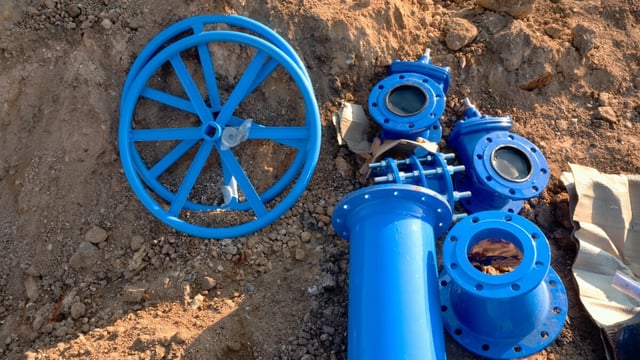
Work began on carrer de Vilallobent, where old fibre-cement mains are being replaced with polyethylene pipe, and is planned to move to carrer Deulofeu, carrer Puigpedrós and camí d’Age over the following weeks, according to Viure als Pirineus.
Fibre-cement is a common legacy material in Spanish distribution networks, and its replacement with polyethylene is the part of the scheme that addresses leakage at joints and on ageing pipe barrels directly.
The council has warned of temporary traffic restrictions and regulated road closures on the affected streets while the trenches are open.
Pressure Reducers, Sectors and Telecontrol Carry the Digital Component
Beyond pipe renewal, the project installs pressure reducers at the entrance to Age and improves the sectorisation of the network, so that zones can be isolated and managed independently when a fault occurs.
The Puig de Santa Maria reservoir is to be waterproofed to stop losses in the structure itself, and an intensive campaign to find hidden leaks is planned across the network.
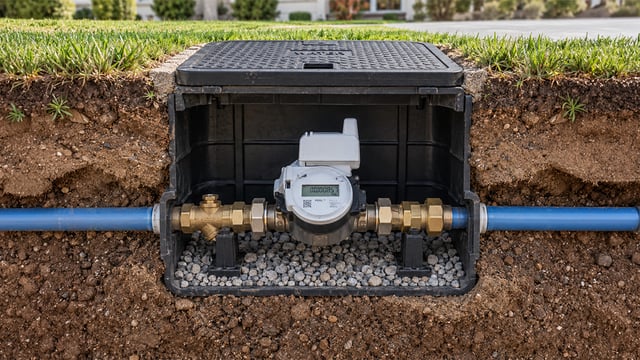
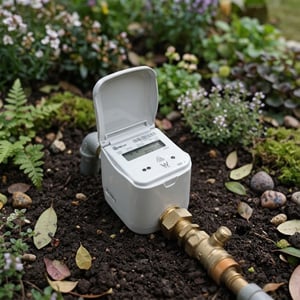
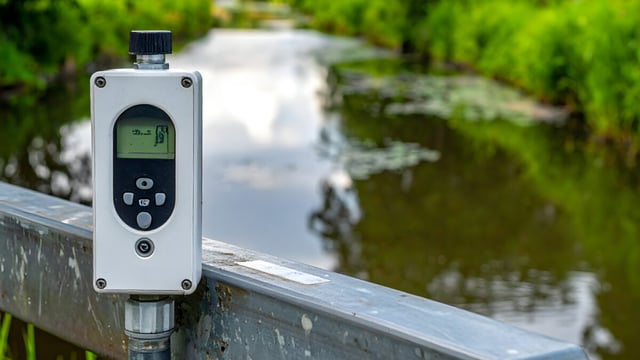
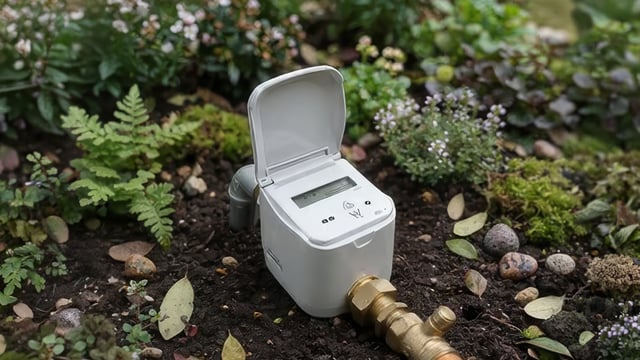
The digital layer consists of telecontrol systems and interconnected data platforms that allow technicians to monitor pressure and flow in real time and react quickly to anomalies, as described by Viure als Pirineus.
Pressure management and sectorisation work as a pair: lower and steadier pressure reduces the rate at which existing leaks lose water and the frequency of new bursts, while sector boundaries give the flow data a place to be compared against expected demand.
Where the Project Sits Against Catalonia’s Loss Rate
The ACA put average losses in Catalan drinking-water networks at 25%, or 134 cubic hectometres a year, in data reported by 3Cat in April 2023, equal to about three quarters of the volume of the Sau reservoir.
The same report listed Olot at about 40% and Girona at about 20%, which gives a range against which a town of Puigcerdà’s size can be measured once its own baseline and post-works figures are available.
The €373,000 budget is a small sum next to the network-wide programmes run by larger Catalan operators, so the measurable result will depend on how much of the network the three named streets and the Age feeder represent, and on how quickly the new sector meters and pressure data are turned into repaired leaks. The next test is the winter reading of flow in the newly isolated zones, which will show whether the loss reduction the council is targeting appears in the data once the trenches are closed.