in Barcelona
 3 to 5 Nov 2026
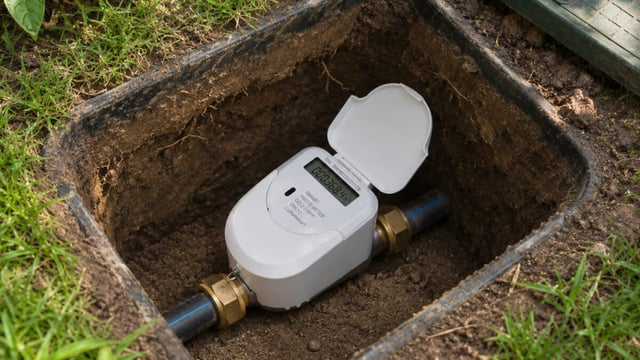
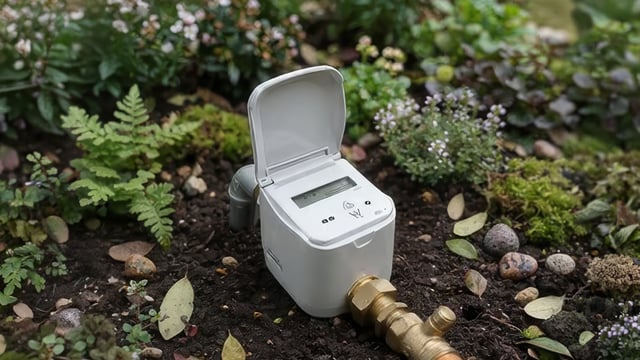
Empresa Municipal Aguas de Málaga, S.A. (EMASA), the municipal water company of Málaga, a city of 599,687 registered residents in the Andalusian province of Málaga, approved on 13 November 2026 the procurement file for an €8.00 million framework agreement (€7,996,783.64 including VAT) to buy smart water meters and remote-reading components with NB-IoT data connectivity, forecasting about 30,000 units a year for an installed park of 245,000 meters.
The decision, taken by the EMASA board of directors and reported by Europa Press, sets an initial term of two years with the option of two further one-year extensions, and it opens the supply procurement rather than confirming any installed devices.
Twelve Lots Split By Metrology, Flow Range And Communication Protocol
The framework is divided into twelve lots defined by measurement technology, flow range, meter dimensions, automatic reading capability, communication protocol and accessories, a structure intended to let companies specialised in different supply segments compete, according to Revista de Urbanismo.
This project is heading to tender
New smart water tenders worldwide, flagged daily with an AI summary.
The 30,000-unit annual forecast covers new customer connections, failed meters, end-of-life replacements and units withdrawn after metrological quality checks, which equals 12.2% of the current park each year and about 120,000 meters, close to half the installed base, if both extensions are exercised.
The same board session approved three further files worth a combined €9.74 million, according to 101TV: a four-year dynamic purchasing system for pumps, hydraulic network material and electromechanical equipment with a base budget of €4.74 million, a four-year €2.90 million framework for rehabilitation and maintenance of infrastructure, and a one-year €2.09 million contract for water treatment chemicals, bringing the day’s approvals to €17.74 million.
PERTE Funding Built The Reading Back End Before The Meters
The new framework sits on top of a digitalisation programme funded under Spain’s PERTE for the urban water cycle: EMASA’s Phase I digitalisation project has a total budget of €9.42 million, of which €7.90 million is a NextGenerationEU grant awarded on 3 October 2024 by the Ministry for the Ecological Transition and the Demographic Challenge under Order TED/919/2023.
Its remote-reading action covers the purchase of 9,000 NB-IoT radio modules for existing meter batteries, with the aim of bringing about 130,000 existing electronic meters under fixed remote reading, and the related tender 25-501 specifies the UNE 82326:2010 protocol with NB-IoT data connectivity included.
A second action funds a common meter-reading repository, a data lake, middleware and a mobile tool for deploying and maintaining NB-IoT meters, so the devices bought under the new framework will report into a back end that the utility has already procured separately.
Leak detection is being contracted in parallel: in February 2026 EMASA published a TED notice for a €1.70 million framework, excluding VAT, covering leak location services and non-revenue water work for three years with two optional one-year extensions.
Vendor-Neutral Connectivity And Supplier-Reported Savings
Connectivity for the early NB-IoT units has been supplied by the German IoT operator 1NCE, whose case study states that EMASA installed its first 1,200 devices using its SIM cards in October 2024 and planned around 170,000 connected meters in 2025, including 11,400 modules for meter batteries and large consumers.
According to 1NCE, its SIM cards attach to the strongest signal among Spain’s three main mobile networks and work independently of the meter manufacturer, and the deployment cut equipment costs by more than 20% and extended battery life by about 10%; these are vendor-supplied figures that have not been independently audited.
A connectivity layer that is independent of the meter manufacturer is consistent with a twelve-lot procurement, since meters from different suppliers can report into the same reading repository provided they meet the protocol and connectivity terms set in each lot.
How Málaga Compares With Madrid And Seville
Málaga’s volumes are modest against Spain’s largest NB-IoT water programmes: Canal de Isabel II planned remote reading for about 1.6 million meters across 172 municipalities in the Madrid region with an estimated investment of €200 million, taking hourly readings transmitted daily.
In its latest phase, the Madrid utility awarded just over €30 million to Telefónica and Vodafone across nine lots, with Telefónica taking seven worth about €25 million and Vodafone two worth more than €5.5 million.
In Seville, EMASESA’s programme with Telefónica Tech and meter maker Contazara covers 77,300 NB-IoT smart meters over four years, with hourly consumption data and batteries rated for more than twelve years, according to Telefónica.
Madrid and Seville awarded large shares of their rollouts to telecom operators, while Málaga is procuring meters by technical lot with NB-IoT data connectivity included in the supply, which leaves integration with the reading repository and data lake to the utility’s own PERTE-funded platform.
The lot-by-lot awards that follow publication of the tender will show whether the twelve-lot design draws more competition than the 2023 framework, where the wireless velocity meter lot attracted two bids and cleared at 46% of its estimated value, and those prices will set the unit cost basis for moving the rest of Málaga’s 245,000-meter park onto NB-IoT reading.