Digitalizing Waste Management in Extreme Weather: Lessons from Lethbridge
View transcript auto-generated
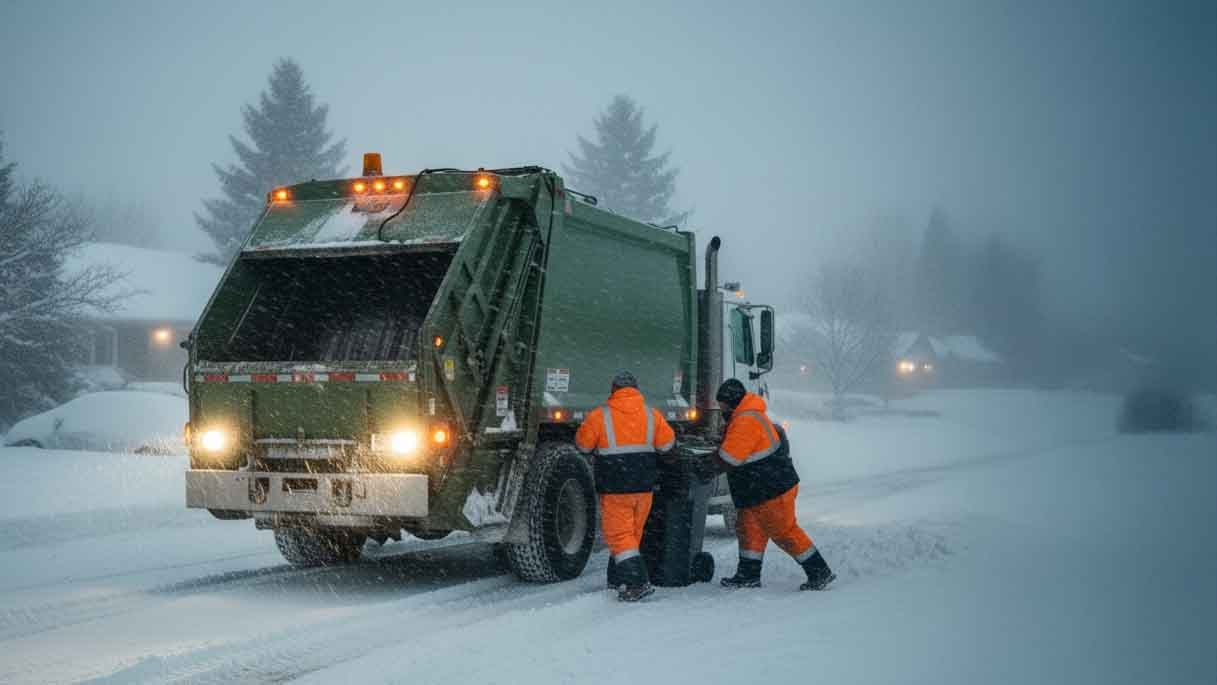
-35ºC. That’s how low temperatures get in Lethbridge. The Canadian city experiences harsh winters. But it’s not just the harsh winters, they also have extreme fluctuations, with temperatures going from -30ºC one day to 10ºC the next. This harsh environment can be a challenge when looking to digitalize a city, as technology might not be able to endure such extreme weather. Lethbridge’s Waste and Recycling Utility knew this when looking for technology that would help them collect waste at their recycling depots and their commercial clients more efficiently. And that was one of the biggest things that we were trying to figure out. Is this going to be an issue or not? So we were concerned that these sensors may not perform, may not perform as well in those extreme cold temperatures. May be more likely to get damaged in those extreme cold temperatures. Maybe they get brittle and get damaged under impact. The tech challenge was made obvious after the team tried cameras to see when containers at their recycling depots needed to be emptied. They found maintenance was a lot more usual than expected. They had to swap out or fix the devices, often with battery failures, camera failures… This added to the fact that they were expensive. So, not a great fit for them. That’s when they decided to turn to ultrasonic fill-level sensors. The city’s waste team piloted, in the winter of 2024-2025, 30 sensors by Sensoneo in three recycling depots. These sensors emit ultrasonic pulses that bounce back when they reach the nearest part, calculating the time it took for the wave to return and estimating the height of the waste. They send the data to the platform via cellular connectivity, gathering data on the fill-level four times a day to see how full each bin is. They also send data on location. What was very important was the GPS. Which is not usually the case in the projects, even though our sensors are equipped. But for them, it was one of the main drivers because their bins, like the big ones, there are a lot of bins that are moving between the three recycling stations. Each morning, the team checks the latest reading, which is at 5 a.m., to plan the best pickup route, allocating resources where they're needed and avoiding having to send people to check them manually. Knowing the harsh conditions, Sensoneo engineers had to study whether they needed to adjust anything on the sensors to survive the extreme cold. How? By sticking them in the freezer, where they passed the first test. Fast forward to the summer of 2025, and the Lethbridge team found the sensors had survived the winter, passing the second test. The city is now entering the next stage of their project, where they can find a clear ROI: commercial clients. Without sensors, the city’s waste utility does an estimation of how much waste the commercial client will generate, and they decide how many times a week the utility must collect it. Each collection costs money to both the commercial client and the city. With the sensors, there is no longer a need for estimations, and the city can collect only when needed. The city now has 30 sensors at the recycling depots and 30 in commercial clients bins. That's double the original pilot and the first steps towards scaling across the city. Because we get charged by the engine hour and we get charged by the kilometer for our light duty vehicles. So every kilometer that's not driven, every engine hour that's not used, is a savings that's going to quickly pay off, the sensors and show a return on investment. The financial goal that we want to achieve is, reducing the engine hours on the commercial garbage side as well. Our overhead trucks that we use to collect commercial garbage are one of the most expensive trucks that we have to run in our fleet. Clients pay a set fee, and the waste utility has to pay the city Fleet Department per truck hours for maintenance and repairs. The fewer hours, the cheaper for the city and the client. And more accurate planning of disposing client material means more accurate costs. The hope is to see the project grow with commercial clients. For Lethbridge, the lesson is clear: smart city projects succeed when they solve real problems. By pairing sensors with thoughtful planning, the waste utility is cutting costs, reducing emissions, and proving that even in -35ºC winters, technology can thrive when it’s used for impact, not just hype.


📰 Latest News

🎬 Kurrant Originals

🎥 Recent Event Coverage

🎯 Featured Case Studies
Real client work behind the news — strategy, M&A and engineering projects we've delivered for cities and utilities.



Stay in the Loop
Get smart cities and utilities insights delivered your way. Choose your channel
Join our WhatsApp Channel