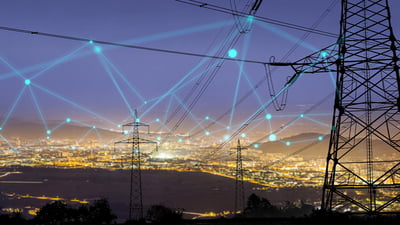
Millions of people across Spain and Portugal have been hit by massive power cuts. That has caused chaos for millions of people across the Iberian Peninsula. A massive blackout left the countries without power for more than 12 hours. A complete blackout. It's what happened on April 28th, when Spain, Portugal, Andorra and parts of the south of France were left without any electricity from 12:30 CET until the next day in some cases. While we have experienced regional blackouts before, during massive storms for example, a national blackout is a very rare occurrence. Never in my 31 years of existence had I experienced something like this. But as we've seen, national blackouts are not impossible. Sometimes we forget that electric grids are highly complex ecosystems. So let's go through how lights remain on. Grids like balance and continuity. To achieve this, energy needs to be produced and consumed at the same time, as there's little room for storage. In the past, energy grids relied on rather predictive power plants, but now they've largely been complemented with local solar plants and wind turbines, which are excellent yet more unpredictable sources of energy. If the balance between all the producers and consumers fails and demand exceeds supply, the frequency of the grid drops and systems automatically shut down to avoid damage. It's like burning a fuse, but at a macro scale. But the same can happen the other way round. More power than demand? Generators and loads can be shut down to protect the infrastructure. Think about it one miscalculation can turn into problems for the grid. So balance. Highly important. But what happens once that balance and power are lost and a blackout takes place? Well, after the blackout comes the black start, turning the power back on. This is no easy task. To restore electricity generation from scratch, the grid will rely on units that can start without external power. Enter the independent Kings and Queens: hydroelectric plants, gas turbines or battery systems. These will be able to start on their own and operate independently. However, to bring back the power to an entire nation, they'll need to be strategically located, spread out across the network. This will lead to islands of local generation and demand popping up on the map, working isolated until ultimately they are slowly synchronized with each other while load is added incrementally and then reconnected. Portugal relied on the Castelo do Bode hydroelectric plant and the Tapada do Outeiro gas plant to restore electricity. But the blackout area also relied on, ENTSO-E. To achieve grid stability there are smart controls to detect imbalances and adapt, inertia from traditional power plants like nuclear and gas, or even connections between countries like in Europe, where there is an interconnected grid sharing system with over 30 nations sharing electricity. It's the ENTSO-E, the European Network of Transmission System Operators for Electricity. This type of system allows electricity to be balanced in real time by supplying and demanding to each country depending on the situation. During the April 28th event, two major grid disturbances, which are currently under investigation and according to some experts could be linked to the instability of high renewable energy penetration, reportedly triggered the Iberian Peninsula disconnection from the broader European grid, thus leaving the area with a lot less production for the high demand and leading to the blackout. Reconnecting again is part of the reason why the black start happened, as they were able to import power and gradually stabilize the peninsula's grid. All in all, blackouts can be seen as a learning. Number one. Blackouts aren't impossible and don't have to be a sign of the end of the world. Power can be restored. And number two. It's important to have interconnections and collaboration, but it's key not to rely solely on them. I'm sure having local energy sources, including district heating and cooling networks, also known as local loops of energy, as well as local energy storage solutions, will probably become more attractive to Iberian cities now.
A National Blackout: Why and How the Power Grid Fails
On April 28th, Spain, Portugal, Andorra and parts of the South of France experienced a complete blackout. This is a very rare event, but as we saw, not impossible. In this video we explore and explain how the electric grid works, why national blackouts can happen, how power is restored after such an occurrence, and the learnings from this major event.
View transcript auto-generated








📰 Latest News
🎬 Kurrant Originals

🎥 Recent Event Coverage


Featured Case Studies
Real client work behind the news. Strategy, M&A and engineering projects we've delivered for cities and utilities.
Stay in the Loop
Get smart cities and utilities insights delivered your way. Choose your channel
Join our WhatsApp Channel