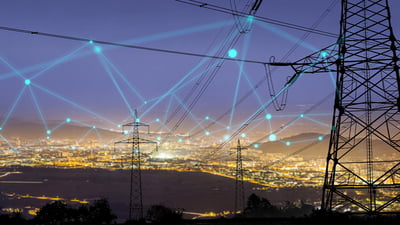
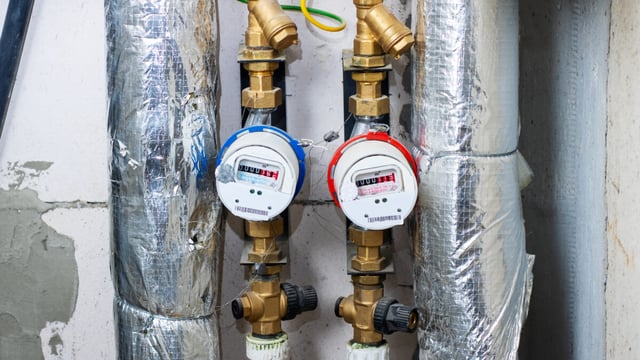
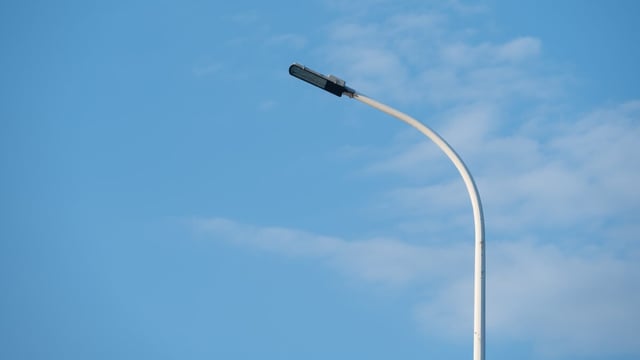
Electric utilities in the US are very advanced when it comes to the digitalization of their distribution. Back in 2009, President Obama allocated $3.4 billion for the Smart Grid Investment Grant to modernize the country's electric grid, funds many utilities used for smart meters. In 2023, the US Department of Energy announced another $10.5 billion in grid resilience and innovation partnerships to help make the grid more reliable and resilient. Fast forward to 2024, and around 70% of utilities have already deployed an advanced metering infrastructure, meaning that unlike what we see in the smart city industry in the US, where most projects are pilots, smart utility solutions are deployed at scale. And when projects are widely deployed, that's when deployers see the benefits. In regards to digitizing Dominion Energy’s main focus has been in regards to enhancing operations and customer experience. So we transitioned many of our, almost all of our meters in the state of Virginia to smart meters. In doing that, it really saves not only saves us money, but makes us more efficient. With the grid reliability stability of the grid. What we're focusing on in outdoor lighting is installing smart lighting controls on our 2.5 million fixtures. We began installing those in late of 2022. Today, we've installed about 150,000 across our footprint. We see a lot of benefits for our customers for example, self-reporting of outages, where our customers will no longer have to report their outages for us. We also see a lot of operational efficiencies in our repair side through digitizing, such that our techs can go to the exact light location. Now, with digitalization they’re able to have real time sensors that are able to be put out into their feeder circuits whether be distribution or transmission, this real time information provides data and they can make modifications as needed to make sure that they're getting their reliable service, those outcomes that they want to have and do it in a cost effective manner and be able to do it in a safe environment for their employees and their customers. Now that the basic benefits of digitalization are covered, the question is how to take it a step further and leverage the network they have. That's where smart city solutions come in, bringing the utility and city environments closer than ever. In the US, a large portion of streetlights are owned by the utilities and to connect them, they need to install a communications network that can be used for other solutions. So utilities are exploring smart city projects. Dominion Energy, for example, has created smart city positions within its team and is to launch five pilots. Four are funded by Dominion and will test smart solutions like a smart bus stop, smart parking and a smart park. The last one will be funded by a grant and in partnership with the Virginia Tech Transportation Institute and the City Air Force Church, where they'll install cameras with computer vision, noise detection and even dynamic lighting thanks to a dimming feature. We're actually looking into doing some pilots where we're going to be utilizing our streetlights infrastructure to attach smart city sensors such as air quality control sensors, flood sensoring, cameras, wi-fi, noise detection. So, a lot of different technology that we're looking to pilot with various vendors and really understand, what all this technology can do and how it can help the cities better make informed decisions. At Duke Energy, Outdoor Lighting we've also been able to deploy 5G towers for carriers to improve that. We also provide attachment space for wildfire and broadband and those types of things for any carriers who want to deploy those areas. So we’re basically a mechanism to facilitate that, we're already at full deployment. We already have over 1600 5G sites around our service territory and we're installing hundreds of the what I call the smart attachments, the wi-fi and the other types of IoT devices like cameras and those types of things. Smart lighting controllers can serve as the communications network or the data aggregation points for sensors deployed around or on the streetlights, or can even manage power usage to have enough energy for both the light and sensors. And since streetlights are everywhere in a city and can communicate, they become an incredible already deployed infrastructure for smart city solutions. So definitely, as utilities expand their communications network, they can partner with the city to be able to take advantage of that and it doesn't require redundant investments in communications. They can leverage the utility communications either via a private network of some type of communications. For you to have a smart city, you need to have a utility that's supporting them. Utilities bring existing infrastructure in place. A great example is streetlights, so they might be providing the street lights for the city. And that street light gives the city the opportunity to attach sensors. In some situations, you may be able to put 20 plus applications onto a street light. Again, utilities is the foundation because utilities have the power source, they have the streetlights and they have a vested commitment to the community too. Street lighting is kind of the backbone of smart cities. And so by providing smart lighting controls, we're kind of providing the platform for cities to do more and attachments, for example, we'll be able to provide attachments for our customers, for our cities, for cameras and such. And that's just an iteration of the smart lighting controls. Of course, one of the reasons for having smart city technologies is to improve the quality of life and services for residents. But there also needs to be a return on investment as at the end of the day, the utility is a business that needs to keep its lights on. Dominion Energy is very much interested. You know, we're all about helping our community, our customers. They've come to us actually, and asking us like, hey, do you offer cameras? Do you offer ways to do license plate recognition? They're coming to us and they're asking for these types of technology. So it's like, you know, why not? Why not get into it and look into it and see if this is a way for us to generate additional revenue. In addition to our LED lights offering cameras or noise detection just providing additional, additional products and services. Everything we're doing from an attachment part is regulated. So the revenues we're charging basically, like you have an apartment and charge space for the apartment, we're charging for the power in the space on our poles. And so the revenue is coming in through our outdoor lighting revenue streams. In the case of Dominion Energy, they're doing the pilots to understand better how they could offer smart city solutions, whether by partnering with third party vendors and offering new products to the municipality or having cities deploy the solutions themselves using the utility infrastructure at a cost in their exploration of partnerships, cities are looking to leverage utility networks to deploy some solutions more than others. The main ones they're asking for, according to Dominion and Duke, are public Wi-Fi, cameras, noise detection, gunshot detection, license plate recognition, flood monitoring and air quality sensors. As we've seen in cases like EV chargers, utilities will be key in deploying smart city solutions as they'll be able to provide the power, the pole and the connectivity for cities to gather and act according to data to make services more efficient and decisions more accurate. So utilities are set to become a major smart city enabler. As we saw at Distributech 2024, selling to US utilities can be key for smart city vendors looking to scale their solutions in North America, as well as a great actor to talk to for cities and utilities around the world looking to gain insights into the industry.
US Electric Utilities Become Smart City Enablers
Electric utilities in the US are very advanced when it comes to the digitalization of their distribution network. They spent a lot of resources on it themselves and even the government allocated billions of dollars to make the grid smarter, more resilient and reliable. Many utilities used the funding to deploy smart meters, some 70% of them now have the AMI technology, but with digitalization so advanced, they're looking to take things a step further and leverage the network they deployed for other projects. That's where smart city solutions, like air quality sensors, cameras or wi-fi, come in.
In this video, we interview Machesha Hasty, Smart Cities Program Manager at Dominion Energy, Jim Cowling, Director of Outdoor Lighting at Duke Energy, and Steve Lowe, Senior Sales Director at Ericsson, to talk about the benefits of digitalization, how electric utilities in the US are becoming smart city enablers and what municipalities are most interested in deploying.
View transcript auto-generated








📰 Latest News

🎬 Kurrant Originals

🎥 Recent Event Coverage


Featured Case Studies
Real client work behind the news. Strategy, M&A and engineering projects we've delivered for cities and utilities.


Stay in the Loop
Get smart cities and utilities insights delivered your way. Choose your channel
Join our WhatsApp Channel