 in Barcelona
 3 to 5 Nov 2026
So the job of FTC is to sell data coming from our own developed edge computing image analysis sensor that we set up on top of lighting pool and we sell data on several use cases that can be parking, can be traffic, can be pedestrian attendance or waste management. I'm really happy to share with you today what it takes to build Upcity from the ground up, to being deployed now in hundreds of cities, to partner with big names and being the enabler of several smart city initiatives around the world. When I was working in my previous job, I was driving a lot outside of Paris and I was parking my car at night in the street and it was really difficult. to find a spot and I was turning around and around with a lot of hopes and finally parking in an underground in an underground parking so I think that there might be a way to do something smart about this and I began to think about new solution that would enable this search of parking spots so it was in 2014 so I began looking at every possible existing solution so magnetic sensor, ultrasound and so on. I had in mind something that needed to be really scalable and and all the existing technology was too complicated, not flexible and they require a lot of infrastructure. So I began to look at computer vision and in 2014 there wasn't a lot of I would say industrial application of computer vision but the use it was able to tackle the flexibility, I think that it was really the way to follow. I think the next step is the one that really shaped the DNA of Hub City. I mean, I could have gone the easy way, just building a software-only company that would analyze video stream from existing CCTV, but I think it was a dead end. First, it really raised big concern about privacy. Second, you are limited to the installed CCTV network. So in most countries, if you want to add a new camera looking at public space you have to have an authorization and most of the time you won't get it. And the answer to all this concern was edge computing. Local analysis, no transmission of video or images and that was the basis of Upcity. To start Upcity, I didn't have a lot of choice to be... be honest so my wife and I invested all what we have in the first prototypes and the first freelancer for developing the algorithm. I built hundreds of sensors in my basement by hands and tested them at the window of family and friends and finally came the day when I sold 10 sensors to a real client that was really huge for me and it gave me the confirmation that the vision seemed right and that the maximum was listening and then comes a time when you think about what kind of company you want I didn't think that there was a lot of specific development to do for each client so I think that I should go big quick so I began to look at venture capital I absolutely I absolutely had no experience with venture capital no network no friends of friends so I did the art way so I send contact email on the VC website but hardware is a bad word for for VC I mean it sounds like regulation capital so it's pretty difficult to propose an hardware project to VC so I get a lot of rejection but I decided to not change a single bit of my of my pitch I really want to find the right one that shares the vision and not choosing the company for the bad reason. I finally found the perfect one and I closed the first deal two years ago on the 1 .8 million euro and I closed a new one three weeks ago with the same investor and new ones of 3 .8 million euro. These investments are really a huge boost. You can follow your vision and you have the means to tackle every problem and challenge you are facing to build your vision. So for us, it means that we are able to industrialize the manufacture of the sensor, of the batteries, getting all the accreditation on the standards, being able to meet a lot of people. clients so what we did in maybe six months would have taken years without these external external investment and keeping the control of the company at this stage was really important of course for for me and to be able to really deliver the the vision I had and our investor really understand this and this is also why it really makes sense to work with them what I keep from this journey is vision drives everything. I mean we change everything during the building of Upcity, I mean the business model, the hardware, the way we are selling, I mean everything except the values that we fixed at the very beginning. So we never cross the red line that we draw, I'll give you an example, on privacy. We will never go further than what we really set up at the very beginning and I This is what also attracts investors. They want to see someone with a vision and they want to trust this vision. And just maybe on a personal note, I would say that it's been a storm. You are asking your family for financial sacrifice. The work -life balance is going way more on the work side of the work -life balance. And you really have to surround yourself with people that understand. what you do that are ready to help you, to support you when things go bad because there are a lot of times when things go bad. And I think that if you keep some naive in the way you are thinking about your future and ambition, I think this is maybe what makes you prevail from other companies.
How Upciti Founder Secured VC Funds
In this video
-
 Jean-Baptiste Poljak
Founder & CEO, Upciti
About this video
In this video, Upciti Founder & CEO Jean-Baptiste Poljak provides an in-depth discussion on his journey of attracting venture capital funding to his startup, Upciti. He shares his experience of starting the company in his basement back in 2014 and delves into the challenges and milestones he encountered along the way. Upciti, known for being one of the pioneering companies in offering edge computing solutions, specializes in providing localized, real-time data, a concept that was quite revolutionary at the time.
This video is a must-watch for entrepreneurs, startup enthusiasts in the smart city industry, and anyone interested in the fields of edge computing, venture capital funding, and innovative technology solutions.
Read the transcript machine-generated
More from Industry leaders
See all 1:12
Paolo Nesi: Wi-Fi Vs. Cameras for People Counting
 2:39
Syliva Haack on urban resilience related to water infrastructure
 1:48
João Matos Discusses the Challenges of Wildfire Detection
 2:08
Mark Dancy on the effectiveness of a pay-as-you-throw program
 5:20
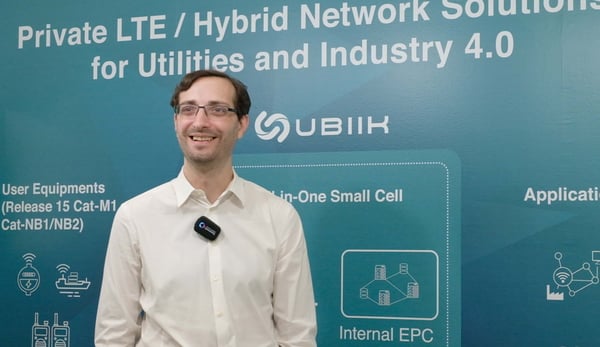
Ubiik CTO on Diversifying IoT Connectivity Technologies
 5:34
Keys to Success in Mobility and Smart City with Gianluca Longo
Latest news
All news- Junehem Connects 5,000 Smoke Detectors To Jönköping’s Municipal LoRaWAN Network26 Nov 2026
- Tivoli Signs Smart City Protocol With Mobile Operator WINDTRE26 Nov 2026
- MicrodB Says Its dBFlash Noise Radar Is The First Homologated In France26 Nov 2026
- National Reconstruction Fund Takes Myriota Investment To A$45M In Series C First Close26 Nov 2026
Kurrant advisory
Planning a smart city or utility project? Talk to Kurrant.
Behind these interviews is Kurrant's advisory team, working with utilities, cities and the companies that serve them.
- Strategy AdvisoryKurrant is actively involved in resolving the challenges that cities, utilities and industry players are facing.
- M&A AdvisorySmart city and utility expertise for successful deals, turning insights into strategic gains.
- Engineering & ProcurementBetter engineering and procurement decisions, by identifying and developing digital and IoT solutions across use cases.
Or write to us: contact@kurrant.com
Send us a message