 in Barcelona
 3 to 5 Nov 2026
Welcome to Current Insights, coverage of Mobile World Congress 2022. In this video, you'll hear from UBIQ CTO Fabian Pettigrand. UBIQ is a pioneer of waitlist connectivity when it comes to IoT. Waitlist is a standardized bi -directional narrowband communication protocol for low -power wide -area networks. It can operate in both sub-1 and sub-1. gigahertz license exempt and license spectrum with a range up to 10 kilometers in line of sight. Ubique released its first weightless hardware in 2017, at the time largely specializing in AMI advanced metering infrastructure solutions. The weightless alliance now says that over 100 companies in 40 countries use the technology, but it's not a fit for all use cases, which is why in this video, you'll hear you be. explained that it uses other connectivities in certain projects and locations key evidence that a once competitive industry now requires a diversity of iot network players to succeed hi fabian thanks for joining us so first let's talk about how ubiqu is using the weightless connectivity standard today so to date we have deployed 300 000 smart meters indeed and about 95 them are using wireless LPWAN and we do complement with 20 ,000, a bit less than 20 ,000, CAT -1 and NB -IoT solution primarily. Okay, so as you mentioned your technology is compatible with other connectivities. So how do you decide when to use waitlist and when to use NB -IoT for example? Now in some places where it's not necessarily practical to install a dedicated base station, then we rely on NB-IoT as a complementary. solution it has very strict capacity limitation and that's why we use it as a complement of connectivity falling back onto waitlist when issues happen we also use a little bit of cat1 which offer higher bandwidth but which coverage is is worse so only works for for line of sight or good coverage conditions and what challenges do you see standing in the way of further adoption of the waitlist connectivity standard The challenges for the expansion of wireless is the lack of an ecosystem. The ecosystem is very small and the lack of effort to promote and market the technology. Now we've proved it on the ground with three consecutive tender for smart meter and we wish to expand it overseas. Okay, interesting. So now let's move on to some of the news at the conference that you're making. Uvique Unveiled, it's Hermes. LTE -M NB -IoT small cell for private and hybrid LTE networks. So tell us what is this move into the cellular IoT network space mean for your focus on the waitlist connectivity standard? So we just announced the small cell it's ready for our pre-orders and and deployment kit ordering and we already got some traction for private band deployments in the US in the EnterX Band 8 or some cases in Band 3. And we will evolve the small cell as well for different bands, Band 20 for Europe, and the 450 MHz band as well, 72, 73, moving forward. We will keep pushing weightless in markets where it makes most sense, like metering in India, in particular, or Southeast Asia. But we want to add complementary to our solution using cellular IoT for markets that are demanding cellular type of technology. technologies in Europe and in the U.S. Okay, and let's move on to some other news now. The retirement of the 2G and 3G networks. What do you think this means for the future of LPWAN technologies? Well, I would like to see more complementarity between the technologies. I don't think it's either public or private networks in either licensed or unlicensed bands. I think solutions are in need to deliver the performance to have hybrid deployments. schemes so I do see for moving forward that cellular as a backhaul will remain a very strong contender but potentially combined with with with more of those LPWAN technologies at the edge technically and in terms of usage of the of the common spectrum resource is probably what makes the most sense okay and lastly I want to get your thoughts on the bankruptcy filing by Sigfox we recently saw this company also undergo a competitive bidding process for new owners. What does this mean for the future of the technology and the overall IoT market? I think Sigmox technology has great advantages. It's the simplest technology for use cases that can afford to sense so little data. Probably the business model and the spending has been too high but the technology is still very sound and I do expect that to remain and still going forward but definitely it's a business model. And the model with Sigfox network operator will have to change. So that's a wrap on our interview with UBIQ Fabian Padegrant. For more coverage like this, be sure to stick with Current Insights.
Ubiik CTO on Diversifying IoT Connectivity Technologies
ConnectivityIndustry leadersLPWAN
In this video
-
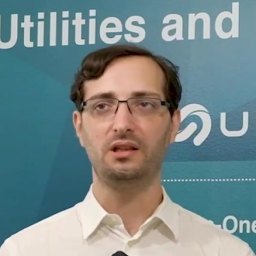 Fabien Petitgrand
Chief Technology Officer, Ubiik Inc.
About this video
The featured video presents insights from Fabien Petitgrand, the Chief Technology Officer of Ubiik, a prominent Taiwanese solutions provider specializing in IoT connectivity. Ubiik's primary focus is on the Weightless standard, a bi-directional, narrowband communication protocol tailored for low power, wide area networks (LPWAN). This protocol is notable for its versatility, as it operates effectively in both sub-1GHz license-exempt and licensed spectrum, boasting a substantial range of up to 10km in line of sight conditions.
Petitgrand discusses the practical applications and limitations of the Weightless standard, emphasizing that while it is a powerful tool in the IoT arsenal, it is not universally applicable to all scenarios. This acknowledgment leads to an exploration of Ubiik's adaptive approach, where the company selects different types of connectivity based on the specific needs of each project and its geographical location. This strategy underscores the importance of flexibility and customization in deploying IoT solutions.
The video also delves into the evolving landscape of the IoT industry, which has traditionally been driven by competition. Petitgrand highlights a significant shift in the industry's paradigm: success in the IoT space now increasingly relies on a diversity of network technologies. This change reflects the growing complexity and varied demands of IoT applications across different sectors.
Anyone involved in IoT, smart city planning, and digital infrastructure, will find this video particularly enlightening. It offers a nuanced perspective on the strategic choices in IoT connectivity, demonstrating how an effective mix of different network types is crucial for addressing the diverse requirements of IoT projects. The insights from Ubiik's CTO provide a deeper understanding of the practical considerations in selecting and implementing IoT networks, making this video a valuable resource for professionals seeking to navigate the complex IoT landscape effectively.
Read the transcript machine-generated
More from Industry leaders
See all 1:12
Paolo Nesi: Wi-Fi Vs. Cameras for People Counting
 2:39
Syliva Haack on urban resilience related to water infrastructure
 1:48
João Matos Discusses the Challenges of Wildfire Detection
 2:08
Mark Dancy on the effectiveness of a pay-as-you-throw program
 5:34
Keys to Success in Mobility and Smart City with Gianluca Longo
 7:42
VC Fund: B2B Companies Offer Smart City Perks
Latest news
All news- Bryan Texas Utilities To Replace 50,000 Smart Meters Over Five Years29 Oct 2026
- UK National Parks Launch Wildfire Resilience Programme In Cairngorms29 Oct 2026
- Ameresco Completes $5.9M Water Metering Upgrade Covering 8,000 Meters In Mustang, Oklahoma29 Oct 2026
- Victoria Adds 11 AI Bushfire Cameras To Seven-Unit Plantation Network In A$3.8M Programme29 Oct 2026
Kurrant advisory
Planning a smart city or utility project? Talk to Kurrant.
Behind these interviews is Kurrant's advisory team, working with utilities, cities and the companies that serve them.
- Strategy AdvisoryKurrant is actively involved in resolving the challenges that cities, utilities and industry players are facing.
- M&A AdvisorySmart city and utility expertise for successful deals, turning insights into strategic gains.
- Engineering & ProcurementBetter engineering and procurement decisions, by identifying and developing digital and IoT solutions across use cases.
Or write to us: contact@kurrant.com
Send us a message