 in Barcelona
 3 to 5 Nov 2026
As we were saying in part one of the video to improve the public transport offer and attract more riders the city of Philadelphia continues to turn to smart solutions. So we're deploying a lot of different technology pilots largely right now to test that out. We're also looking at data and really making sure that we're making data informed decisions so we're digging deep into data analytics deploying what we Called the APC's the automatic passenger counters. So SEPTA is unique in that we have fare cards to tap in but you can leave the system without tapping out so We really had a hard time for a while understanding how our passenger where our passengers were boarding and then alighting and Being able to adapt our services to that but the APC's they count passengers as they come in and off of our system Onto the vehicles and it also geolocates so we have a much clearer idea of how people are riding our system we can adjust our services in that way. With the APC, it's literally a sensor over the entryway on the vehicle, and it just says person getting on, person getting off, and it counts. And so the hope, again, is to take that data and build on it, and can we use that to provide information on our app where, like, if you go on Google Maps to map your thing, it'll say, you know, your train, and is it not full, medium, full, or, but it's kind of, it's a guesstimate. There's no actual data driving that. the hope is that we can actually have estimated seat availability information as part of that. The APCs, which are present on trains, buses and trolley feeds, could also come in handy for locating subway trains more accurately. At the moment, to let riders know when the next train is coming in, SEPTA calculates more or less how long it takes from one station to the next. But APCs have good antennas and geolocation, so SEPTA is considering tapping into... them to geolocate trains in the tunnels and be more accurate. Another main challenge of SEPTIS is safety for riders. We partnered with a veteran -owned company that was regionally located in Conshohocken, so just outside of Philadelphia, to deploy an algorithm that detects weapons on our system. So one of the challenges we have is the violence in our city and it, you know, as in all cities, it kind of tends to make its way up to the transit system. our hope is that with by detecting early weapons on our system we can deploy our transit police more quickly. So we have a massive network of cameras which is a great asset to SEPTA. I want to say we have over 30,000 cameras throughout our system so including on vehicles and then stationary in our in our stations. For the pilot that we're doing with ZeroEyes we pilot on 300 cameras in 10 stations and so we're working through some of the challenges I think. One of the great things about SEPTA is that it's an old system that we've existed for a long time. But one of the challenges is we have a lot of legacy infrastructure, including our camera. So we have both analog and digital cameras. Obviously, the algorithm works better on digital cameras because of the clarity. The analog cameras present a little bit of a challenge, but we're ideating and kind of researching and kind of adjusting and figuring out how to make it work better on those analog cameras as well as we move forward. informing our procurement as we move forward that we want technology that is much more open to other technology open apis and whatnot because i think historically the technology has been very proprietary making it much harder to kind of lego on additional technologies that could really benefit us one of the ways to encourage ridership is by assuring users they can get to where they need to be quicker than they would by car the city has priority bus lanes for its almost buses and have prioritized the signals but they're also piloting enforcement cameras from Hayden AI which mounts cameras on buses to automatically recognize rule breakers that are parked on the bus lane and send license plate numbers for ticketing. Where they're capturing how many interferences we have within our bus lanes and if you've been to Philly you know that people like to park wherever they want to park and so this technology is really critical. for us. Early on we've captured in one day I want to say close to 3 ,000 interferences so there's a lot of opportunity with this system to improve. When it comes to the data the authority is still quite siloed as different types of data is gathered by different departments. For the future SEPTA is looking for technology that will help solve two other issues they're facing. One is smoking on public transport so they're looking for a solution. whether an air quality sensor or a camera to alert them when someone is smoking the other we have individuals who fall on our tracks quite frequently they're largely under the influence of a drug and are unaware that they've fallen on the tracks it's a huge risk both from their perspective one the fall could harm them but also we have an electrified third rail so if you hit that you're instantly in trouble but also it then requires us to single track or delay our services, affecting our riders and the speed of their transit. So we've tried a couple pilots. Some where it's created a trigger line on the edge of our platform, and if that's triggered because somebody's falling, we get a response from our transit police. The problem with that is the person is already falling, so it's not preventative. So I'm really exploring the horizon for algorithms. I know that there have been some deployed in Las Vegas for people who are drunk to monitor the crowds and allow for an emergency response if somebody hasn't moved for a substantial period of time or they're walking in a way that creates concern. Could we have something similar that tracks people before they get to the edge of our system so we can just deploy our social work service? The city of Philadelphia is open to and very interested. in smart city technology to improve its mobility. However, a lot of the solutions deployed are part of pilots, which reinforces the trend we're seeing in the US that cities struggle to deploy more permanent solutions.
Philadelphia’s Smart Traffic & Transit Strategy – Part 2
MobilityPhiladelphiaTraffic management & monitoring
In this video
- Mike Carroll Deputy Managing Director for Transportation, Infrastructure, and Sustainability, City of Philadelphia
-
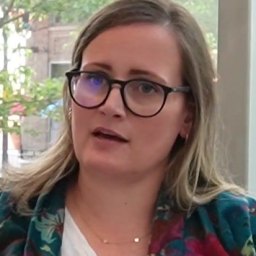 Emily Yates
CIO, Southeastern Pennsylvania Transportation Authority
About this video
In this week’s two-part video, we talk to Mike Carroll, Deputy Managing Director for Transportation, Infrastructure, and Sustainability at the city of Philadelphia, and Emily Yates, CIO at SEPTA, to discuss how the city uses smart solutions to manage and improve its traffic and public transport.
Photo credits: Michael Barera
Read the transcript machine-generated
More in Mobility
See all 4:11
From Cameras to Insights: VisionAI Transforms Motorway Operations
 6:29
VisionAI Helps Boost Security During 2024 Olympic Games
 8:19
Curbing Noise Pollution with AI-Enabled Solution
 7:29
Brussels’ Smart City Strategy – Part 2
 7:59
Smart Parking Landscape Changes with New Players, Enforcement
 8:13
Mobility Data: New Paradigm for Smart Cities
Latest news in mobility
All news- USDOT Selects UCLA, University Of Michigan And Derq For $5.5M Intersection Safety Phase One25 Oct 2026
- MBTA Begins Hayden AI Bus Lane And Bus Stop Camera Enforcement On Routes SL4 And SL525 Oct 2026
- Los Angeles Council Approves 50 DASH Bus Enforcement Cameras In $3.43M Hayden AI Contract24 Oct 2026
- Allstate’s Arity To Acquire INRIX Assets To Merge Driving And Traffic Data20 Oct 2026
Kurrant advisory
Planning a mobility project? Talk to Kurrant.
Behind these interviews is Kurrant's advisory team, working with utilities, cities and the companies that serve them.
- Strategy AdvisoryKurrant is actively involved in resolving the challenges that cities, utilities and industry players are facing.
- M&A AdvisorySmart city and utility expertise for successful deals, turning insights into strategic gains.
- Engineering & ProcurementBetter engineering and procurement decisions, by identifying and developing digital and IoT solutions across use cases.
Or write to us: contact@kurrant.com
Send us a message