Cambridgeshire County Council has deployed a solar-powered flood warning system on Mill Lane in Little Paxton, targeting one of the county’s most disrupted road corridors with automated detection and real-time driver alerts. The system, designed and installed by SWARCO UK & Ireland, uses LED signage, water-level sensors, and gate monitoring to warn motorists when flooding threatens road safety.
A Road Corridor With a History of Repeated Closures
Mill Lane and its surrounding routes in Little Paxton, near St Neots, have faced escalating flood-related disruption in recent years. The road, which sits on the B1041 and crosses the River Great Ouse, was closed four times in 2024 alone due to high water levels. Each closure created knock-on congestion throughout St Neots and neighbouring villages, while fast-moving floodwater repeatedly damaged the road surface, including washing away repairs completed just weeks earlier.
The severity of the situation prompted a community petition that gathered more than 2,800 signatures. In early 2025, Cambridgeshire County Council’s Highways and Transport Committee allocated £250,000 toward flood resilience measures, with £100,000 directed specifically at short-term interventions for Mill Lane. Upgrading electronic flood signage was identified as one of the first priorities, with Little Paxton selected as the initial site.
How the Detection and Signage System Works
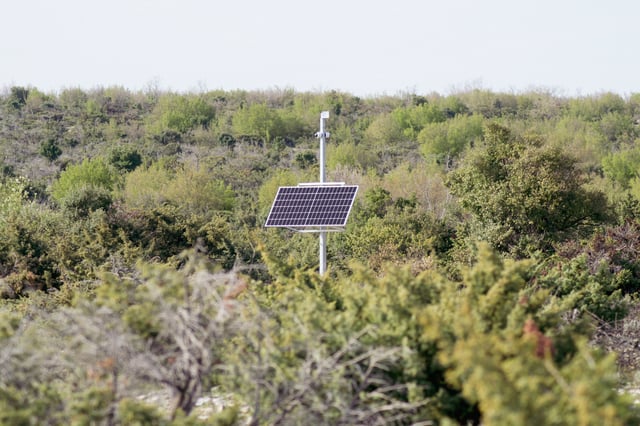
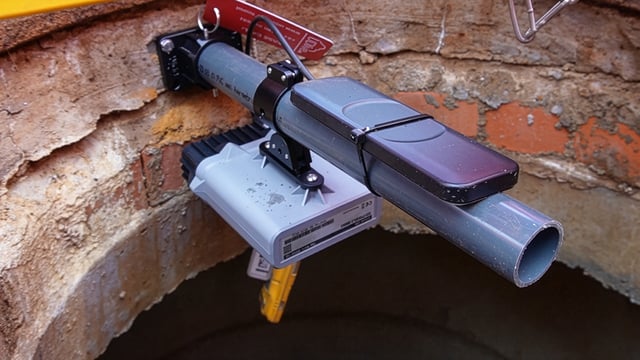
The installation comprises three fixed LED flood warning signs, a solar-powered flood detection unit, and a gate sensor fitted to the existing flood gates on Mill Lane. The system operates dynamically based on changing water levels and gate status.
When the detection unit registers rising water, the LED signs initially display a caution warning. If water reaches higher trigger thresholds, the message escalates automatically to indicate that the road is closed. Separately, when the physical flood gates are shut, the gate sensor immediately triggers the signs to display a road closure message. That notification remains active until the gates are reopened and the road has been inspected and cleared.
The use of solar power for the detection unit eliminates the need for mains electricity at the site, which is a practical advantage for flood-prone locations where power infrastructure may itself be vulnerable to water damage.
Remote Monitoring Through SWARCO’s MyCity Platform
The system is fully integrated with SWARCO’s MyCity platform, a modular urban traffic management system that enables the council’s traffic management team to monitor, control, and manage the site remotely. MyCity is a cloud-hosted, web-based platform that aggregates data from multiple roadside assets and allows operators to respond to changing conditions from any device.
SWARCO has deployed MyCity across a growing number of UK local authorities. The company holds a 10-year intelligent transport systems contract with Suffolk County Council that includes MyCity as the primary urban traffic management control system, covering traffic signals, variable message signs, CCTV, and air quality monitoring. The Cambridgeshire deployment represents a more targeted application of the same platform, focused specifically on environmental hazard management.
A Growing Pattern of Sensor-Based Flood Signage Across UK Councils
The Little Paxton installation is part of a broader programme by Cambridgeshire County Council to upgrade electronic flood signage across the county. Following Little Paxton, similar systems are planned for the A1123 at Earith and the Welney Wash, the latter in coordination with Norfolk County Council.
The deployment also adds to a growing portfolio of SWARCO flood warning projects across England. In October 2025, the company installed intelligent flood warning systems for Warrington Borough Council at two flood-prone locations, combining detection sensors with LED vehicle-activated signs and traffic signal integration to automatically close roads during flooding events. Meanwhile, North Yorkshire Council expanded its own sensor-based flood warning network in January 2026, adding three additional electronic warning signs along the A684 as part of a £100,000 extension to an earlier £418,000 automated detection system funded through the UK Government’s Safer Roads Fund.
Together, these deployments illustrate a wider national shift among local authorities away from manual flood response processes and toward automated, sensor-driven warning infrastructure. The UK’s Environment Agency maintains a network of river-level monitoring stations, but translating that data into real-time roadside warnings for drivers has historically depended on crews physically erecting temporary signs. Automated systems like those at Little Paxton, Warrington, and along the A684 are closing that gap.
SWARCO, headquartered in Wattens, Austria, operates in more than 80 countries through its parent group SWARCO AG and employs over 5,300 people globally. The group’s UK division provides end-to-end intelligent transport solutions ranging from speed warning signage for villages to large-scale motorway management.
What This Means for Local Authorities Managing Climate Risk
For councils facing budget constraints alongside increasing flood frequency, the Cambridgeshire deployment offers a case study in targeted, scalable intervention. Rather than pursuing large-scale civil engineering works, which the council’s own assessment found did not represent best value for money, Little Paxton received a technology-led solution designed to reduce risk and improve response times at a fraction of the cost.
The combination of solar power, automated escalation logic, and remote platform integration suggests a template that could be replicated across other flood-vulnerable road corridors in the UK and beyond. The key question for other authorities will be whether similar systems can deliver measurable reductions in the duration and impact of flood-related road closures over time.