Ofwat, the economic regulator of water and wastewater services in England and Wales, has announced the 19 winners of the sixth Water Breakthrough Challenge, awarding a combined £58 million to projects that range from fungal water filtration and acoustic river monitoring to supercritical waste treatment and 3D-printed concrete infrastructure. The announcement, made on 19 May 2026, marks one of the largest single tranches of innovation funding the UK water sector has seen in recent years.
A Decade-Long Bet on Structural Change
The awards are drawn from Ofwat’s Water Innovation Fund, a £600 million, ten-year programme running from 2020 to 2030 that is designed to move the water sector beyond incremental improvement. Since its launch, the fund has committed nearly £250 million across 128 projects involving 323 partner organisations. The sixth challenge is the most ambitious instalment to date by total award value, and the first to place such visible emphasis on nature-based solutions alongside digital and engineering approaches.
The challenge is delivered by Challenge Works, an innovation prize organisation that is part of the Nesta research foundation.
“The water sector is going through its biggest transformation in 30 years,” said Jo Jolly, Director of Innovation at Ofwat, in the fund’s 19 May 2026 announcement. “We have to make sure these changes drive far better outcomes for society and the environment. Multiple urgent challenges must be solved. And, importantly, our mindset must change.”
Flagship Projects: What Got Funded
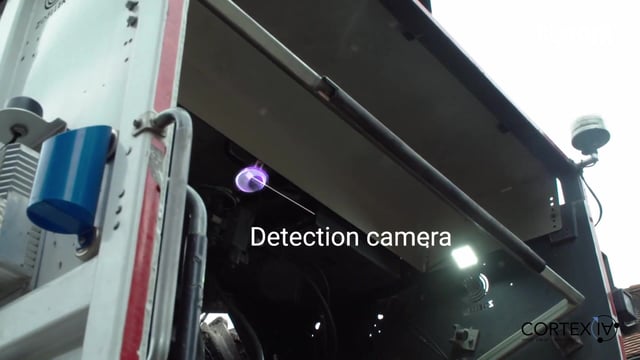
The single largest award, £9.2 million, goes to the Hydrothermal Oxidation project, led by Anglian Water in partnership with engineering firm AtkinsRealis, deep-tech company Cetogenix, Cranfield University, Severn Trent Water, and others. The project applies water at extreme temperature and pressure to break down organic waste without incineration, converting sewage sludge into reusable bioresources, a direct alternative to the current practice of land application of sludge, which faces increasing regulatory scrutiny across England and Wales.
Close behind, the Splitting Biogas, Multiplying Value project, led by United Utilities in partnership with construction materials firm Tarmac, deep-tech company Levidian Nanosystems, and Severn Trent Water, receives £8.9 million to convert wastewater biogas into hydrogen and graphene. The project builds on earlier research and moves toward commercial-scale assessment of carbon impact and material applications.
The Headstart initiative, led by Anglian Water in partnership with the National Trust, Freshwater Habitats Trust, Game and Wildlife Conservation Trust, and Nottingham Trent University, receives £7 million to test nature-based restoration in headwater catchments, the upper reaches of river systems where early intervention can have the broadest downstream effect. The project will produce a web-based decision tool to help water companies target investment in treatment works and habitat restoration simultaneously.
The SuDS through Streetworks Market initiative, involving Thames Water and the Greater London Authority, receives £6.9 million. It aims to embed Sustainable Drainage Systems such as rain gardens into routine utility streetworks excavations across London, a market-based model designed to reduce the per-unit cost of flood resilience infrastructure by coupling it with work that is already planned and funded.
AI Wastewater Monitoring and the AMR Signal
One of the more clinically significant projects is Smoke in the Water, which receives £2 million for a 12-month pilot in Leicester led by Severn Trent Water in partnership with the University Hospitals of Leicester NHS Trust, Finnish microbiology firm Resistomap, and wastewater intelligence company Kando Environmental. The project combines AI analysis, clinical hospital data, and in-sewer surveillance to track antimicrobial resistance, a capacity that researchers believe could surface resistance trends weeks earlier than conventional clinical surveillance alone.
Antimicrobial resistance is projected to cause 10 million deaths annually by 2050 globally. Wastewater surveillance has gained significant traction since the COVID-19 pandemic demonstrated the approach’s value in population-level epidemiological monitoring, but its systematic application to drug-resistant infection tracking at city scale remains nascent.
The Smart Alarm Management project, led by Northumbrian Water with software firm Softwire Technology and the engineering standards body EEMUA, receives £1.66 million to deploy AI and machine learning tools in water industry control rooms. The goal is faster and more accurate triage of alarms, a persistent operational bottleneck in complex infrastructure systems where alert fatigue can delay responses to genuine failures.
Nature-Based Filtration: Fungi in the Field
The Mycofiltration project, awarded £1.52 million and led by Anglian Water in partnership with biotechnology company Spore and Anvil, construction firm Barhale, the University of Essex, and Imperial College London, will trial fungal mycelium filters at storm overflow and run-off sites. Mycelial networks act simultaneously as a physical filtration mesh and a biological reactor: the fungal filaments secrete enzymes that degrade heavy metals, insecticides, and bacteria into non-toxic compounds.
“This funding will play a pivotal role in expanding natural technologies across the water sector,” said Phil Buckingham, Head of Research and Innovation at Anglian Water, in the fund’s 19 May 2026 press release. “Harnessing the filtration superpower of mycelia to enhance water quality will have a direct benefit on local wildlife and ecosystems, as well as the communities who use these environments day-to-day.”
Storm overflow pollution has been a politically contested issue in England and Wales in recent years, with Ofwat and the Environment Agency both tightening enforcement expectations on water companies. Biological filtration approaches such as mycofiltration represent a lower-capital alternative to conventional grey infrastructure for overflow treatment, though field-scale evidence of performance remains limited, a gap this trial is explicitly designed to address. Anglian Water’s broader digital and innovation strategy, which Kurrant has covered in depth, provides relevant context for the company’s continued role as a lead innovator in this challenge.
Acoustic Intelligence for River Health
The Good Vibrations project, led by Severn Trent Water with France-based environmental services group SUEZ, the UK Centre for Ecology and Hydrology, Yorkshire Water, United Utilities, and Anglian Water, receives £1.57 million to deploy underwater microphones at river sites and use AI to translate acoustic data into biodiversity and ecosystem health indicators.
The premise is that a biologically rich river is an acoustically active one: invertebrates, fish, and amphibians all contribute to a measurable soundscape that changes with water quality and habitat condition. Traditional biomonitoring typically requires field collection, laboratory analysis, and significant time between sampling and results. Continuous acoustic monitoring, if validated at scale, would allow near-real-time detection of ecosystem stress.
3D Concrete Printing: Scaling an Earlier Proof of Concept
The Printfrastructure 2.0 project receives £1.91 million, led by Northumbrian Water in partnership with 3D construction firm Changemaker 3D Limited, United Utilities, Scottish Water, and Anglian Water. It builds on the third Water Breakthrough Challenge round, where earlier proof-of-concept work demonstrated up to 50% reduction in embodied carbon for concrete structures alongside an 8% cut in construction costs. The new phase targets larger wastewater storage tanks that can be printed on-site, reducing logistics pressure on constrained construction supply chains at a time when the water sector faces one of its largest capital investment cycles in decades.
Community and Circular Economy Approaches
Several awards address the systemic and community dimensions of water management. Community Water Enterprises, led by Wessex Water in partnership with the King’s Trust, National Trust, Thames 21, and Rivers Trust, receives nearly £5 million to establish locally managed programmes for rain gardens, wetlands, and other nature-based drainage assets, recognising that long-term ecological benefit depends on maintenance that utility companies alone cannot sustain.
The I’m a P-Leaver project, led by Severn Trent Water with Harper Adams University, the University of Exeter, Shropshire County Council, and Dutch water technology group Nijhuis Saur Industries, receives £1.63 million to test biochar derived from pyrolysed sewage sludge as an adsorbent for phosphorus and PFAS, two contaminants that are separately regulated but share the challenge of removal at low concentrations. If validated, the approach would allow water companies to produce their own PFAS and phosphorus capture material from a waste stream they already generate.
What the Awards Signal for the Sector
The sixth challenge cohort collectively reflects a broader shift in how UK water regulation is shaping innovation incentives. Rather than treating engineering upgrades and environmental outcomes as separate cost centres, the fund is pushing toward integrated projects that simultaneously address infrastructure, ecology, public health, and decarbonisation.
A seventh Water Breakthrough Challenge is scheduled to open for applications on 7 September 2026, continuing the programme through to the end of the decade.