Dubai Electricity and Water Authority (DEWA) has become the first government entity in the UAE to adopt Microsoft 365 Copilot Cowork, integrating agentic AI directly into employee workflows across the organisation. The move, announced on May 20, 2026, marks a significant shift in how the utility uses artificial intelligence: away from information retrieval and toward autonomous, multi-step task execution embedded in daily operations.
From Assistance to Execution: What Copilot Cowork Actually Does
Microsoft‘s Copilot Cowork, launched in preview in March 2026 as part of the Wave 3 update to Microsoft 365 Copilot, functions differently from the AI tools most enterprise users have encountered to date. Rather than responding to isolated queries, it analyses contextual work data across an employee’s Microsoft 365 environment, including emails, calendar data, meetings, and files, and builds a comprehensive execution plan to carry out complex, multi-step objectives.
The platform is designed to act as a digital colleague rather than a search tool. It can draft, schedule, reorganise, and execute tasks across applications such as Outlook, Teams, SharePoint, Excel, and Calendar, intervening only at key decision points rather than requiring constant human prompting. Crucially, full employee oversight is retained at every stage of the process, a feature Microsoft has positioned as central to its governance framework for agentic tools, which logs all actions, enforces identity and compliance policies, and flags decisions requiring human sign-off.
DEWA’s Strategic Position in the UAE’s AI Transformation
For DEWA, the deployment is not an isolated experiment. The authority has been building toward this moment since 2017, when it first adopted AI for operational efficiency, making it one of the earliest utilities globally to do so. Over the intervening years, it integrated ChatGPT technology into its virtual assistant Rammas in April 2023, becoming the first utility worldwide and first UAE government organisation to use generative AI for customer interactions at scale.
“We are proud that DEWA is the first government entity in the UAE to deploy agentic AI models within its operations. Adopting Microsoft 365 Copilot Cowork marks a key milestone in embedding agentic AI as an execution-focused tool that supports employees in accelerating task completion, enhancing data-driven decision-making and enabling our workforce to focus on high-value strategic activities,” said Saeed Mohammed Al Tayer, MD and CEO of DEWA, in the authority’s May 2026 press release.
Early in 2026, DEWA became the first utility and government organisation worldwide to offer services through the ChatGPT Apps Directory, enabling customers to access bill enquiries, account details, and EV charging station information through natural language conversations. The Copilot Cowork adoption extends this pattern to internal operations, treating employees as the next beneficiaries of the same generative AI transformation that has already been applied to customer-facing services.
The AI-Native Utility Roadmap
The Copilot Cowork deployment is the latest step in a roadmap DEWA’s CEO announced in March 2025 at the authority’s GenAI Week, which outlined a strategy to make DEWA the world’s first AI-native utility. That ambition is grounded in a substantial existing infrastructure. Rammas, DEWA’s AI virtual assistant, has handled more than 12.7 million customer inquiries since its launch, with a 95% satisfaction rate. The Khadamatech e-services portal, IT support, legal affairs, governance, and cybersecurity frameworks have all been extended with AI-driven automation. Microsoft, IBM, ServiceNow, and DataRobot are listed as strategic partners supporting the programme.
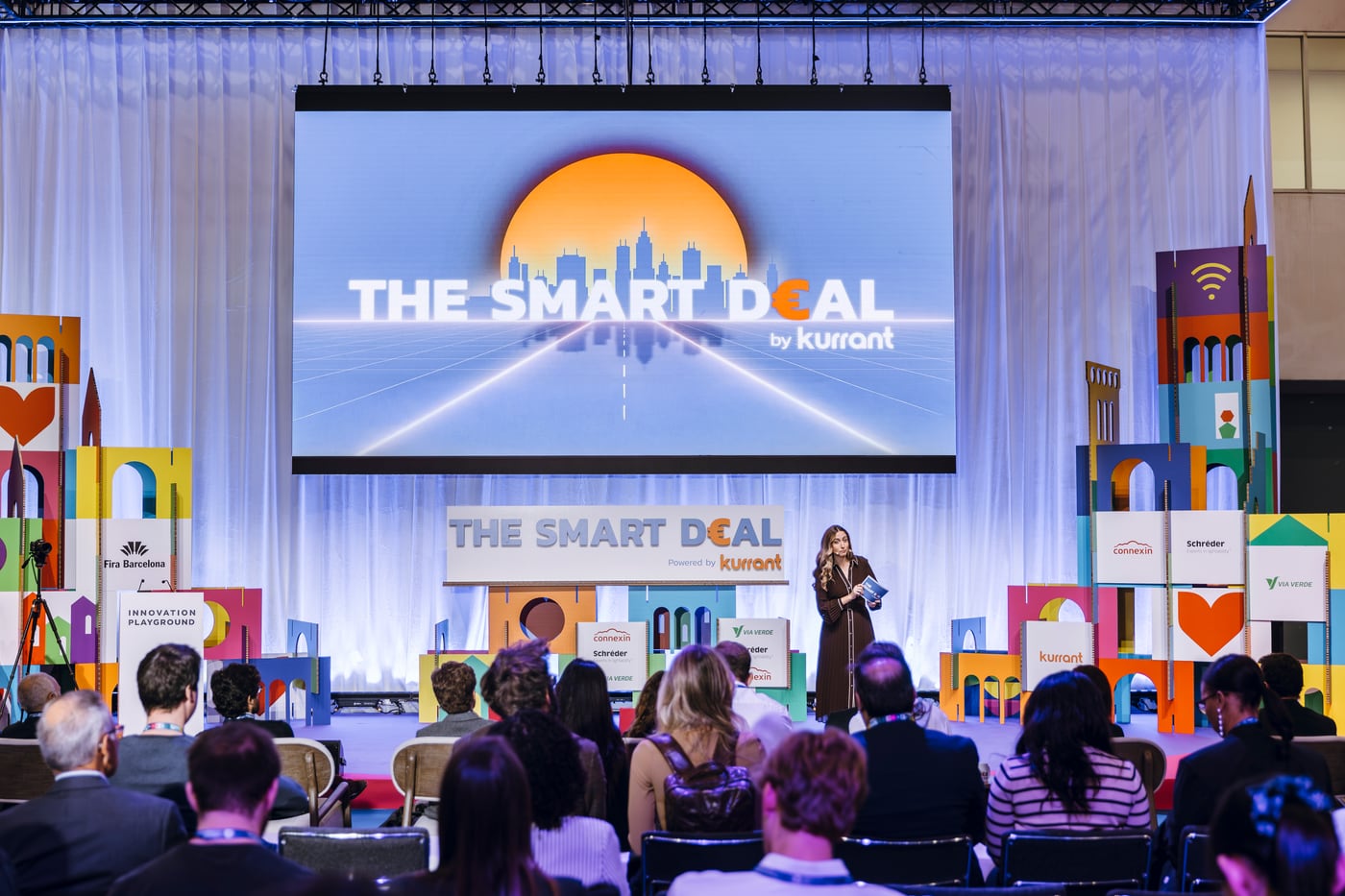
The distinction DEWA is now making with agentic AI, as opposed to the generative AI tools it has deployed to date, is one of operational depth. Prior tools provided information, surfaced data, or generated content. Copilot Cowork takes an objective and executes it across live applications in real time. For a utility the scale of DEWA, serving the entire Emirate of Dubai with electricity and water, that shift could affect everything from administrative workload and procurement processes to HR operations and compliance management. This broader question of whether agentic AI will prove transformative for cities and utilities was explored in Kurrant’s May 2025 discussion on AI Agents as potential gamechangers for the sector, which examined both the promise and the governance challenges the technology presents.
How Other Utilities Are Approaching Generative AI at Scale
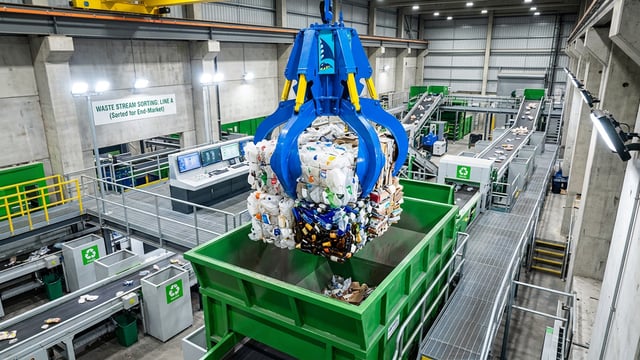
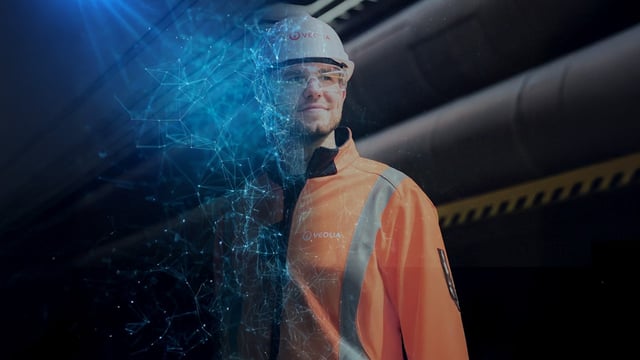
DEWA’s move sits alongside a growing number of utility-sector AI deployments, though the focus areas and technology choices differ considerably. In February 2025, French environmental services group Veolia announced a strategic partnership with Mistral AI to embed generative AI into industrial plant operations across its water, waste, and energy facilities. The Veolia-Mistral integration, known internally as Talk to My Plant, enables technicians and operators to interact with industrial facilities through natural language, accessing equipment data and receiving real-time recommendations without waiting for manual diagnosis. Veolia’s approach targets the operational technology layer of utility infrastructure, while DEWA’s Copilot Cowork deployment targets the internal enterprise workflows and information environment of its workforce. The two approaches are not mutually exclusive; together they illustrate how generative AI is being adopted at both the field and office layers of utility operations.
Governance, Oversight, and the Adoption Signal for the UAE Public Sector
One of the constraints historically associated with deploying agentic AI in government and regulated environments is the question of who is accountable when an autonomous system makes a consequential decision. Microsoft’s governance framework for Copilot Cowork addresses this through audit trails, administrator-defined agent permissions, and a design principle that human employees retain approval authority over any action with significant downstream effects.
For the UAE public sector specifically, DEWA’s status as the first government entity to deploy the platform will likely accelerate consideration among other authorities. The deployment aligns with both the Dubai Universal Blueprint for Artificial Intelligence and the UAE National Strategy for Artificial Intelligence 2031, which prioritises AI adoption across key industries and positions the UAE as a global hub for AI governance and application.
Whether other UAE government entities move quickly to follow will depend partly on how DEWA’s deployment performs in practice. As a utility with defined operational processes, measurable service outputs, and existing Microsoft 365 infrastructure already in place, DEWA represents a relatively favourable environment for an agentic AI rollout. The results it reports over the coming quarters will offer the clearest indication yet of what agentic AI in government operations actually delivers.