SOMACYL, the public infrastructure and environment company of Spain’s Castilla y León regional government, has awarded Telefónica Tech the contract to digitize the region’s water cycle through the installation and management of 175,000 NB-IoT connected smart meters across 244 municipalities. Announced June 15, 2026, the agreement covers implementation, operation, and maintenance over more than ten years, replacing a manual meter reading model across one of Europe’s largest and most sparsely populated autonomous communities.
A €39M Program Years in the Making
The Junta de Castilla y León launched the €38.7 million program through SOMACYL in late 2025, targeting nearly 175,000 IoT-enabled ultrasonic water meters across 244 municipalities, with stated goals of cutting network water losses by 30% and increasing municipal revenue collection by up to 25%. The Telefónica Tech contract award, announced in June 2026, closes that procurement and names the operator responsible for delivery. As Kurrant reported when the program launched, the initiative draws on EU FEDER structural funds and NextGenerationEU Recovery and Resilience Facility financing, qualifying as a Strategic Project for Economic Recovery and Transformation (PERTE) under Spain’s water cycle digitalization program.
A Geographically Complex Territory Demanding Remote Solutions
Castilla y León spans over 94,224 km², making it the largest second-level region in Spain and the third largest in the European Union, with a population of approximately 2.4 million people spread across 2,248 municipalities at a density of just 25 inhabitants per km². That combination of geographic scale and dispersed settlement has historically made water infrastructure management labour-intensive and costly for public authorities.
SOMACYL, an instrument of the Junta de Castilla y León, is responsible for financing, executing, and managing investments in water management, forest resources, renewable energy, and industrial land, currently supplying more than 40 million litres of potable water per day to 432 population centres across the region.
Multi-Protocol Architecture Built for Regional Diversity
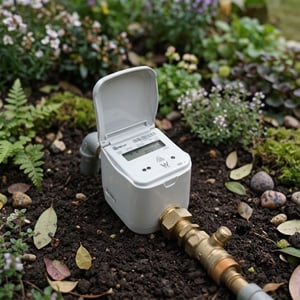
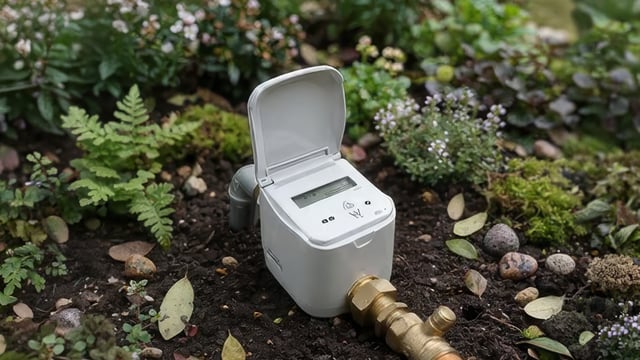
The technical specification for the deployment encompasses ultrasonic smart meters equipped with multiple communication protocols including NB-IoT, LoRaWAN, Wireless M-Bus, LTE-M, and 5G connectivity, a multi-technology approach designed to ensure operational flexibility across the varied geographic and infrastructure conditions found throughout the autonomous community.
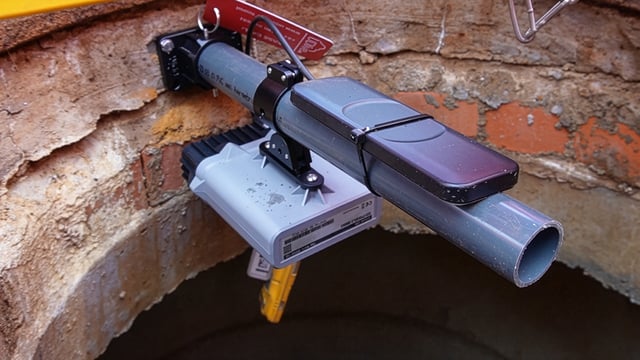
Telefónica Tech’s role centres on NB-IoT as the primary connectivity layer. The protocol transmits hourly consumption data with low energy draw and strong signal penetration into enclosed or underground spaces such as basements, meter rooms, and manholes where conventional radio signals often attenuate. Battery life for NB-IoT water meters in comparable deployments runs beyond twelve years, reducing field maintenance requirements substantially.
Kite Platform Centralises Connectivity Management
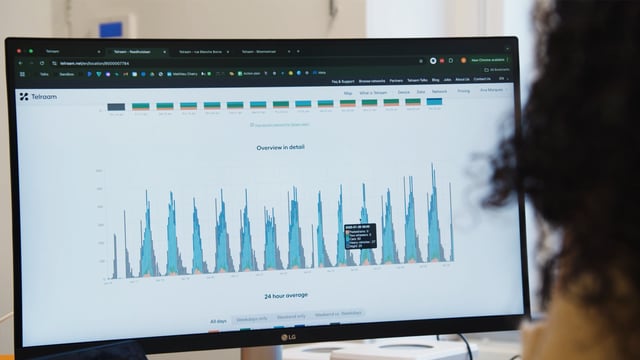
Connectivity across the meter estate will be managed centrally through Telefónica’s proprietary Kite platform, a managed IoT solution that gives operators real-time visibility and remote control over all connected SIMs from a single interface. In this deployment, Kite handles SIM lifecycle management, consumption monitoring, and anomaly detection across the full meter fleet.
Alongside the network layer, Telefónica Tech is providing a modular analytics platform capable of ingesting data from meters produced by multiple manufacturers. The platform supports operational monitoring, incident management, advanced analytics, and component traceability. The open-source interoperable platform should enable real-time data transmission, continuous consumption monitoring, early leak detection, and fraud identification, with access for both municipal authorities and end consumers through a dedicated web portal.
Security architecture across both the communications network and the platform is designed to meet regulatory standards applicable to critical government services, covering data protection, operational resilience, and compliance requirements.
Phased Rollout Across 244 Municipalities
Project execution follows a structured schedule: an initial six-month phase covers communications infrastructure establishment, platform deployment, and installation of 25% of all meters, with full deployment and system validation across all devices scheduled for completion within 24 months. The contract includes a 12.5-year maintenance and support period.
Darío Cesena, Director of IoT at Telefónica Tech, said in the company’s June 2026 press release: “Our managed IoT connectivity is enabling us to offer more and better services to customers so that they can, in this case, optimise water resource management in a more efficient, secure and sustainable way through remote water meter reading. The project to digitise the full water cycle in Castilla y León helps to anticipate incidents, improve operations and deliver a higher quality service.”
Telefónica Tech Deepens a Multi-Year Water IoT Position in Spain
This contract is the most recent in a series of NB-IoT water metering agreements that Telefónica Tech has accumulated across Spain over the past five years. In late 2023, the company was engaged by EMASESA, the metropolitan water authority of Seville, to supply the smart metering solution for the city using NB-IoT communication networks. That Seville deployment carried an investment of 28 million euros, with three million co-financed through the PERTE programme, supported by European Union NextGenerationEU funds.
In an earlier Madrid-region engagement with Canal de Isabel II, Telefónica Tech estimated that IoT technology applied to water telemetry could reduce water leaks by 40%, cut operation and maintenance costs by 20%, and improve customer satisfaction rates by up to 60%.
The competitive landscape in the Spanish smart water IoT segment is active. Vodafone Spain, now operating under Zegona Communications, holds a 10-year agreement with Aqualia, the fourth-largest water company in Europe by customers, to automate and manage its advanced meter infrastructure with an initial target of more than one million NB-IoT connections over the first five years. Vodafone also won the largest lot in a separate Canal de Isabel II tender covering 315,000 NB-IoT water meters over five years, with Orange and Telefónica also participating in that procurement.
Global Ambitions: Telefónica’s IoT Water Strategy Extends to Latin America
The Castilla y León award sits within a broader international pattern of telco-led water digitization. Kurrant previously reported that Telefónica’s Brazilian subsidiary Vivo secured a 3.8 billion real (approximately US $693 million) contract with Sabesp, São Paulo’s state water utility, to connect up to 4.4 million meters using NB-IoT technology by 2029, widely described as the world’s largest smart water metering initiative to date. As of September 2025, Telefónica reported more than 51 million active IoT connections worldwide across deployments in more than 190 countries.
Water Stress Intensifies the Operational Case
Spain faces sustained and worsening water pressure. Climate change has driven a measurable reduction in Spain’s average annual rainfall, producing more prolonged drought periods, with nine million people facing water restrictions in November 2023 alone. Castilla y León is not insulated from these pressures: short-term drought indices for the Ourense-León-Zamora triangle recorded values not previously observed in available data during the 2025 wildfire season.
Real-time hourly consumption data positions water managers to detect distribution losses and respond to abnormal patterns far faster than quarterly manual readings permit, a material operational advantage as climate variability increases stress on regional water systems and on the public infrastructure companies responsible for managing them.