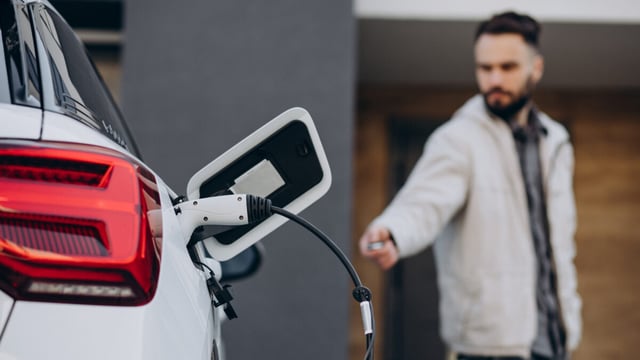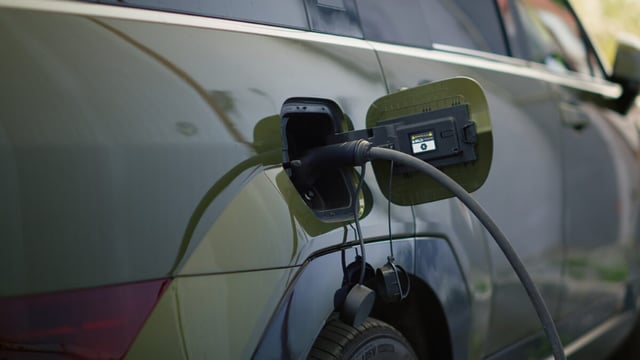
Germany’s Federal Network Agency, the Bundesnetzagentur, headquartered in Bonn, adopted on 1 October 2026 its determination on the market integration of electricity storage and charging points, known as MiSpeL. The ruling, filed under reference 618-25-02 and in force from the day of adoption, sets out how electricity passing through mixed-use batteries and bidirectional charging points is split between self-generated solar power and grid supply, so that grid power an electric car feeds back into the network can claim levy and grid-fee relief.
The rules reach a fleet of 2,034,260 battery electric cars registered on 1 January 2026, according to Federal Motor Transport Authority figures. Until 30 September 2027, anyone using either accounting method in the determination needs consent from both the grid operator and the metering point operator, according to the regulator’s MiSpeL procedure page.
Two Metering Options, One Still Waiting On Brussels
The first method, the demarcation option, allocates every kilowatt-hour from quarter-hour metering data. It normally requires two meters, one at the grid connection and one at the storage unit or charging point, with a single meter permitted only in special cases.
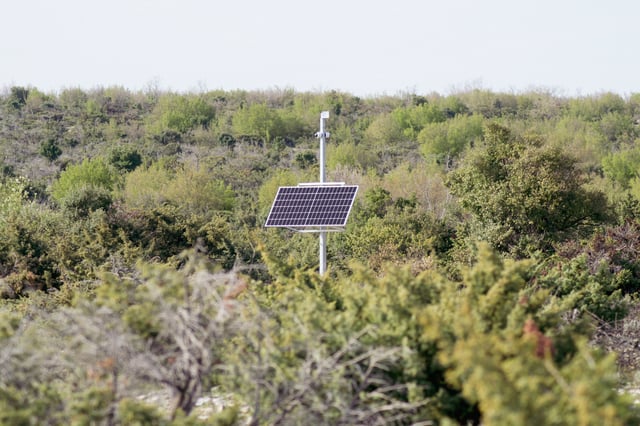
The second, a flat-rate option for solar systems of up to 30 kWp, generally works with one meter but depends on European Commission state-aid approval of its legal basis. German utility trade publication ZfK reported in August that the timing of that approval remained open.
Under either method, operators can now charge a home battery or car from the grid without losing the market premium paid on their solar output under the Renewable Energy Sources Act. That restriction had previously forced owners to keep grid and solar electricity in separate systems or give up support.
The regulator opened the procedure on 31 July 2025 under powers created by 2025 amendments to the Renewable Energy Sources Act and the Energy Financing Act. It published consultation drafts in September 2025 and a working draft on 5 August 2026, and missed a statutory deadline of 30 June 2026, according to ZfK.
“The MiSpeL determination has been urgently awaited by the market. It will activate countless large and small electricity storage systems and charging points for the power system. This allows millions of committed households to become active shapers of the energy transition,” said Klaus Müller, President of the Bundesnetzagentur, in the agency’s 1 October 2026 press release.
The Ruling Completes A Package Passed In November 2025
The determination is the operational piece of a legislative package that removed double grid fees on stored electricity. The Bundestag passed an amendment to the Energy Industry Act on 13 November 2025, the Bundesrat approved it on 21 November, and it was published in the Federal Law Gazette, 2025 I No. 347, on 22 December 2025.
The amended Section 118(6) of the act extends the grid-fee exemption for storage to bidirectionally used charging points and applies it in proportion to the electricity actually returned. It covers installations commissioned by 4 August 2029 for 20 years, according to the Stiftung Umweltenergierecht.
A parallel amendment to the Electricity Tax Act, which KPMG reported entered into force mainly on 1 January 2026, treats battery storage as part of the supply network. It also exempts electricity returned from a car and used on site without passing through the public grid.
Carmakers And Utilities Warned The Draft Would Not Pay
Before adoption, a group including the German Association of the Automotive Industry, BMW, Ford, Volkswagen’s charging unit Elli, E.ON, Octopus Energy, The Mobility House and Enpal warned that the August draft would make vehicle-to-grid uneconomic, elektroauto-news reported on 22 September.
Their objections centred on the cost of a second meter and on a buffer zone covering the first 500 kWh under the flat-rate option, for which no incentive applied. The regulator’s 1 October release does not state whether that buffer survived into the final text.
A 5.9% Smart Meter Rollout Limits The Addressable Fleet
Germany had 3,172,579 intelligent metering systems installed on 30 June 2026, equal to 5.9% of 54,135,202 metering points, according to the Bundesnetzagentur. The agency opened proceedings against 434 metering operators in March for missing the 20% installation quota.
The car fleet is growing faster than the meter base. Registrations of battery electric cars reached 545,142 in 2025, a 19.1% share, and 32.4% of new cars in August 2026 after a federal purchase subsidy arrived in May, electrive reported from transport authority data.
The Mobility House, a charging-software supplier with a commercial interest in the market, estimates that 1.65 million eligible cars could provide 3.3 to 5.0 GWh of storage at plug-in rates of 20% to 30%. A 2024 study by Fraunhofer ISE and Fraunhofer ISI for Transport & Environment put potential savings for the German energy system at €8.4 billion a year by 2040, pv magazine reported.
German, French And British Tariffs Set Price Expectations
The first German retail offer, launched in September 2025 by BMW and E.ON for the iX3, pays up to €720 a year at 24 cents per plugged-in hour, capped at €60 a month. It requires a €2,094.40 direct-current wallbox, electrive reported, and all of these figures come from the companies.
In France, Renault’s Mobilize Power service has been on sale since October 2024 with vendor-estimated earnings of €250 to €400 a year, New Mobility News reported, while Octopus Energy and BYD claim savings of £620 a year in Britain. Kurrantly has tracked larger utility trials, including Vattenfall’s 200-charger vehicle-to-grid test in Sweden and a TransnetBW trial of EV flexibility without smart meters.
Whether MiSpeL produces revenue for households depends less on the 1 October text than on two dates nobody has set: the European Commission’s state-aid decision on the single-meter option, and the point at which smart meter coverage, 5.9% at mid-year, reaches the homes where bidirectional wallboxes are being installed.