in Barcelona
 3 to 5 Nov 2026
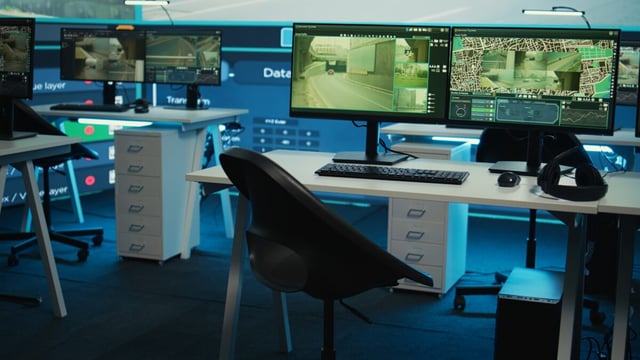
Albania’s Ministry of Interior has earmarked about 2 billion lek (€22 million) in foreign financing and about 1 billion lek (€11 million) to cover value added tax for its Smart City public-security project in the 2027 draft budget, Interior Minister Ervin Demo told the parliamentary Committee on Internal Affairs and Defence in Tirana on 4 November 2026, according to the Albanian Telegraphic Agency. The programme equips the State Police with video surveillance, number plate recognition and traffic management across 20 cities, and is being delivered by Presight AI, the analytics unit of Abu Dhabi’s G42 group, under a loan from the Abu Dhabi Fund for Development, according to Albanian outlet Alfapress.
A €125 Million Programme That Began As A €54 Million Estimate
Alfapress reported in February 2026 that the total value is €125 million ($140 million) including VAT, up from an initial estimate of €54 million ($60 million) that nearly doubled after a February 2025 visit by the president of the United Arab Emirates. The itemised lines in the same report are €27.8 million for software licences, €55.9 million for hardware and infrastructure, €7.2 million for professional services and €15.3 million for four years of maintenance, which add up to about €106 million.
That sum matches the value of €106 million ($118.5 million) that Deputy Interior Minister Besfort Lamallari gave to the parliamentary security committee in March 2025, according to Shqiptarja. Lamallari told the committee that the loan agreement does not require a tender because the lender’s conditions determine the implementing company, and opposition deputy Asllan Dogjani asked at the same session why the loan value had doubled.
Equipment Counts And Delivery Schedule
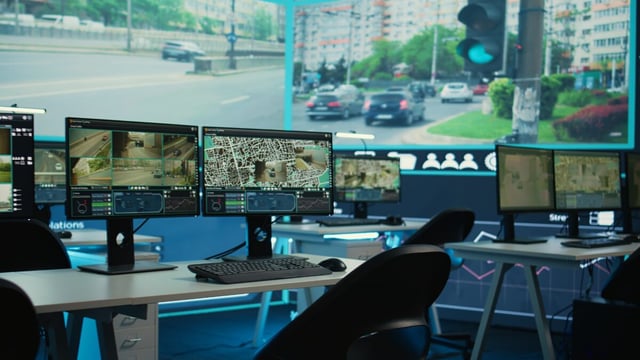
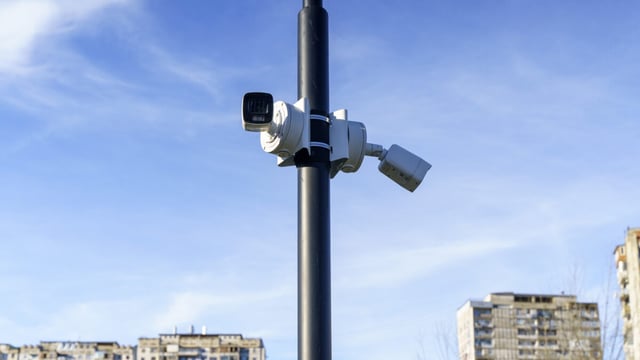
According to Alfapress, the scope covers 2,239 automatic number plate recognition cameras, 2,602 pan-tilt-zoom cameras, 3,816 police body cameras, 100 smart radars and 100 traffic noise sensors, together with AI platforms for city and traffic management and an advanced control centre. The three camera categories total 8,657 devices, the same figure of more than 8,657 smart cameras in 20 cities that Shqiptarja reported from the March 2025 committee session.
Lamallari described a 12-month implementation phase followed by a 48-month operation and maintenance phase, with 12 monitoring centres across the country managed by the State Police. The Ministry of Interior has said that the cameras will be linked to each other and will monitor vehicles in real time on priority road routes and at border crossings, with the project extending to the 20 main cities and the tourist areas with the most visitors.
Schools Come First In The Rollout
Then Interior Minister Besfort Lamallari said in May 2026 that the first application would be an AI network that analyses footage from existing security cameras to flag critical incidents and link schools directly to State Police monitoring centres, according to CE Report, which cited ATA. The ministry aimed to start implementation within the new school year, with the system extending afterwards to crowded public areas and high-traffic roads, and he said it would operate without violating the privacy of students.
From A Classified Memorandum To A Local Branch
Alfapress traced the procurement chronology to April 2024, when then Interior Minister Taulant Balla signed a memorandum of understanding with Presight AI that the outlet describes as classified. Prime Minister Edi Rama signed a letter of commitment in February 2025, which made the project one of national importance, and Presight AI opened an Albanian branch in December 2025 with the sole purpose of implementing the contract.
Presight announced the Albanian agreement in February 2025, and AGBI quoted its chief executive in February 2025: “Albania is embarking on one of Europe’s most ambitious smart nation transformations,” said Thomas Pramotedham, Chief Executive Officer of Presight.
Benchmark Set By Astana
The company’s closest comparable is the €170 million, six-year smart city agreement that the city of Astana signed with Presight in February 2025 for AI-assisted traffic management and public services. Albania’s loan-funded programme carries a €125 million headline value for a national deployment, against a single-city contract in Kazakhstan, which gives procurement officers a basis for comparing unit costs per camera, per control centre and per year of maintenance.
Data Protection And Procurement Questions
The European Commission told Alfapress that the handling of personal data is Albania’s responsibility under its national law, which it describes as recently aligned with EU standards, and that Albania must assess whether individual contracts comply with EU procurement rules. The country’s Ombudsman said it has received no complaints and acts only on concrete complaints or credible signs of rights violations, adding that data processing must follow principles of necessity, proportionality and security.
Demo told the committee that technological advancement must go hand in hand with safeguarding citizens’ fundamental rights and freedoms, particularly personal data protection and privacy, under clear legal guarantees and institutional oversight, according to ATA’s report of the session.
The appropriation of about 3 billion lek (€33 million) in the 2027 draft budget will be the first annual test of drawdown against the loan, and the 12-month implementation period outlined in March 2025 is the schedule against which delivery of the 8,657 cameras will be measured.
Euro figures are converted at the Bank of Albania official rate (90.84 lek) and the ECB reference rate ($1.1165) of 6 November 2026.